The 50-Minute Bodyweight Circuit Every Adult Over 60 Needs for Daily Strength
Turning 60 does not mean you have to stop exercising, lose your strength, or depend on a gym to stay physically active. But if you are approaching retirement or have already retired, you might be wondering where to begin, especially if you have never felt comfortable lifting weights in a gym.
As a certified personal trainer with nearly a decade of experience in fitness training and writing for online fitness magazines, I would suggest starting with something much simpler: Your own body weight.

You do not necessarily need dumbbells, weight machines, or an expensive gym membership to begin improving your strength and movement. A well-planned bodyweight circuit can help you practice movements you use every day, from standing up from a chair to climbing stairs, reaching overhead, and maintaining your balance while walking.
And you do not have to perform dozens of exercises every day to get started.
In this guide, I am sharing 15 bodyweight exercises suitable for reasonably active adults over 60. You can select eight to ten exercises for a workout lasting approximately 50 minutes, then use the remaining movements to add variety on other training days.
The goal is simple: keep moving, maintain your strength, and build the physical capacity to remain independent as you age.
🟧 READ MORE
- These Protein-Rich Foods Can Help Support Muscle Maintenance After 50
- Fitness Expert Says Men Over 60 Should Prioritize These Strength Exercises
- Strength Training or Hypertrophy? Coaches Explain How to Choose
Why Bodyweight Training Makes Sense After 60
As we get older, maintaining muscle strength, balance, mobility, and cardiovascular fitness becomes increasingly important. Age-related changes in muscle mass and physical capacity can make everyday tasks more challenging, particularly when combined with prolonged sitting and reduced physical activity.
But retirement does not have to mean becoming less active.
Bodyweight exercises provide a convenient starting point because you can perform them at home, in a park, or in a gym without needing specialized equipment. They also allow you to practice movements that resemble everyday activities.

For example: Squats rehearse the motion of sitting down and standing up. Calf raises train the muscles that help you push off the ground while walking. Push-ups challenge your upper-body muscles, while standing marches and controlled lunges can help develop lower-body coordination and balance.
Regular physical activity also supports cardiovascular health, metabolic health, and overall physical function. And when bodyweight exercises become too easy, you can progress to resistance bands, dumbbells, or weight machines to continue challenging your muscles.
One important point: Bodyweight training is not automatically easy or safe for everyone simply because it does not involve weights. Choose movements that match your current ability, and progress gradually.
How to Complete This 50-Minute Bodyweight Circuit
You do not need to perform all 15 exercises in one session. Instead, select eight to ten movements that collectively train your upper body, lower body, core, and balance.
Here is the structure I recommend for a session lasting about 50 minutes.
| Workout stage | Time |
|---|---|
| Gentle warm-up | 7 minutes |
| Bodyweight circuit | 30 minutes |
| Rest and water breaks | 5 minutes |
| Cool-down and gentle mobility | 8 minutes |
| Total | 50 minutes |
For the circuit, aim for two rounds of eight to ten selected exercises. Spend approximately 45 – 60 seconds performing each exercise, then use the remaining time in each three-minute exercise slot for recovery and transitions.
That gives you approximately 24 – 30 minutes for two rounds, depending on the number of exercises selected and your pace.
Start with a comfortable pace. If you need longer recovery periods, take them. The time target is a planning guide, not a deadline you must meet at the expense of good technique.
You can also rearrange the exercises to suit your preferences. However, avoid performing every demanding leg exercise consecutively if that leaves your muscles excessively fatigued.
Before beginning, warm up with easy walking in place, shoulder circles, gentle hip movements, and a few comfortable practice squats. Use a stable surface nearby for balance when needed, and stop if you experience chest pain, dizziness, unusual breathlessness, or sharp pain.
🟧 READ MORE
- 10 Yoga Poses to Add to Your Warm-Up for Better Lunges and Squats
- Here’s a Simple Yoga Routine for Beginners Who Want Better Balance After 50
- Start Here if You Want to Build Muscle Without Feeling Overwhelmed
15 Bodyweight Exercises for Adults Over 60
1. Bodyweight Squats
Primary muscles: Quadriceps, glutes, and hamstrings.
Squats are among the most practical exercises for maintaining lower-body strength. They rehearse the movement of sitting down and standing up, which becomes particularly valuable when you want to preserve independence.
How to do them:
- Stand with your feet approximately shoulder-width apart.
- Keep your chest comfortably upright and your feet flat on the floor.
- Push your hips backward and bend your knees as if sitting in an imaginary chair.
- Lower yourself only as far as you can while maintaining control.
- Press through your feet to return to standing.
Repetitions: 8 – 12 per set. Perform 2 to 4 sets.
2. Wall Push-Ups
Primary muscles: Chest, shoulders, and triceps.
Wall push-ups train the upper body without requiring you to get down onto the floor. They are a useful option for people who want to build pushing strength while controlling the amount of resistance.
How to do them:
- Stand facing a wall and place your palms against it at shoulder height.
- Step backward slightly, keeping your body aligned from head to heels.
- Bend your elbows and bring your chest toward the wall.
- Keep your body straight rather than bending at the hips.
- Push through your hands to return to the starting position.
Repetitions: 8 – 12 per set. Perform 2 to 4 sets.
3. Standing Calf Raises
Primary muscles: Gastrocnemius and soleus calf muscles.
Your calf muscles help you push off the ground during walking and climbing stairs. Calf raises are a straightforward way to train them using bodyweight resistance.
How to do them:
- Stand upright with your feet hip-width apart.
- Keep your knees relatively straight without locking them.
- Slowly lift your heels and rise onto the balls of your feet.
- Pause briefly at the top.
- Lower your heels under control.
Repetitions: 10 – 15 per set. Perform 2 to 4 sets.
4. Glute Bridges
Primary muscles: Glutes, hamstrings, and trunk stabilizers.
Glute bridges train hip extension, helping strengthen the muscles that contribute to standing up, walking, and moving from a seated position.
How to do them:
- Lie on your back with your knees bent and feet flat on the floor.
- Position your feet approximately hip-width apart.
- Gently brace your abdomen and press through your feet.
- Lift your hips until your shoulders, hips, and knees form a comfortable diagonal line.
- Squeeze your glutes briefly, then lower your hips slowly.
Repetitions: 10 – 12 per set. Perform 2 to 4 sets.
🟧 READ MORE
- How to Know If Your Recovery Routine Is Actually Working
- 10 Strength Exercises That Become More Important After 50
- The Regular Dead Bug Too Easy? I’m a Personal Trainer — Here’s How to Progress the Exercise
5. Standing Marches
Primary muscles: Hip flexors, quadriceps, and core stabilizers.
Standing marches encourage you to coordinate your legs while remaining upright. They can also raise your heart rate gently when performed continuously at a comfortable pace.
How to do them:
- Stand tall with your feet hip-width apart.
- Lift your right knee toward hip height, or as high as comfortable.
- Lower your foot slowly.
- Repeat with your left knee.
- Continue alternating sides without leaning backward or rushing.
Repetitions: 10 – 12 lifts per leg. Perform 2 to 4 sets.
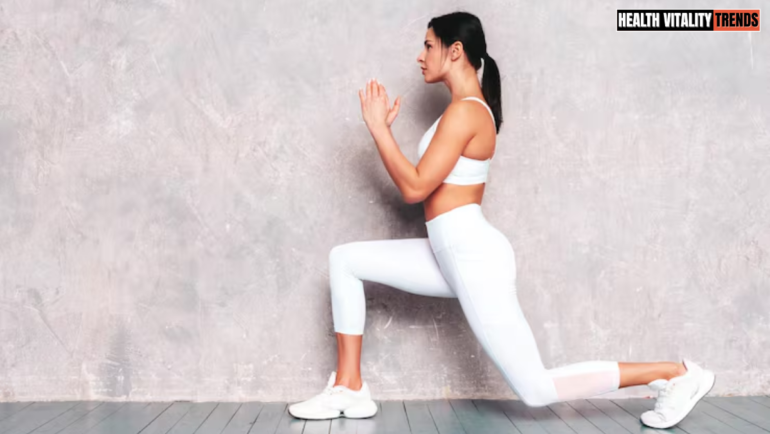
6. Reverse Lunges
Primary muscles: Quadriceps, glutes, and hamstrings.
Reverse lunges train each leg separately and challenge your ability to control your body while stepping backward. They are best suited to adults who already have reasonable balance and can perform them comfortably.
How to do them:
- Stand upright with your feet hip-width apart.
- Step one foot backward into a comfortable split stance.
- Bend both knees slightly, lowering your body only as far as you can control.
- Keep your front foot planted and your front knee aligned with your toes.
- Push through your front foot to return to standing.
- Repeat on the other side.
Repetitions: 6 – 8 per leg. Perform 2 to 4 sets.
7. Bird Dogs
Primary muscles: Core, back, glutes, and hip stabilizers.
Bird dogs train trunk control while you move one arm and the opposite leg. This combination helps you practice coordinating your limbs without excessive movement through your lower back.
How to do them:
- Start on all fours, with your hands beneath your shoulders and knees beneath your hips.
- Extend your right arm forward and your left leg backward.
- Keep your hips level and avoid arching your lower back.
- Pause briefly, then return to the starting position.
- Repeat with your left arm and right leg.
Repetitions: 6 – 8 per side. Perform 2 to 4 sets.
8. Standing Hip Abductions
Primary muscles: Gluteus medius, gluteus minimus, and hip stabilizers.
The muscles on the sides of your hips help control your pelvis while you walk and stand on one leg. Hip abductions train these muscles through a simple side-leg movement.
How to do them:
- Stand tall with your feet hip-width apart.
- Shift your weight onto your left leg.
- Move your right leg out to the side without rotating your hips or leaning your torso.
- Pause briefly.
- Return your foot to the floor and repeat before switching sides.
Repetitions: 10 – 12 per leg. Perform 2 to 4 sets.
9. Bird-Wing Arm Raises
Primary muscles: Shoulders, upper back, and scapular stabilizers.
Overhead reaching, dressing, and placing objects on shelves all require shoulder movement. Controlled arm raises help you practice moving your arms while maintaining an upright posture.
How to do them:
- Stand with your feet hip-width apart and your arms relaxed at your sides.
- Raise both arms forward or slightly out to the sides.
- Lift only as high as your shoulders allow comfortably.
- Avoid shrugging excessively or arching your back.
- Lower your arms slowly.
Repetitions: 8 – 12 per set. Perform 2 to 4 sets.
🟧 READ MORE
- I’m a Personal Trainer — Here’s Why Yoga Can Be Useful Even if You Already Lift Weights
- Can You Build Muscle With Just Bodyweight Exercises?
- Why Some People Build Muscle Faster Than Others
10. Standing Hip Extensions
Primary muscles: Glutes and hamstrings.
Hip extensions train the muscles that move your leg backward. They can complement squats and bridges while helping you practice controlled movement at the hip.
How to do them:
- Stand tall with your feet hip-width apart.
- Shift your weight onto one leg.
- Move the other leg backward a short distance without leaning forward or arching your lower back.
- Squeeze your glutes gently at the end of the movement.
- Return to the starting position and repeat.
- Switch legs.
Repetitions: 10 – 12 per leg. Perform 2 to 4 sets.
11. Wall Angels
Primary muscles: Upper back, shoulder stabilizers, and postural muscles.
Wall angels encourage controlled shoulder movement and upper-back positioning. They may be particularly useful for people who spend long periods sitting or working at a desk.
How to do them:
- Stand with your back against a wall, keeping a comfortable posture.
- Position your arms in a goalpost shape, with elbows bent.
- Slowly slide your arms upward as far as your shoulders comfortably allow.
- Avoid forcing your lower back flat against the wall.
- Lower your arms slowly to the starting position.
Repetitions: 8 – 10 per set. Perform 2 to 4 sets.
12. Standing Knee Raises With a Twist
Primary muscles: Hip flexors, abdominal obliques, and core stabilizers.
This exercise combines a knee lift with a small trunk rotation. It challenges coordination and introduces controlled rotational movement, which you use in everyday activities such as turning while walking.
How to do them:
- Stand upright with your feet hip-width apart.
- Lift your right knee to a comfortable height.
- Gently rotate your torso toward the raised knee without twisting aggressively.
- Return to the starting position.
- Repeat on the opposite side, alternating slowly.
Repetitions: 6 – 8 per side. Perform 2 to 4 sets.
13. Bodyweight Good Mornings
Primary muscles: Hamstrings, glutes, and spinal erectors.
Good mornings teach the hip-hinge movement pattern, which is useful for bending forward to pick something up. They also train the muscles along the back of your body.
How to do them:
- Stand with your feet shoulder-width apart and knees slightly bent.
- Place your hands across your chest or on your hips.
- Push your hips backward while keeping your back in a comfortable, neutral position.
- Lean forward from your hips without rounding your back.
- Stop when you feel a mild stretch in your hamstrings.
- Push your hips forward to stand upright again.
Repetitions: 8 – 12 per set. Perform 2 to 4 sets.
14. Side Lunges
Primary muscles: Quadriceps, glutes, adductors, and hip stabilizers.
Side lunges introduce movement in a direction that standard squats and forward lunges do not emphasize as much. They challenge your ability to bend one knee while keeping the opposite leg relatively straight.
How to do them:
- Stand with your feet wider than hip-width apart.
- Shift your body toward the right side and bend your right knee.
- Keep your left leg relatively straight and your right foot flat.
- Push your hips backward slightly as you lower.
- Press through your right foot to return to the middle.
- Repeat on the left side.
Repetitions: 6 – 8 per side. Perform 2 to 4 sets.
15. Forearm Plank
Primary muscles: Abdominals, obliques, shoulders, and other trunk stabilizers.
A forearm plank challenges your ability to maintain a stable trunk against gravity. That strength can support posture and body control during other movements.
How to do them:
- Start on the floor with your forearms down and elbows beneath your shoulders.
- Extend your legs behind you, placing your toes on the floor.
- Keep your body in a straight line from head to heels.
- Gently tighten your abdomen and glutes while breathing normally.
- Hold the position without allowing your hips to sag or rise excessively.
- Lower your knees to the floor if you need to stop.
Repetitions: 15 – 30 seconds per hold. Perform 2 to 4 sets.
🟧 READ MORE
- 4 Functional Fitness Exercises That Support Healthy Movement For Life
- Broccoli Won’t Build Muscle Alone, But It Still Deserves a Place on Your Plate
- Your Muscles Grow While You Sleep, Not While You Lift
How to Choose Your Exercises Without Overcomplicating the Routine
The purpose of this circuit is not to exhaust yourself by completing every exercise in the list. It is to develop a balanced routine that trains the major muscle groups while allowing sufficient recovery.
For example, you might select:
- Lower body: Bodyweight squats, standing calf raises, and reverse lunges.
- Upper body: Wall push-ups and wall angels.
- Core: Bird dogs and forearm planks.
- Hip strength: Glute bridges and standing hip abductions.
- Movement and coordination: Standing marches.
That gives you 10 exercises covering several important areas of physical fitness.
If you want to change the routine on another day, substitute side lunges, good mornings, standing hip extensions, or standing knee raises with a twist.

You can also change the order according to your preferences. I would generally recommend starting with movements that require more coordination or strength, then moving toward simpler exercises as fatigue builds.
If you enjoy practical advice about staying strong as you age, follow our Facebook page for more training ideas, exercise guidance, and realistic fitness habits designed to fit everyday life.
Can Bodyweight Training Build Enough Strength After 60?
Yes, bodyweight training can be an effective starting point, particularly if you are returning to exercise after a long break. But there is an important distinction between maintaining movement and continually developing strength.
Your muscles adapt to the demands placed on them. As an exercise becomes easier, you may need to increase the challenge by performing more controlled repetitions, using a more demanding variation, slowing the movement appropriately, or adding external resistance.
For example: You could begin with standard bodyweight squats and later progress to a more challenging squat variation or a squat performed while holding a dumbbell.
The same principle applies to upper-body exercises. Wall push-ups may be an appropriate starting point, but you could eventually progress to push-ups against a sturdy countertop or a lower stable surface as your strength improves.
And there is no need to avoid a gym simply because you are over 60. Properly supervised resistance training can help older adults develop and maintain muscle strength. Bodyweight exercises and weight training can complement each other rather than compete.
Choose the method that helps you train consistently and safely, and increase the challenge as your ability improves.

The Bottom Line
Staying physically active after 60 is about much more than completing a workout. It is about preserving the strength, balance, mobility, and endurance that help you continue doing the things you enjoy.
A 50 minute bodyweight circuit is one practical way to work toward that goal. Select eight to ten exercises, complete them with controlled technique, take recovery breaks when needed, and adjust the routine to your current fitness level. You do not need to perform all 15 movements in every session.
Just remember that exercise is only one part of healthy aging. A balanced diet with sufficient protein, adequate overall energy, good sleep, and regular physical activity all contribute to maintaining muscle and supporting everyday function. Adults with medical conditions, balance difficulties, or persistent pain should seek individualized guidance before starting a new routine.
The goal is not to train until you are exhausted. It is to keep your body capable, active, and ready for daily life.
For more short daily fitness tips and practical training advice, join the Health Vitality Trends WhatsApp community. You will find guidance on strength training, mobility, nutrition, and healthy habits to help you keep moving as you get older.
Editor’s Note: This content is for informational and educational purposes only and is not intended to diagnose, treat, or cure any medical condition. Always consult your physician or a qualified personal trainer before starting any workout or nutrition program.