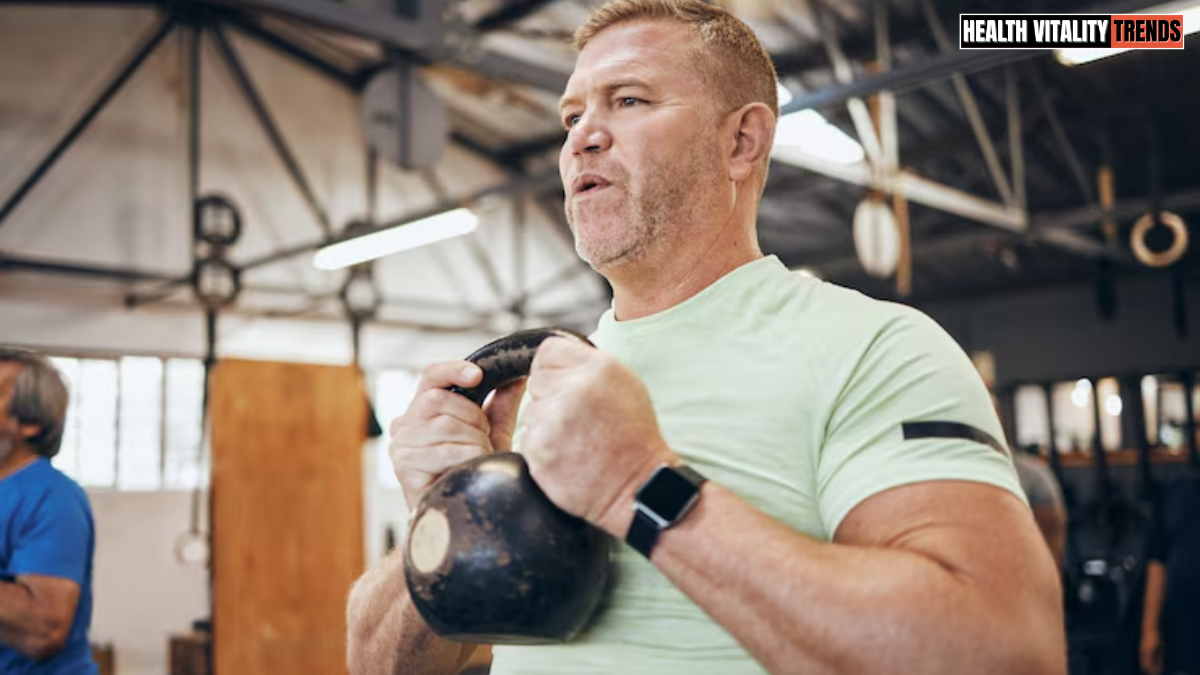
10 Strength Exercises That Become More Important After 50
Are you a person in your 50s? If yes, then have you begun to notice that, day by day, getting up from a chair feels a little harder than it used to? Maybe climbing stairs leaves you more tired now, or carrying grocery bags makes you uncomfortable, or you no longer feel as strong and energetic as you did in your 30s.
Indeed, these changes can become more noticeable after 50. But they don’t automatically mean you have to accept a steady decline in your physical ability.

As a certified personal trainer with nearly a decade of experience in fitness training, I’ve learned that one of the most valuable things adults can do as they age is build and maintain their strength. You don’t need to lift extremely heavy weights or spend hours in the gym. You need the right exercises, consistent training, adequate recovery, and proper nutrition.
Strength training, combined with a balanced diet, can help you preserve muscle, support healthy bones, improve balance, and maintain the physical abilities that make everyday life easier.
Think of it as giving your body a fresh start.
If you’re in your early, mid, or late 50s and want to start exercising again, here are 10 strength exercises worth including in your routine.
🟧 READ MORE
- Fitness Expert Says Men Over 60 Should Prioritize These Strength Exercises
- This Beginner Yoga Pose Relieves Lower Back Stiffness in Adults Over 50
- 4 Functional Fitness Exercises That Support Healthy Movement For Life
10 Strength Exercises That Become More Important After 50
You don’t have to perform all 10 exercises in one workout. Considering the fact that you are beginning to exercise after a long gap, start with movements you can do comfortably, learn the correct technique, and gradually increase the challenge as your strength improves.
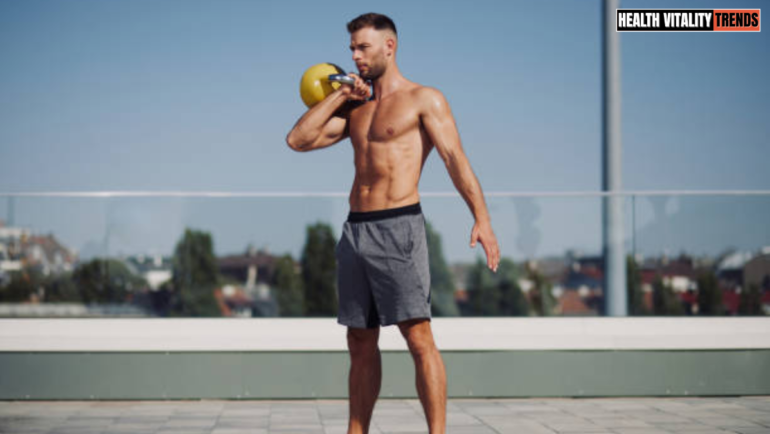
1. Goblet Squat With a Kettlebell
Why it helps: Squats are an exercise that strengthens your quadriceps, glutes, and other muscles involved in standing up, climbing stairs, and maintaining lower-body strength.
How to do it:
- Hold a light kettlebell close to your chest with both hands.
- Stand with your feet approximately at shoulder-width apart.
- Push your hips back and bend your knees, lowering yourself as far as comfortable.
- Always keep your chest lifted and your feet flat on the floor.
- Push through your feet to return to standing.
If you’re doing goblet squat for the first time, start with a light weight or practice without a kettlebell or use a chair as a depth guide.
2. Sit-to-Stand
Why it helps: This simple bodyweight exercise directly trains the muscles you use when getting out of a chair, making it particularly practical for beginners and older adults.
How to do it:
- Sit toward the front of a sturdy chair with your feet flat on the floor.
- Lean your torso slightly forward.
- Push through your feet and stand up without using your hands, if possible.
- Slowly lower yourself back onto the chair.
- Repeat while maintaining control.
Use your hands for support if needed. As you improve, try performing more repetitions without assistance.
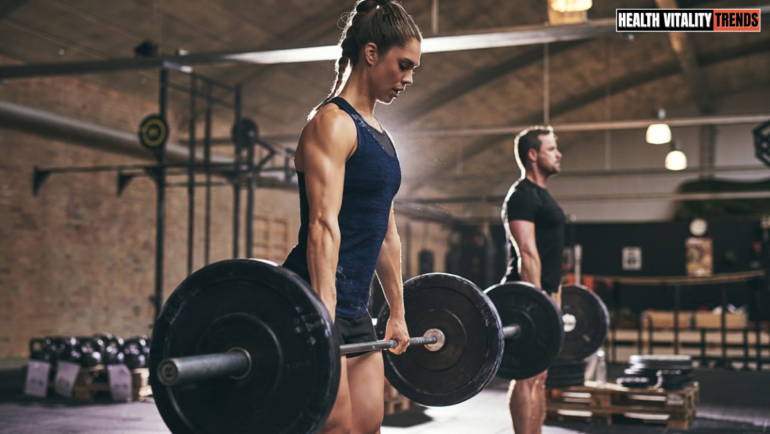
3. Romanian Deadlift With Kettlebells
Why it helps: Romanian deadlifts train the hamstrings, glutes, and muscles responsible for hip extension. These muscles help you to bend forward, lift objects, and maintain lower-body strength.
How to do it:
- Stand with your feet hip-width apart, holding a light kettlebell in each hand or one with both hands.
- Keep your knees slightly bent.
- Push your hips backward while lowering the weight close to your legs.
- Stop when you feel a comfortable stretch in your hamstrings, keeping your back neutral.
- Drive your hips forward to stand upright.
The movement should come primarily from your hips, not from rounding your back. Learn the hip-hinge pattern before increasing the weight.
4. Wall or Countertop Push-Ups
Why it helps: Push-ups strengthen the chest, shoulders, and triceps. They also help to maintain the pushing strength needed for everyday activities.
How to do it:
- Place your hands against a wall or a sturdy countertop, slightly wider than shoulder-width apart.
- Step your feet backward to create a comfortable incline.
- Keep your body in a straight line.
- Bend your elbows and bring your chest toward the surface.
- Push yourself back to the starting position.
Wall push-ups are a good starting point for seniors. Progress to regular push-ups when you can maintain proper form.
5. Bent-Over Rows
Why it helps: Rows strengthen your upper back, rear shoulders, and arms. These muscles contribute to pulling strength and help you perform tasks such as carrying and moving objects.
How to do it:
- Hold light dumbbells or kettlebells and stand with your feet hip-width apart.
- Bend forward at your hips, keeping your back neutral and knees slightly bent.
- Let your arms hang beneath your shoulders.
- Pull the weights toward your waist while keeping your elbows close to your body.
- Lower the weights slowly.
If maintaining the bent-over position feels uncomfortable, use a supported one-arm row with your free hand resting on a sturdy bench.
🟧 READ MORE
- Electrolytes vs Water: When Do Active People Actually Need Electrolytes?
- Can You Build Muscle With Just Bodyweight Exercises?
- I’m a Personal Trainer — Here’s Why Yoga Can Be Useful Even if You Already Lift Weights
6. Step-Ups
Why it helps: Step-ups strengthen the legs and glutes while challenging balance and coordination. These qualities are useful for climbing stairs and moving around safely.
How to do it:
- Stand in front of a low, stable step.
- Place one foot fully on the step.
- Push through that foot to bring your body upward.
- Step down slowly and with control.
- Complete your repetitions before switching legs.
Use a handrail or sturdy support if needed. Begin with a low step rather than trying to lift yourself onto a high platform.
7. Glute Bridge
Why it helps: Glute bridges target the gluteal muscles and support hip extension, which is important for standing, walking, and other lower-body movements.
How to do it:
- Lie on your back with your knees bent and feet flat on the floor.
- Keep your arms by your sides.
- Tighten your glutes and lift your hips toward the ceiling.
- Stop when your shoulders, hips, and knees form an approximately straight line.
- Lower your hips slowly.
Avoid excessively arching your lower back at the top of the movement.
8. Standing Calf Raises
Why it helps: Your calf muscles help you push off the ground when walking, climbing stairs, and changing direction. Strengthening them also supports ankle function.
How to do it:
- Stand behind a sturdy chair or near a countertop.
- Keep your feet approximately hip-width apart.
- Rise onto the balls of your feet.
- Pause briefly at the top.
- Lower your heels slowly.
Hold the support for balance. As your strength improves, you can progress to performing the exercise on one leg with appropriate support.
9. Bird Dog
Why it helps: The bird dog trains trunk stability, coordination, and the muscles that help you maintain control of your spine during movement.
How to do it:
- Start on your hands and knees, with your hands beneath your shoulders and knees beneath your hips.
- Tighten your abdominal muscles gently.
- Extend your right arm and left leg without rotating your torso.
- Pause briefly while maintaining balance.
- Return to the starting position and switch sides.
Move slowly. If extending both limbs is too challenging, begin by lifting one arm or one leg at a time.
10. Farmer’s Carry
Why it helps: This exercise builds grip strength and challenges your shoulders, trunk, and ability to walk while carrying a load. These skills transfer directly to everyday tasks.
How to do it:
- Hold a light dumbbell or kettlebell in each hand.
- Stand tall with your shoulders relaxed and your arms by your sides.
- Tighten your abdominal muscles and look straight ahead.
- Walk forward with controlled, comfortable steps.
- Stop, set the weights down safely, and rest before repeating.
Start with a short distance and manageable weights. You should be able to walk without leaning to one side or struggling to maintain your posture.
A personal trainer’s tip: Consistency matters more than choosing the heaviest weight. Begin with one or two sets of around 8 to 12 controlled repetitions for most exercises, adjusting the number to your ability. For farmer’s carries, start with short bouts of walking. Train two or three days per week, allowing recovery between sessions.
If you’re returning after a long break, begin with fewer exercises and lighter resistance. If you have osteoporosis, significant joint pain, balance problems, or a chronic health condition, seek individualized guidance before starting.
And if practical fitness advice like this helps you, follow our Facebook page for more exercise guides, strength-training tips, and realistic ways to stay active as you age.
Strength Training Is Important, but Don’t Ignore Endurance
Strength exercises are only one part of overall fitness. You also need activities that challenge your cardiovascular system and improve your ability to sustain physical effort.
Walking, cycling, swimming, rowing, and running are examples of endurance-based activities. Choose something that matches your current fitness level and that you can maintain consistently.

For most adults, public health guidelines recommend at least 150 minutes of moderate-intensity aerobic activity per week, alongside muscle-strengthening activities on two or more days. You can build toward these targets gradually.
For example, you might perform strength training on Monday and Thursday, take brisk walks throughout the week, and add cycling or swimming when your schedule allows.
The goal isn’t to exhaust yourself. It’s to build a body that can handle both demanding tasks and everyday movement.
Why Neglecting Proper Nutrition Can Jeopardize Your Fitness Goals After 50
Here’s something I want every adult over 50 to understand: exercise stimulates adaptation, but your body also needs the right nutrients to recover and rebuild.
You can follow a regular workout schedule and still struggle to maintain muscle if you’re consistently eating too little, consuming inadequate protein, or failing to recover between sessions.
This becomes particularly relevant with aging.

Understanding Muscle Protein Synthesis and Anabolic Resistance
Your muscles are constantly breaking down and rebuilding their proteins. This process is called muscle protein turnover. Muscle protein synthesis is the process through which your body creates new muscle proteins.
Resistance training stimulates muscle protein synthesis, while dietary protein supplies the amino acids your body needs to repair and build muscle tissue.
However, aging can make muscles less responsive to the anabolic signals provided by protein and exercise. This phenomenon is known as anabolic resistance. It doesn’t mean muscle growth becomes impossible after 50. It means that maintaining or building muscle may require more deliberate attention to training, nutrition, and recovery.
For many healthy older adults, approximately 1.0 to 1.2 grams of protein per kilogram of body weight daily can be a useful starting reference, while people who train regularly may benefit from individualized targets around 1.2 to 1.6 grams per kilogram. Needs vary with health status, activity, energy intake, and training goals. People with kidney disease or other relevant medical conditions should seek personalized medical or dietetic advice before increasing protein intake.
🟧 READ MORE
- The Regular Dead Bug Too Easy? I’m a Personal Trainer — Here’s How to Progress the Exercise
- These Protein-Rich Foods Can Help Support Muscle Maintenance After 50
- Fitness Coach Shares 5 Supplements Men Over 50 May Need to Support Muscle Growth and Strength
Why More Exercise Isn’t Always Better
Imagine someone in their 50s who starts lifting weights five days a week but eats very little protein and cuts calories aggressively to lose body fat.
They may feel exhausted, experience persistent soreness, and struggle to improve their strength. If their energy and protein intake remain inadequate, recovery and muscle maintenance can become more difficult.
Adding more workouts won’t necessarily solve the problem.
Instead, prioritize protein-rich foods such as eggs, fish, poultry, Greek yogurt, milk, tofu, beans, and lentils. Include adequate carbohydrates to support activity, healthy fats, and plenty of fruits and vegetables. Spread protein intake across meals rather than relying on a single large serving at dinner.
A qualified dietitian or nutrition professional can help you adjust your intake to your goals and health needs.
How Strength Training Promotes a Healthier Life After 50
Strength training offers benefits that go beyond looking muscular or lifting heavier weights. When practiced consistently, it can support several aspects of healthy aging.
1. Helps Preserve Muscle and Reduce the Impact of Sarcopenia
Sarcopenia is the progressive loss of muscle strength and muscle mass associated with aging. Resistance training helps counter this process by providing muscles with a reason to adapt and remain strong. Combined with sufficient protein and energy intake, it can help preserve the physical capacity needed for daily life.
2. Supports Bone Mineral Density
Bones respond to mechanical loading, and appropriately prescribed resistance training can help maintain or improve bone strength. This matters because bone density can decline with age, increasing vulnerability to fractures. People with osteoporosis or a history of fractures may need specific exercise modifications from a qualified professional.
3. Improves Balance and May Reduce Fall Risk
Exercises such as step-ups, sit-to-stands, and farmer’s carries challenge coordination and functional strength. When combined with dedicated balance training, they can help older adults improve stability and reduce fall risk. Better strength alone isn’t a guarantee against falls, but it is an important part of a broader prevention strategy.

4. Supports Metabolic and Chronic Disease Management
Muscle tissue plays an important role in glucose metabolism. Resistance training can improve insulin sensitivity and help regulate blood glucose, while also supporting body composition and physical function. It can be a valuable part of managing cardiometabolic risk, alongside appropriate nutrition, aerobic activity, medication when prescribed, and regular medical care.
5. Contributes to Longevity and Independence
Maintaining strength helps people continue doing the things they value, from travelling and gardening to playing with grandchildren. Research consistently links physical activity and better physical function with healthier aging, although no individual exercise routine can guarantee a longer life.
6. Makes Daily Necessities Easier — and Leisure More Enjoyable
Think about the everyday tasks you may take for granted: carrying groceries, climbing stairs, standing up from a low sofa, lifting a suitcase, or walking through an airport. These activities all require some combination of strength, balance, and endurance. Building these abilities can help you remain independent while making recreational activities more enjoyable.
The Bottom Line
Turning 50 doesn’t mean your strongest or most active years are behind you. But it is a good time to become more intentional about preserving your physical abilities.
Goblet squats, sit-to-stands, Romanian deadlifts, push-ups, rows, step-ups, glute bridges, calf raises, bird dogs, and farmer’s carries provide a practical starting point for developing strength that matters in everyday life.
You don’t need to master every exercise immediately. Start with a manageable routine, focus on technique, progress gradually, and give your body enough food and recovery to adapt.
And remember, strength training works best as part of a broader approach that includes endurance exercise, adequate protein, balanced nutrition, and good sleep.
Your goal after 50 isn’t to train like you’re 25 again. It’s to build the strength, energy, and confidence to keep doing the things you love for years to come.
Want simple, practical fitness advice you can use every day? Join the Health Vitality Trends WhatsApp community for short daily fitness tips, training advice, nutrition insights, and realistic ways to stay active as you age. Small, consistent steps can make a meaningful difference over time.
Editor’s Note: This content is for informational and educational purposes only and is not intended to diagnose, treat, or cure any medical condition. Always consult your physician or a qualified personal trainer before starting any workout or nutrition program.