The Most Overlooked Back Exercise for Lifters Over 40
After you have crossed the 40-year milestone, it is wise to make changes in your lifting philosophy too. For both men and women, studies have shown that the same heavy lifting movements like deadlifts, squats or barbell rows, that you did in your 20s should be considered to be substituted with safer machine-based exercises. The truth is, your muscles can still handle the tension from heavy compound exercises, but your joints and lower back are likely to give up faster.
If you want to build strength and muscles in your back without compromising your lower back health, it’s time to make some subtle changes.
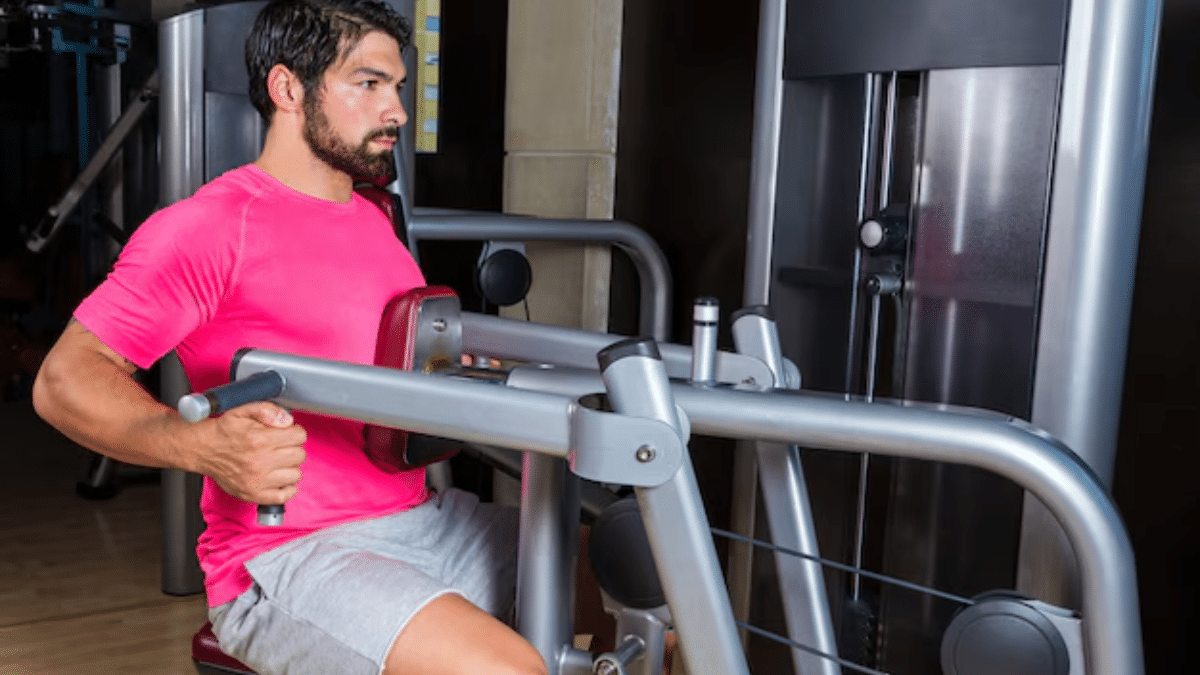
While most lifters still chase heavy compound movement like barbell row, they are completely missing an effective and joint-friendly exercise in the gym, which is the Machine Seated Row.
The Problem with Free-Weight Back Movements
Traditional back training relies heavily on “axial loading” – which places a heavy load directly down on your spine. Exercises like bent-over barbell rows require your lower back, glutes, and hamstrings to work overtime just to hold and keep you in position.
That is why, for lifters over the age of 40, it can be very challenging, because now your lower back fatigues faster and gives out long before your lats and rhomboids even get close to failure. With this, you aren’t actually training your back to its full potential – you are just exhausting your lumbar spine.
🟧 READ MORE
- Stubborn Belly Fat After 50? Here’s What Changes With Age
- Why Strength Training in Your 60s Is More Important Than Ever
- What Changes in Your Diet After 50? Experts Explain
Why the Machine Seated Row Wins After 40
To be able to train for building muscle mass and longevity, you need external stability. The Machine Seated Row provides you with exactly what the barbell row is missing.
According to Alex Beevis, a men’s fat loss expert who specializes in fitness for men aged 40 and above. In a YouTube Reel, he recommends that mature lifters choose Machine Seated Row exercise as a staple in their back workout routine. In his expert commentary on training for longevity, Beevis highlights that “not only the seated rows, but it is important that you are doing any rowing movement for your posture.“
Alex also highlights that – the seated position when doing the machine row, lessens the stress from your lower back, making the movement more efficient.
Consequently, the machine row offers a lifter with three distinct advantages:
- Minimum Spinal Compression: The chest pad for stance support, along with seated position, completely eliminates stress from lower back.
- Maximum Muscular Failure: Because now your body is more balanced, you can safely push your upper back and lats muscles to their limit.
- Customizable Grips: Most modern rowing machines offer multiple handle options. The neutral or pronated handles let you match with the movement to your specific shoulder mobility, thus saving your rotator cuffs from unnecessary wear and tear.
How to do Machine Seated Rows the right way
To get the most out of the Machine Seated Row, Alex points out the biomechanics of this exercise, which is to pull your shoulder back with your shoulder blades.
Machine Seated Row stance
- Put some light-moderate weight on the machine. Sit on the machine’s seat and make sure that the chest-supported pad is right at the center of your pecs.
- Place your feet completely flat on the ground to avoid any unnecessary movement during workout.
- Now, grab the handles, and make sure your hands are parallel to the ground. Let the natural stretch happen in your shoulders. Maintain an erect position and do not slouch your shoulders.
The Pulling Movement –
- After you have grabbed the handles, brace your core, and begin the movement by pulling with your shoulder blades together.
- Pull your elbows back, bring the handles close to your chest, and squeeze for the count of 2 or 3. Nice, slow, and easy.
- Now do the opposite, in a controlled manner, let your elbows come forward. And let your shoulder blades be pulled forward.
- Repeat the same movement till the set is complete.
Mike includes that – rather than pulling with your biceps, focus on pulling with the shoulder blades to target the rhomboid muscle accurately.
Final Note
Training in your 40s isn’t about being afraid to lift heavier weight, its about how you can lift them in a smarter way. Therefore, by swapping out high-risk barbell movements with variety of rowing exercises, you can stimulate maximum back muscle growth, protect your spine, and ensure that you keep lifting for decades to come.
Editor’s Note: This content is for informational and educational purposes only and is not intended to diagnose, treat, or cure any medical condition. Always consult your physician or a qualified personal trainer before starting any workout or nutrition program.