A Physical Therapist Says This Quick Mobility Drill May Help Make Lunges Feel Smoother And More Stable
While doing lunges if you feel awkward, unstable, or uncomfortable pain in your lower back rather than on your quads, well the problem may not be about quad muscle strength at all. According to Jim Heafner (PT, DPT, OCS) – he explains that the root cause could be the limited hip mobility that is silently affecting how well you move while performing lunges — especially the lunge depth, balance, and posture.
In a video published on his YouTube channel, Heafner Health Physical Therapy, the physical therapist explains how improving mobility around the front hips and inner thighs can make you feel the lunges movement more smoother, stable and more effective during lower-body training.
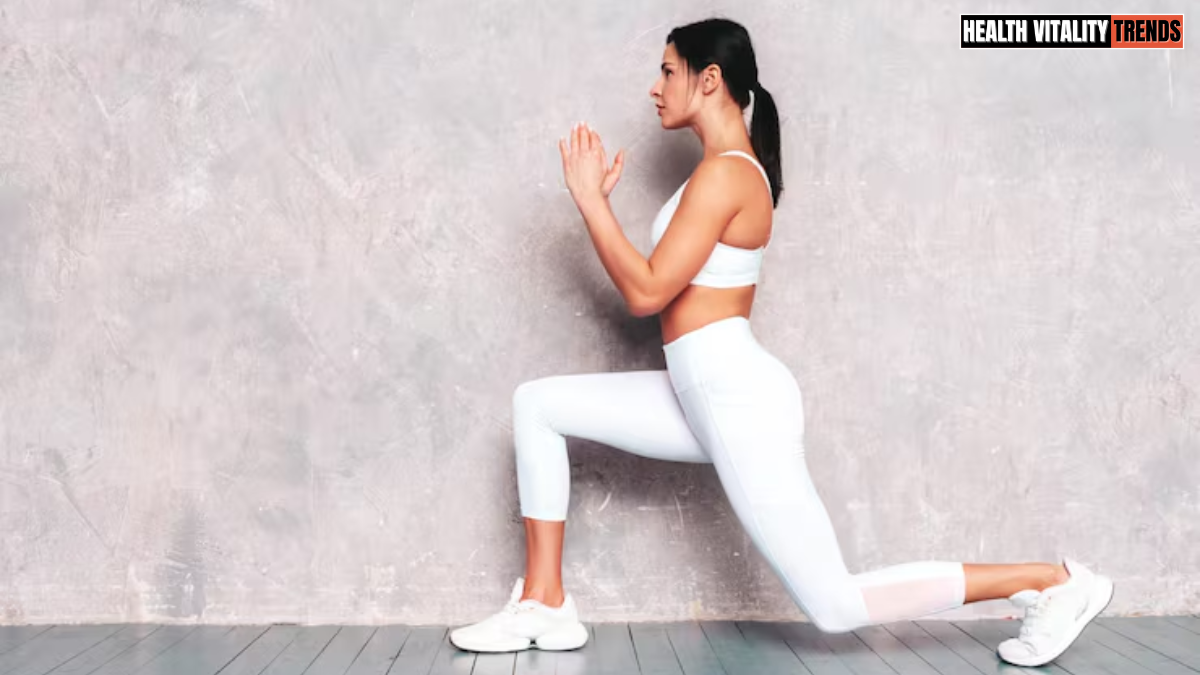
Also, it is a known fact that nowadays, very few people actually include lunges in their training routines, as most of them solely focus on heavy movements like squats, leg press, hack squats and leg extensions, to train the quads muscle group and lower body strength. Well, according to Jim, lunges could offer you better muscle engagement if you perform it in the correct way. Since lunges are a unilateral movement, they challenge the lower body to build balance, coordination, hip stability, and mobility all at once.
But the downside is also that lunges can expose the limitations in the lower body movement very quickly. Yes, that is very true.
Therefore, if you feel tight or restricted movement in your hips, the body will often compensate for this movement by leaning forward too much during the lunge movement. And over time, this upper body forward leaning can build up unwanted stress on the lower back instead of keeping tension where it is supposed to be — in the glutes, quadriceps and hips.
🟧 READ MORE
- Why Lunges Are One of the Most Effective Leg Exercises You’re Probably Underusing
- A Trainer Says This Quick Balance Test Can Expose Weak Glutes And Poor Stability
- The Hip Mobility Exercise That Makes Squats Feel Easier Instantly
It is important to understand that good hip mobility matters because the lunges require your hips to move through a large range of motion while keeping your torso upright and balanced. Therefore, the tight hip flexors or limited inner thigh mobility can restrict how deep and stable your lunges feel. Which in turn can shorten your lunge foot stance, poor control, and can make the movement feel uncomfortable even if your legs are strong enough to perform it.
According to Heafner, one simple way to assess your hip mobility is to notice how flexible you feel around the inner thighs and front thighs during a lunge walk. If you feel stiffness or tightness in these two areas, you can improve flexibility here by doing a simple mobility drill.
To begin the mobility drill, you have to get into a half-kneeling position, similar to a proposal pose. Where one leg is forward and the other knee is resting on the floor behind you. Now, place your hands on the sides of your hips and brace your core gently. From here, slightly lean your hips forward and backward in a controlled motion. That’s it.
When you are doing this mobility drill – after a short period, you should feel a slight stretch through the front of the hip and upper thigh of the kneeling leg.
The goal here is not to force a deep stretch, but to slowly work in and out of the position while maintaining tension through the core muscles. Heafners adds that – doing this will help to open up the hips and improve mobility over time.
So, as your hips become more mobile and flexible – now doing lunges will begin to feel more natural and controlled. Consequently, now the improved hip mobility will help you to stay more upright during the lunge movement, with reduced excessive forward leaning, and create a deeper, more stable lunge position.
And for people wanting to use lunges as a part of their muscle-building or athletic training program, by improving and working on their lunge movement, they can make this exercise both safer and more effective in the long run.
Editor’s Note: This content is for informational and educational purposes only and is not intended to diagnose, treat, or cure any medical condition. Always consult your physician or a qualified personal trainer before starting any workout or nutrition program.