Dietitian Shares 10 High-Protein Vegetarian Foods That Can Help Support Muscle Growth
When we think about muscle building, the word ‘protein‘ immediately comes to our mind. And it’s true, because proteins are the primary nutrients that can help us maintain and build new muscle tissue. Often, we associate proteins with food sources such as — chicken, eggs, fish, or with many other animal-based foods.
However, vegetarians can also complete their daily protein needs for muscle growth by choosing the right plant-based foods that are not only rich in protein, but also provide other important nutrients such as fiber, healthy fats, minerals, and essential amino acids.
As you know, Proteins play a critical role in muscle repair, recovery, and growth. Therefore, every time you challenge your muscles through resistance training, your body needs essential amino acids — the building blocks of protein to repair damaged muscle fibers and build them stronger.
In a YouTube video from Healthline, registered dietitian Lisa Valente highlights some of the best plant-based high-protein sources for vegans and vegetarians. Many of these foods can be easily added to your meal plan for muscle building, and can be bought from any nearby supermarket.
🟧 READ MORE
- 6 Muscle-Building Habits Most Gym-Goers Completely Ignore
- Eggs for Breakfast: A Simple Habit That Could Support Muscle Gain
- 5 High-Protein Indian Breakfast Ideas That Actually Support Muscle Gain
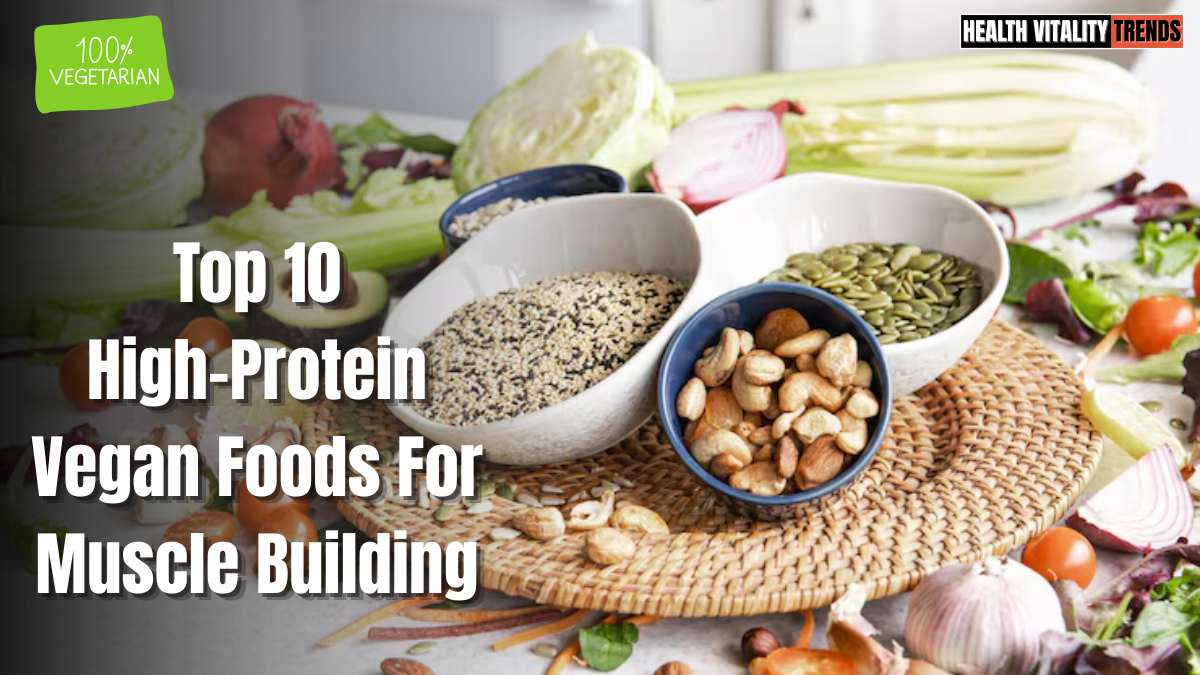
Top 10 High-Protein Vegetarian Foods for Muscle Building
1. Seitan

Seitan is made from wheat gluten and is one of the highest-protein plant-based foods available right now in the market. A 3-oz serving of seitan provides around 25g of protein. It also contains several important minerals such as selenium, iron, calcium, and phosphorus, making it a popular and the number one choice of vegan protein among vegetarians.
2. Soy Foods

Lisa says — Soy stands out of all the vegan protein options because it contains all the nine essential amino acids — thus making it a complete protein source. Popular Soy Foods such as – tofu, tempeh, and edamame typically contain around 12 to 20 grams of protein per 3.5 oz serving — which makes them an excellent option for supporting muscle growth.
3. Lentils

Lentils, also called Daals, have been a staple protein source in vegetarian diets for a long time. A one-cooked or boiled cup of lentils provides around 18g of protein, along with about 15 grams of fiber as well. They are a great addition to soups, curries, salads, and pasta dishes. The fiber content may also support digestive health and improve satiety.
4. Hemp Seeds

Lisa adds that – Hemp seeds contain approximately 3 grams of protein per tablespoon. Not only this – hemp seeds also contain omega-3 fatty acids, fiber, and several important micronutrients. Their mild flavor makes them easy to add to your morning oatmeals, protein smoothies, yogurt, and salads.
5. Nutritional Yeast

Often known for its nutty, cheesy-like flavor, nutritional yeast is a favorite among many vegetarians and vegan athletes in their meal plan. A quarter-cup serving contains about 8 grams of protein. Many fortified nutritional yeast products also provides B vitamins, including Vitamin B12.
6. Quinoa

Quinoa is known as a powerful and a nutrient-dense breakfast. Like Soy, quinoa also contains all nine essential amino acids, making it an excellent choice for vegan muscle-building. One cup of quinoa provides roughly 8grams of protein, along with fiber, magnesium, and other essential nutrients that support an active lifestyle.
7. Sprouted Grain Bread

Lisa highlights that – sprouted grain bread is typically made from wheat grains after they have sprouted. Grains that get included in the bread are — wheat, barley, millet, lentils, and soybeans. Two slices can provide around 8 grams of protein, more than regular bread. It is also a healthy choice, as it contains little to no added sugar.
8. Nuts and Nut Butters

Two tablespoons of nut butter contain 5 to 7 grams of protein, similar to an ounce of raw nuts. Nuts also provide healthy fats, fiber, Vitamin E, magnesium, and other nutrients important for overall health and recovery.
9. Beans

Another high-protein vegan food that is popular after Lentils, is Beans. A variety of beans — Kidney beans, black beans, pinto beans, and various varieties have been a dietary staple for generations. One cup of cooked or steamed beans provides around 15 grams of protein. They are the most affordable, versatile, and can easily be included in a muscle-building meal plan.
10. Chia Seeds

Lisa adds that — Chia seeds are also popular among vegans. They provide around 5 grams of protein and 10 grams of fiber per ounce. They are rich in calcium, magnesium, iron, selenium, antioxidants, and omega-3 fatty acids as well. They can be easily included in protein-smoothies, oatmeal, or protein shakes of your liking.
Final Takeaway
Building muscle on a vegetarian diet is entirely possible when you make sure that your protein intake is adequate and comes from a variety of high-quality sources. Foods such as seitan, soy, lentils, beans, quinoa, nuts & nut butter, and more… can help you by providing high-quality vegan proteins and essential amino acids that your muscles need for recovery and growth.
However, you should understand that eating only proteins is not enough. You need to do strength training consistently, eat the right number of calories, and take proper recovery too for your muscle-building goals.
Editor’s Note: This content is for informational and educational purposes only and is not intended to diagnose, treat, or cure any medical condition. Always consult your physician or a qualified personal trainer before starting any workout or nutrition program.