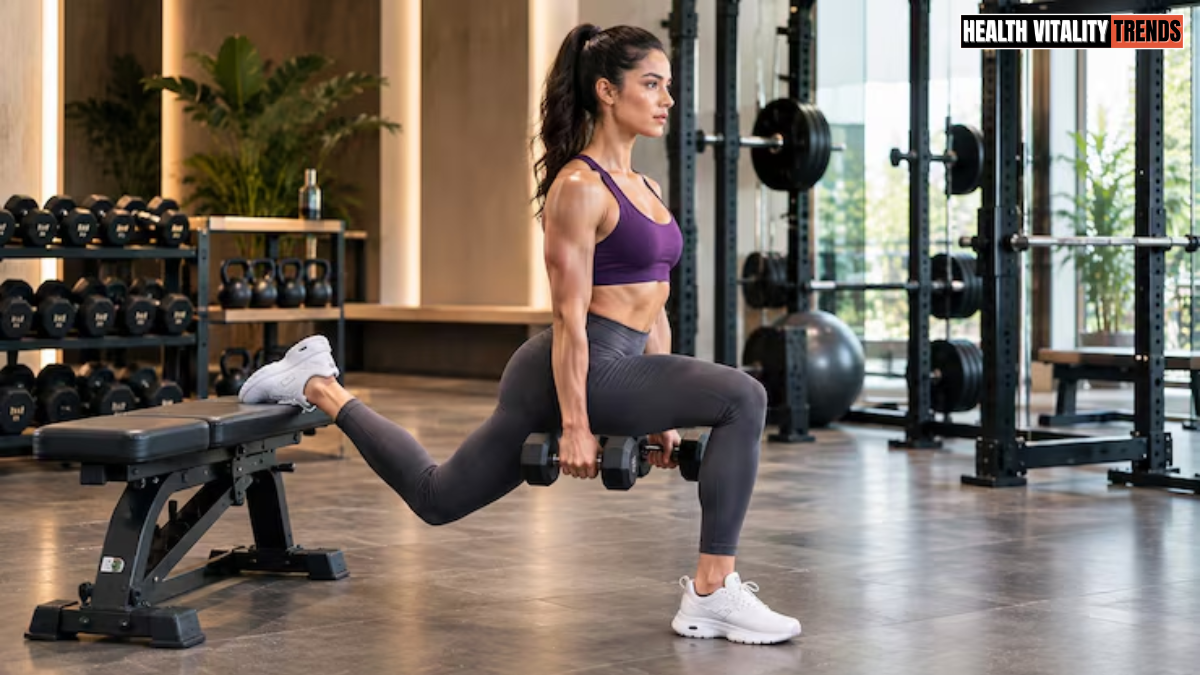
10 Yoga Poses to Add to Your Warm-Up for Better Lunges and Squats
If your leg day starts with a few rushed stretches before you head straight into squats and lunges, you might be missing an important part of your workout preparation.
As a certified personal trainer with nearly a decade of experience in fitness training and writing for online fitness magazines, I often see people focus on how much weight they can lift while giving very little attention to how well their bodies are prepared to lift it.
And that matters, especially on leg day.

Squats and lunges require more than strong quadriceps. Your hips need to move freely, your ankles need enough mobility, your glutes need to contribute, and your core must help stabilize your body as you lower and raise yourself under load.
That is why I recommend adding a few yoga poses to your warm-up before training your legs. The right movements can help you explore your available range of motion, gradually prepare the muscles involved in these exercises, and feel more comfortable when you begin your working sets.
You do not need to complete a full yoga session before every workout. Even three to five carefully selected poses can make a useful addition to your routine.
🟧 READ MORE
- Your Muscles Grow While You Sleep, Not While You Lift
- Does Smoking Affect Muscle Recovery?
- The Yoga Stretch That Feels Amazing After Hours of Sitting
Why Your Legs Need a Proper Warm-Up Before Squats and Lunges
Your legs contain some of the body’s largest and strongest muscles, including the quadriceps, hamstrings, glutes, and calf muscles. Squats and lunges also demand coordination between your hips, knees, ankles, and trunk.
But preparing for these movements is not simply about stretching as much as possible.
A good warm-up gradually increases your body temperature, rehearses the movement patterns you are about to perform, and prepares you for the demands of your workout. Dynamic mobility exercises can help you move through a comfortable range of motion, while progressively heavier warm-up sets help prepare you for loaded exercises.
Yoga can support this process by combining controlled movement, balance, mobility, and body awareness.
One important note: These poses are not a substitute for a general warm-up or lighter practice sets. And forcing a deep stretch immediately before lifting heavy is not the goal. Move with control, avoid painful positions, and choose a comfortable range of motion.
Here are 10 yoga poses I would consider adding before squats and lunges.
10 Yoga Poses to Improve Your Squat and Lunge Warm-Up
1. Cat-Cow Pose (Marjaryasana-Bitilasana)
Muscles and movements prepared: Core, spinal muscles, hips, and trunk control.
Cat-Cow is a gentle way to begin your warm-up. Although it does not directly stretch the major leg muscles, it encourages controlled spinal movement and helps you become more aware of your trunk position, which matters when maintaining a stable torso during squats and lunges.
How to do it:
- Start on all fours, with your hands beneath your shoulders and knees beneath your hips.
- Inhale and gently tilt your pelvis forward, allowing your abdomen to lower as you lift your chest and tailbone.
- Exhale, gently round your back, tuck your pelvis, and draw your abdomen inward.
- Alternate between these positions without rushing or forcing your neck.
- Keep the movement smooth and coordinated with your breathing.
Warm-up dose: 1 set of 8 to 10 slow repetitions.
2. Downward-Facing Dog (Adho Mukha Svanasana)
Muscles and movements prepared: Calves, hamstrings, shoulders, and ankle mobility.
Downward-Facing Dog introduces a lengthened position for the posterior chain, particularly the calves and hamstrings. These muscles contribute to lower-body movement, and ankle mobility can influence how comfortably you perform a squat.
Do not worry about getting your heels to the floor. That is not a requirement for performing this pose correctly.
How to do it:
- Begin on all fours, placing your hands slightly ahead of your shoulders.
- Tuck your toes under and lift your hips upward and backward.
- Lengthen your back while keeping your knees slightly bent if your hamstrings feel tight.
- Gently press through your hands and allow your chest to move toward your thighs.
- Alternate between bending one knee and the other if you want to introduce gentle calf movement.
- Breathe normally and avoid forcing your heels down.
Warm-up dose: 1 set of 5 to 6 slow pedal movements per side, followed by 2to 3 comfortable breaths.
3. Low Lunge (Anjaneyasana)
Muscles and movements prepared: Hip flexors, quadriceps, glutes, and hip extension.
If you spend much of your day sitting, your hips may feel stiff when you first begin lunges. A Low Lunge helps you explore hip extension while maintaining a stable position through your pelvis and trunk.
This is particularly useful before exercises that require you to step forward or backward and lower your body under control.
How to do it:
- Start in a kneeling position and step your right foot forward, placing it flat on the floor.
- Position your right knee approximately over your ankle, adjusting your stance for comfort.
- Lower your left knee onto a mat or other comfortable surface.
- Gently shift your hips forward until you feel a mild stretch at the front of your left hip.
- Keep your torso upright and your abdomen gently engaged.
- Return to the starting position and repeat on the opposite side.
Warm-up dose: 1 set of 5 to 6 gentle forward-and-back shifts per side, holding each comfortable end position for 1 to 2 seconds.
🟧 READ MORE
- Here’s a Simple Yoga Routine for Beginners Who Want Better Balance After 50
- Start Here if You Want to Build Muscle Without Feeling Overwhelmed
- How to Know If Your Recovery Routine Is Actually Working
4. Warrior I (Virabhadrasana I)
Muscles and movements prepared: Quadriceps, glutes, hip flexors, and trunk stabilizers.
Warrior I combines a split stance with an upright torso. This makes it a useful movement rehearsal before lunges, where you need to control your balance while one leg works in front of the other.
It also encourages you to coordinate your hips and trunk instead of relying entirely on your legs.
How to do it:
- Stand tall and step your left foot backward into a comfortable split stance.
- Turn the back foot slightly outward and keep the front foot pointing forward.
- Bend your front knee while maintaining a stable position through your feet.
- Keep your torso upright and your hips facing generally forward, without forcing them into alignment.
- Raise your arms overhead only if your shoulders can move comfortably.
- Return to standing and repeat with the opposite leg forward.
Warm-up dose: 1 set of 4 to 5 controlled repetitions per side, briefly pausing in the lunge position.
5. Warrior II (Virabhadrasana II)
Muscles and movements prepared: Quadriceps, glutes, inner thighs, and hip stabilizers.
Warrior II involves a wider stance and a bent front knee. It can help you practice maintaining foot contact, controlling knee position, and keeping your torso upright while your hips and knees remain flexed.
These are useful movement skills for squats and lunges, although the pose itself does not replace strength training.
How to do it:
- Stand with your feet wide apart.
- Turn your right foot outward and angle your left foot slightly inward.
- Bend your right knee while keeping the left leg relatively straight.
- Aim your right knee in the same general direction as your toes, avoiding an inward collapse.
- Extend your arms to the sides if comfortable and keep your chest upright.
- Hold briefly, straighten the front leg, and switch sides.
Warm-up dose: 1 set of 4 to 5 controlled knee bends per side, holding each position for 2 seconds.
6. Garland Pose (Malasana)
Muscles and movements prepared: Ankles, hips, adductors, and quadriceps.
Garland Pose is a deep squat position that can help you explore hip and ankle mobility. It is especially relevant to people who struggle to reach a comfortable squat depth without their heels lifting or their torso tipping excessively forward.
However, everyone’s anatomy and mobility are different. You do not need to achieve a perfectly deep squat for this pose to be useful.
How to do it:
- Stand with your feet slightly wider than hip-width apart and turn your toes outward a little.
- Bend your knees and lower your hips toward the floor.
- Keep your heels down if comfortable; place a folded mat or stable heel support underneath them if needed.
- Bring your hands together in front of your chest if that helps you balance.
- Allow your knees to move in the direction of your toes while maintaining a comfortable, controlled position.
- Rise slowly by pressing through your feet.
Warm-up dose: 1 set of 5 to 6 controlled repetitions. Pause for 1 – 2 seconds near the bottom without forcing the position.
7. Half Split Pose (Ardha Hanumanasana)
Muscles and movements prepared: Hamstrings, calves, and hip-hinge control.
Your hamstrings help control movement at the hip and knee. Half Split Pose offers a gentle way to explore the back of the front leg before lower-body training.
For a pre-workout warm-up, keep the stretch mild rather than holding an intense, prolonged position.
How to do it:
- Begin in a Low Lunge with your right foot forward and your left knee on the floor.
- Shift your hips backward as you straighten your right leg to a comfortable degree.
- Keep a slight bend in your right knee if your hamstrings feel tight.
- Hinge forward from your hips while keeping your spine long.
- Rest your hands on the floor or on yoga blocks for support.
- Move forward into the lunge again, then repeat on the other side.
Warm-up dose: 1 set of 5 gentle forward-and-back transitions per side, pausing briefly at the back of the movement.
🟧 READ MORE
- 10 Strength Exercises That Become More Important After 50
- The Regular Dead Bug Too Easy? I’m a Personal Trainer — Here’s How to Progress the Exercise
- I’m a Personal Trainer — Here’s Why Yoga Can Be Useful Even if You Already Lift Weights
8. Bridge Pose (Setu Bandha Sarvangasana)
Muscles and movements prepared: Glutes, hamstrings, and trunk stabilizers.
The glutes contribute substantially to hip extension when you stand up from a squat or drive upward from a lunge. Bridge Pose rehearses that action without requiring external weights.
Focus on using your hips rather than arching your lower back excessively.
How to do it:
- Lie on your back with your knees bent and your feet flat on the floor, approximately hip-width apart.
- Place your arms beside your body with your palms facing down.
- Gently brace your abdomen and press through your feet.
- Lift your hips until your shoulders, hips, and knees form a comfortable diagonal line.
- Pause briefly while squeezing your glutes.
- Lower your hips slowly and repeat.
Warm-up dose: 1 set of 8 to 10 repetitions, using a controlled lifting and lowering movement.
9. Chair Pose (Utkatasana)
Muscles and movements prepared: Quadriceps, glutes, calves, and core stabilizers.
Chair Pose resembles a partial squat. It is one of the most directly relevant yoga poses for rehearsing the basic pattern of bending your knees and hips while keeping your trunk controlled.
It can also help you recognize whether you tend to shift your weight excessively toward your toes or heels.
How to do it:
- Stand with your feet about hip-width apart.
- Inhale and extend your arms forward or overhead, depending on your shoulder mobility.
- Bend your knees and push your hips backward as though you were about to sit in a chair.
- Keep your feet grounded and your knees tracking in the direction of your toes.
- Maintain a comfortable, upright torso and avoid forcing yourself into a deep position.
- Press through your feet to return to standing.
Warm-up dose: 1 set of 6 to 8 controlled repetitions, pausing for 1to 2 seconds in the lowered position.
10. Extended Side Angle Pose (Utthita Parsvakonasana)
Muscles and movements prepared: Inner thighs, glutes, quadriceps, hip stabilizers, and trunk muscles.
Extended Side Angle combines a bent knee with lateral trunk positioning. It can introduce your hips and legs to a different movement direction while challenging your balance and control.
This is useful because leg training involves more than moving straight up and down. Your hips and trunk also help you maintain a stable position as your body shifts during unilateral exercises such as lunges.
How to do it:
- Stand with your feet wide apart and turn your right foot outward.
- Bend your right knee while keeping your left leg extended comfortably.
- Rest your right forearm lightly on your right thigh, or place your right hand on a yoga block.
- Extend your left arm overhead only if your shoulder allows it comfortably.
- Keep your chest open without twisting your body excessively.
- Return to standing and repeat on the opposite side.
Warm-up dose: 1 set of 3 to 4 controlled repetitions per side, pausing for 2 seconds in each position.
How to Combine These 10 Yoga Poses Before Leg Day
You do not have to perform all 10 poses before every workout. The best selection depends on your current mobility, training experience, and the movements that feel restricted.
Here is how I would organize them as a practical pre-leg-day routine.
| Warm-up focus | Poses to choose |
|---|---|
| General movement and trunk control | Cat-Cow Pose |
| Calves and posterior-chain mobility | Downward-Facing Dog |
| Hip-flexor mobility | Low Lunge |
| Split-stance control | Warrior I and Warrior II |
| Squat depth and ankle mobility | Garland Pose and Chair Pose |
| Hamstring mobility | Half Split Pose |
| Glute activation | Bridge Pose |
| Lateral movement and balance | Extended Side Angle |
Choose three to five poses that address your needs and spend approximately 5 to 10 minutes moving through them. Use the repetitions above as a guide rather than a rigid requirement.
Afterward, do a few minutes of easy cycling, brisk walking, or another activity that gradually raises your body temperature if you have not already done so. Then perform several progressively heavier sets of the squat or lunge variation you plan to train.
For example, if you are preparing to squat with a barbell, begin with bodyweight squats or an unloaded bar, then increase the load gradually before your working sets.
And if you find these practical training tips helpful, follow our Facebook page for more straightforward advice on strength training, mobility, exercise technique, and fitness habits you can use in everyday life.
🟧 READ MORE
- Can You Build Muscle With Just Bodyweight Exercises?
- Why Some People Build Muscle Faster Than Others
- 4 Functional Fitness Exercises That Support Healthy Movement For Life
Can Skipping Your Warm-Up Affect Your Squat and Lunge Performance?
Going straight into heavy squats or lunges without adequate preparation may leave you feeling stiff, uncoordinated, or uncomfortable during the first few sets.
A warm-up gives you an opportunity to assess how your body feels that day, practice the movements, and increase the demands gradually. It may also help improve your immediate exercise performance when it includes dynamic movement and exercise-specific preparation.
But stretching alone cannot guarantee that you will avoid injuries. Nor does feeling tight automatically mean a muscle is injured or incapable of handling a load.

The aim is to prepare your body for the work ahead, not to exhaust your muscles before the workout begins.
If a pose causes sharp pain, numbness, or significant joint discomfort, stop and choose a more comfortable alternative. Persistent symptoms deserve assessment by an appropriate healthcare professional.
The Bottom Line
These 10 yoga poses offer different ways to prepare your hips, legs, ankles, and trunk before a workout centered on squats and lunges. Learning all of them gives you variety, but you do not need to master every pose to benefit.
Start with three to five movements that feel comfortable and address your specific limitations. Cat-Cow may help you begin moving, Low Lunge can introduce hip extension, Garland Pose can help you explore a squat position, and Bridge Pose can rehearse hip extension.
Most importantly, treat yoga as one part of your warm-up, not the entire process. Combine comfortable mobility work with general movement and progressively heavier practice sets. That way, your body has a chance to prepare for the actual demands of leg day.
For more short, practical fitness tips and training advice, join the Health Vitality Trends WhatsApp community. You can get regular guidance on strength training, mobility, nutrition, and everyday fitness without needing to search for a new article every time you have a question.
Editor’s Note: This content is for informational and educational purposes only and is not intended to diagnose, treat, or cure any medical condition. Always consult your physician or a qualified personal trainer before starting any workout or nutrition program.