How to Do One-Arm Dumbbell Rows: Heavy Unilateral Training for Thick, Wide Lats
Lift heavier, train each side independently, and build a thicker, more balanced back.
If you’ve already mastered conventional Bent-Over Dumbbell Rows and Barbell Rows, it’s time to take your back training a step further with One-Arm Dumbbell Rows.
One of the biggest advantages of this exercise is the ability to support your body with your non-working hand. Unlike unsupported rowing variations, where your lower back must work continuously to stabilize your torso, the supported position reduces some of that stabilization demand.
And there’s another advantage. You can train each side independently, making it easier to identify strength differences and develop more balanced back muscles.

One-Arm Dumbbell Rows are a foundational horizontal pulling exercise that primarily develops the latissimus dorsi, rhomboids, middle trapezius, and other muscles of the back. The movement also allows you to use substantial resistance while maintaining a controlled rowing path.
Whether you’re a beginner learning proper rowing mechanics or an experienced lifter looking to develop a thicker back, this exercise deserves a place in your training program.
🟧 READ MORE
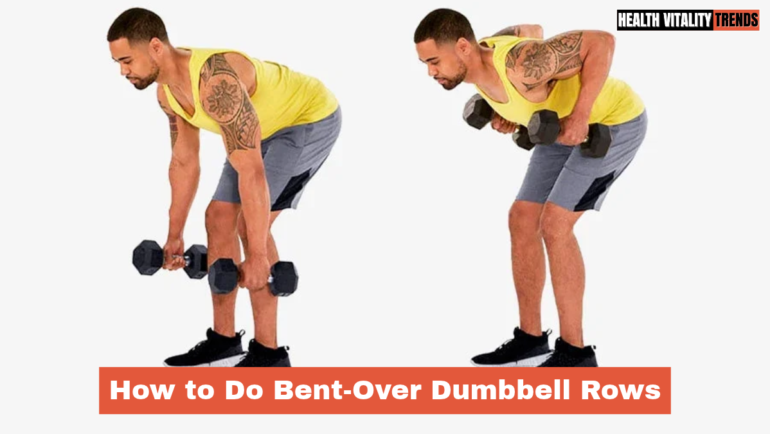
- How to Do Bent-Over Dumbbell Rows: Unlock a Deeper Stretch and Fix Muscle Imbalances
- Why We Only Train Muscles We Can See in the Mirror — And How to Fix It
Muscles Worked During One-Arm Dumbbell Rows
One-Arm Dumbbell Rows recruit several muscles responsible for shoulder movement, scapular control, and upper-body pulling strength.
Primary Movers
- Latissimus dorsi (lats): The large muscles covering much of your back. They contribute to pulling your upper arm backward and toward your torso, helping develop back width and thickness.
- Rhomboids: Located between the shoulder blades, these muscles assist with scapular retraction during the rowing movement.
- Middle trapezius: Works alongside the rhomboids to pull the shoulder blade toward the spine.
- Posterior deltoids: The rear shoulder muscles assist with shoulder extension and horizontal abduction, depending on your elbow path.
Supporting and Stabilizer Muscles
- Biceps and brachialis: Assist with elbow flexion as you pull the dumbbell upward.
- Forearm muscles: Maintain a secure grip throughout the movement.
- Erector spinae: Help stabilize your spine and maintain your torso position.
- Obliques and abdominal muscles: Resist excessive trunk rotation and help keep your torso stable.
- Gluteus maximus and hamstrings: Assist in maintaining your hip-hinge position and stabilizing your lower body.
How to Do One-Arm Dumbbell Rows Correctly
The biggest advantage of this exercise is that you can use your non-working arm for support. However, that doesn’t mean you should allow your torso to twist or swing while lifting.
Here’s how to perform each repetition correctly.
1. The Setup: Establish Your Supporting Position
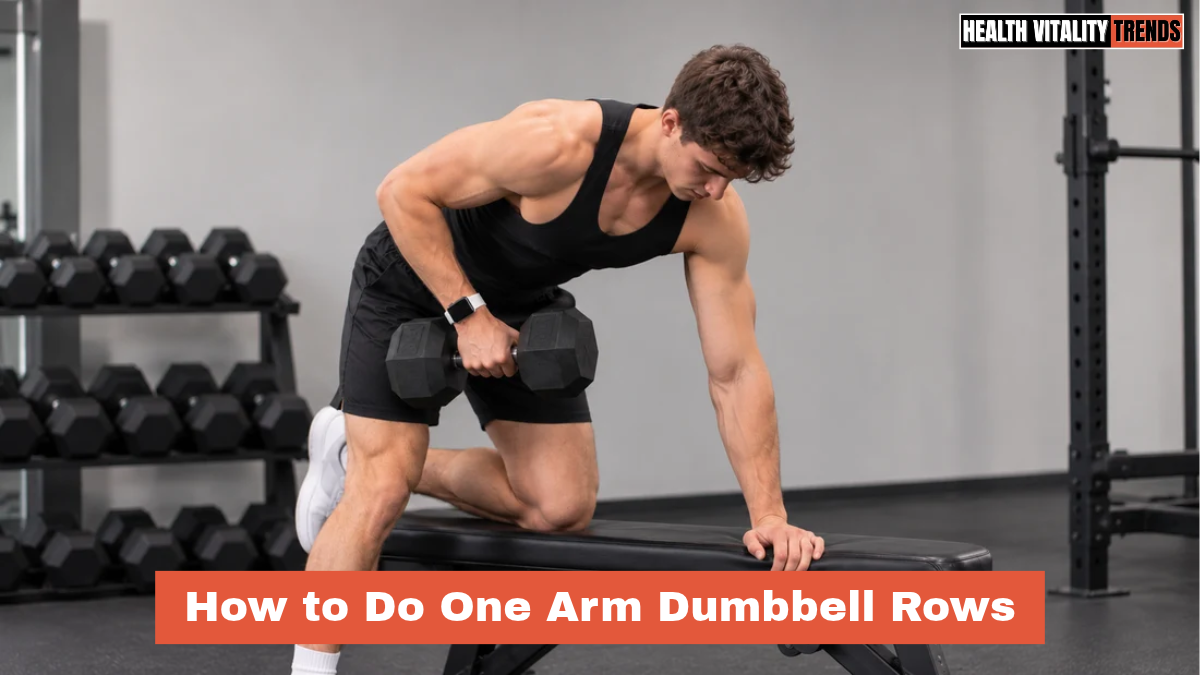
Place one knee and the same-side hand on a flat exercise bench. Position your opposite foot firmly on the floor.
Hold a dumbbell in your free hand with a neutral grip (palm facing your torso). Keep your back relatively flat, brace your core, and position your torso approximately parallel to the floor.
Allow the working arm to hang naturally beneath your shoulder.
2. The Initiation: Pull the Dumbbell Upward
Begin by driving your working elbow backward toward your hip.
Keep your wrist neutral and avoid initiating the movement with excessive shoulder or torso rotation. Your supporting hand should remain firmly planted on the bench.
Think about pulling your elbow rather than simply curling the dumbbell.
3. The Peak Contraction: Squeeze Your Back
Continue pulling until the dumbbell reaches approximately your hip or lower rib-cage area.
Briefly squeeze your back muscles at the top while keeping your shoulder away from your ear. Your elbow should move behind your torso naturally without forcing an excessive range of motion.
Avoid rotating your chest toward the working side to lift the dumbbell higher.

4. The Return: Control the Eccentric Phase
Slowly lower the dumbbell toward the floor, allowing your working shoulder blade to move forward naturally.
Fully extend your arm within a comfortable range and allow your lat to experience a controlled stretch.
This is the eccentric phase of the movement. Avoid dropping the weight or allowing your shoulder to lose control at the bottom.
Complete your repetitions on one side before switching arms.
🟧 READ MORE
- How to Do Chest-Supported T-Bar Rows: Take Your Lower Back Out of the Equation
- These Protein-Rich Foods Can Help Support Muscle Maintenance After 50
7 Common One-Arm Dumbbell Row Mistakes to Avoid
One-Arm Dumbbell Rows may feel easier than unsupported bent-over rows because your body has additional support. But lifting heavier doesn’t automatically mean better back development.
Here are the mistakes worth avoiding.
1. Moving the Dumbbell Without Controlling Its Path
Don’t treat this exercise as simply lifting a dumbbell up and down.
The concentric phase should involve driving your elbow backward, while the eccentric phase should involve controlled lowering and a comfortable stretch. Both phases contribute to productive resistance training.
2. Starting With Excessively Heavy Weights
Although the supported position allows you to handle substantial resistance, beginners should first master the movement with manageable dumbbells.
Learn to maintain a stable torso, control your shoulder blade, and move through a consistent range of motion before increasing the weight.
3. Rotating Your Torso to Lift Heavier
This is one of the most common mistakes.
When the weight becomes too heavy, lifters often rotate their chest upward to generate additional momentum. This reduces control and changes the movement mechanics.
Keep your hips and shoulders relatively square to the floor throughout each repetition.
4. Assuming a Weightlifting Belt Is Mandatory
Your core and spinal erectors still contribute to stabilizing your body, even with one hand and one knee supported.
A weightlifting belt may provide additional support during heavier lifting, but it isn’t compulsory. Proper bracing, controlled movement, and suitable resistance should come first.

5. Allowing Grip Strength to Limit Your Back Training
If your forearms fatigue before your back muscles, lifting straps can help you maintain your grip during heavier working sets.
However, don’t depend on them for every repetition. Continue developing your natural grip strength alongside your back training.
6. Neglecting Your Lower Back and Posterior Chain
Although the bench reduces stabilization demands, your erector spinae, glutes, and hamstrings still contribute to maintaining your body position.
Include appropriate posterior-chain training in your overall program. Exercises such as glute bridges and controlled back extensions can help develop these supporting muscles.
7. Ignoring Discomfort and Forcing Repetitions
If you experience discomfort in your lower back or spine while maintaining the rowing position, stop and reassess your technique.
Chest-supported T-bar rows and chest-supported seated machine rows are practical alternatives because they reduce the need to stabilize an unsupported torso.
For more practical strength-training guidance, exercise breakdowns, and workout tips, follow our Facebook page. We regularly share useful advice to help you train more effectively and build a stronger physique.
Sets, Reps, and Training Tips
One-Arm Dumbbell Rows can be used as a primary horizontal pulling exercise or as an additional movement after pull-ups and lat pulldowns.
For general muscle development, consider the following training approach:
- Working sets: 3 to 4 sets per arm.
- Repetitions: 10 – 12 repetitions per arm, with up to 15 for lighter resistance.
- Rest periods: 2 to 3 minutes between challenging working sets.
- Intensity: Select a weight that allows you to maintain controlled repetitions without rotating your torso.
Perform lighter warm-up sets before your working sets. Start with your weaker side and match the number of repetitions on your stronger side.
You don’t need to lift the heaviest dumbbell in the gym. Consistent technique and progressive overload are more important for long-term muscle development.
🟧 READ MORE
- You Can Maintain Your Physique Forever in Your 30s When These Daily Habits Back Up Your Workout
- The Regular Dead Bug Too Easy? I’m a Personal Trainer — Here’s How to Progress the Exercise
Who Should Do One-Arm Dumbbell Rows?
If your goal is to develop thicker, wider-looking back muscles, One-Arm Dumbbell Rows are an excellent addition to your training routine.
They are particularly useful for lifters who want to train each side independently and address potential strength differences.
Unlike conventional barbell rows, the supported position also makes it easier to concentrate on the working side without having to maintain the same degree of unsupported torso stabilization.
Older adults who participate in resistance training can also benefit from appropriate rowing variations to maintain upper-body strength and muscle mass. Those who struggle with the bent-over position may prefer chest-supported alternatives.
Best Alternatives to One-Arm Dumbbell Rows
You don’t have to rely on a single exercise to develop your back. Here are some useful alternatives using different equipment.
Machine Exercise
1. Single-Arm Chest-Supported Seated Row: Allows you to train one side at a time while your chest remains supported against a pad, reducing lower-back stabilization demands. (Check Exercise Here)
Dumbbell Exercises
1. Incline Chest-Supported Dumbbell Rows: Performed face-down on an inclined bench, this variation allows both arms to work independently while minimizing momentum and torso movement.
2. Bent-Over Dumbbell Rows: Uses two dumbbells simultaneously without external torso support. Both arms work independently while your lower back and posterior chain stabilize your body. (Check Exercise Here)

Cable Exercise
1. Single-Arm Seated Cable Rows: Provides continuous cable resistance while allowing independent arm movement. The seated position also makes it easier to maintain a consistent torso position.
Final Thoughts
One-Arm Dumbbell Rows are a timeless back-building exercise that combines independent arm training, substantial loading potential, and controlled rowing mechanics.
They allow you to concentrate on each side individually while developing the lats, rhomboids, and middle trapezius.
Master the movement before chasing heavier dumbbells. Maintain a stable torso, control the eccentric phase, and gradually increase resistance as your strength improves.
For short daily fitness tips, practical training advice, and guidance on building strength, join our WhatsApp community. Stay connected and keep improving your workouts with Health Vitality Trends.
Editor’s Note: This content is for informational and educational purposes only and is not intended to diagnose, treat, or cure any medical condition. Always consult your physician or a qualified personal trainer before starting any workout or nutrition program.