I Realized My Right Leg Was Doing All The Work — So I Fixed It
My right leg was dominating every workout. Here’s how I corrected the imbalance and rebuilt my weaker left leg in eight weeks.
Have you ever finished a heavy leg workout feeling that you’ve pushed both legs equally hard, only to discover that one quad is noticeably bigger or stronger than the other?
I’ve been there. And what made it worse was that I was a personal trainer who understood exercise mechanics, muscle development, and progressive overload. Yet, I had developed an imbalance without recognizing it.
My right quad was doing considerably better than my left. The difference wasn’t just noticeable in the mirror — it showed up in my measurements and unilateral strength tests.

Here’s something I’ve learned from years around the gym — Muscle symmetry isn’t simply about building an aesthetically balanced physique. It’s also about developing the ability to produce force efficiently through both sides of your body.
Significant strength differences can affect how you distribute loads during squats, lunges, running, and everyday movements. They can also create compensatory movement patterns that deserve attention, particularly when they persist under heavy loads.
The frustrating part? Even experienced lifters aren’t immune.
But discovering an imbalance isn’t a training failure. It’s an opportunity to identify what your existing program has been overlooking. And that’s exactly what happened to me.
🟧 READ MORE
- Swap Your Heavy Squats for This Single Step-Up Variation to Transform Your Stability
- Your Tight Lower Back Isn’t The Problem — Your Locked Hips Are
The Day I Discovered My Right Quad Was 1.5 Inches Bigger
I have a habit of taking regular body measurements. It’s something I’ve always considered useful for tracking muscle development, particularly when working toward bodybuilding or physique-related goals.
I measure my arms, chest, waist, thighs, and other muscle groups periodically. I don’t rely entirely on the mirror because visual changes can be difficult to judge consistently.
During one of these measurement sessions, I decided to compare both thighs.
I measured my right quad first. Everything looked normal. Then I measured the left.
I checked again.
And again.
There was approximately a 1 to 1.5 inches difference between the two thighs. My right quad was significantly bigger than my left.

Honestly, I was shocked.
How did this happen to me as a trainer? I understood the importance of balanced development, proper exercise execution, and progressive overload. Yet, somewhere along the way, I’d allowed one leg to become noticeably more developed than the other.
I wasn’t particularly concerned about the aesthetic difference alone. What bothered me was the possibility that my stronger leg had been compensating for my weaker one throughout months of training.
I knew I had to investigate before changing anything in my routine.
I Tested Both Legs Separately And Found The Real Problem
My first step was to assess unilateral strength.
I wanted to know whether the measurement difference was simply a matter of muscle size or whether my left leg was genuinely struggling to produce the same amount of force.
I selected single-leg movements and used controlled sets in the 15 to 20-repetition range to compare muscular endurance and working strength.
I paid attention to how each leg performed, how stable I felt, and whether I could maintain the same range of motion and movement control.
The results were revealing.
My right leg could handle the workload much more comfortably. My left leg fatigued sooner, struggled to maintain the same control, and couldn’t consistently match the performance of its counterpart.
That was my biggest clue.
I started looking at my regular leg training, particularly the exercises I had relied on for years — Barbell Squats and Traditional Leg Presses.
Both are excellent compound exercises. I have nothing against them. But I began questioning whether my dominant right leg had been taking more responsibility during these movements.
Think about what happens when you perform a heavy barbell squat.
Both feet are planted on the floor, and you’re moving a substantial load through a bilateral movement. Ideally, both legs contribute appropriately. However, if one side is stronger, more coordinated, or better positioned, you may unconsciously shift your weight or distribute force unevenly.
The same possibility exists during a traditional leg press.
You might feel that you’re pushing equally with both legs, but subtle differences in foot pressure, hip positioning, and movement mechanics can allow one side to contribute more.
My working theory was that my right leg had gradually become the dominant contributor, while my left wasn’t receiving the same effective training stimulus.
One scientific distinction is worth making here — this isn’t technically the bilateral deficit. That term describes a reduction in force when both limbs work together compared with the combined force they can produce separately. What I was investigating was unequal contribution and compensation during bilateral exercises.
And that distinction changed how I approached my training.
🟧 READ MORE
- Stop Doing Crunches If You Actually Want A Visible Six-Pack
- Why Looking Jacked Won’t Save You: The Bodyweight Moves That Build True Survival Strength.
I Stopped Heavy Squats And Leg Presses For Two Months
Once I identified the likely problem, I decided to make a significant adjustment.
For approximately 1.5 to 2 months, I removed heavy bilateral compound movements from my leg routine.
That meant no heavy barbell squats and no conventional heavy leg presses.
Some lifters might disagree with this decision, especially those who consider squats essential for leg development. But I wasn’t trying to build the biggest possible squat during those eight weeks.
My priority was to make both legs work independently, identify their individual limitations, and give my weaker side an opportunity to catch up.
I divided my leg training into two sessions per week, leaving approximately three days of recovery between them.
This gave me enough time to train each leg thoroughly without unnecessarily rushing into another demanding lower-body session.
I also made one important change — I stopped chasing heavier weights.
Instead, I concentrated on controlled repetitions, consistent range of motion, stability, and making sure the weaker leg was actually doing the work.
I wanted quality contractions, not impressive numbers on the weight stack.
The Unilateral Exercises That Helped Rebuild My Left Leg
I structured my routine around exercises that allowed me to train each leg independently. This gave me better control over the workload and made it easier to identify differences in strength and movement quality.
Here are the exercises I relied on.
1. Bulgarian Split Squats
Bulgarian split squats became one of my primary quad-building movements.
I placed my rear foot on a bench behind me and positioned my front foot far enough forward to maintain a stable base. From there, I lowered my body under control, allowing my front knee and hip to bend naturally before driving through the working leg to return to standing.
I avoided bouncing at the bottom or using momentum to complete repetitions.
The biggest advantage was that I couldn’t rely on my right leg to help my left. Each side had to manage its own workload, balance, and stability.
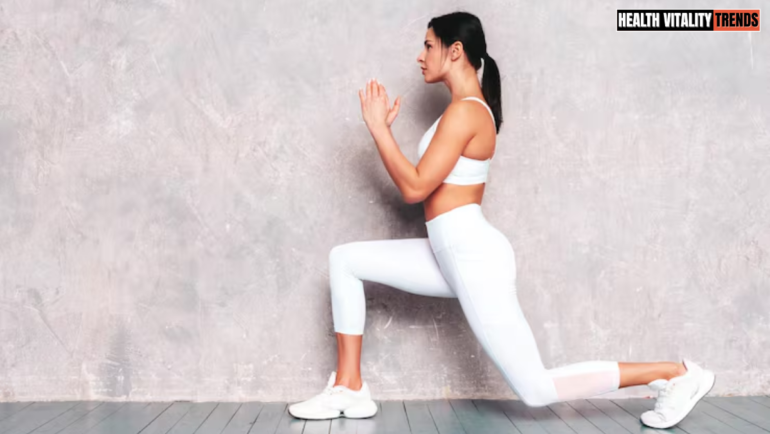
2. Weighted Walking Lunges
Walking Lunges helped me develop unilateral strength while challenging coordination and balance.
I held dumbbells at my sides, stepped forward, and lowered my body until both knees were comfortably bent. I then pushed through the front foot to move into the next repetition.
I kept my torso controlled and avoided letting my front knee collapse inward.
These were particularly useful because they required each leg to produce force while stabilizing the body through a moving pattern rather than a stationary exercise.
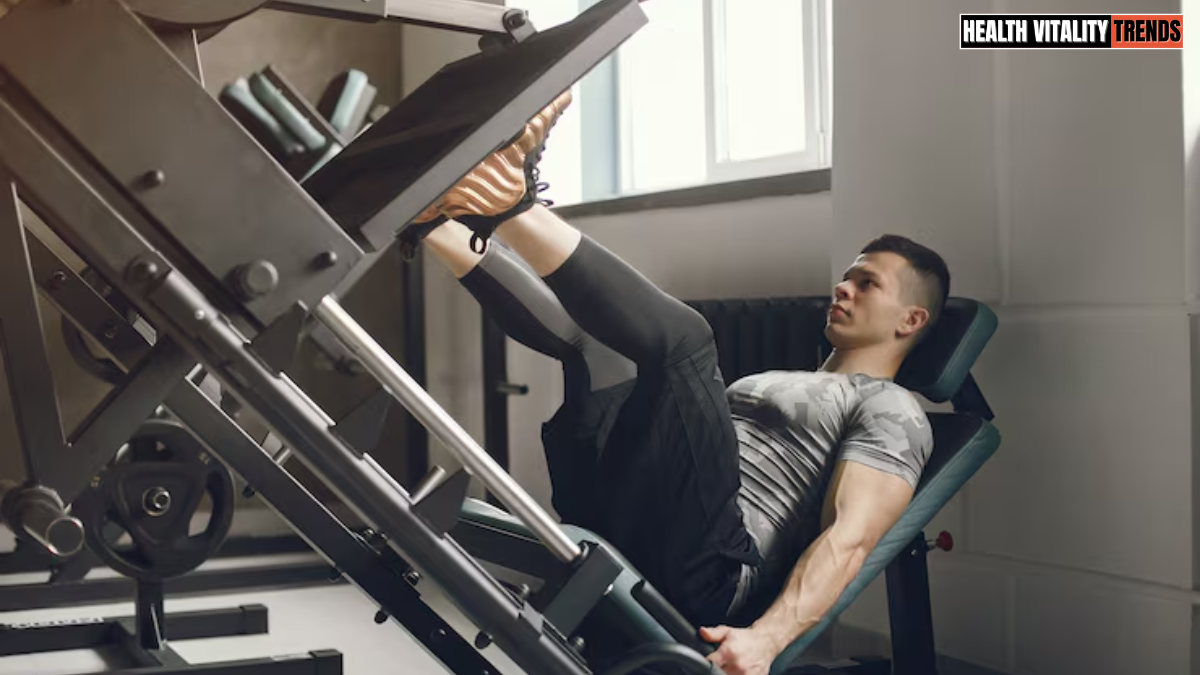
3. Single-Leg Leg Press
I also included the unilateral leg press to isolate each quad more effectively.
I positioned one foot on the platform, kept my hips firmly against the seat, and lowered the platform under control until I reached a comfortable depth.
Then I pressed through the working foot without locking out my knee aggressively.
This exercise allowed me to compare both legs under controlled conditions and adjust the resistance independently.
I deliberately avoided using the same heavy weight I previously handled with both legs. The goal was to train the weaker side properly, not prove how much weight I could move.
🟧 READ MORE
- The Simple Balance Test That Reveals Why Your Stride Is Imbalanced
- If Your Hips Always Feel Tight, Try Adding These Game-Changing Stretches To Your Routine
4. Standard Leg Extensions
Leg Extensions helped me finish my quad training with a more isolated movement.
I adjusted the machine so the knee joint aligned with its pivot point, positioned the lower leg against the padded lever, and extended my knee smoothly.
I squeezed the quadriceps briefly near the top before lowering the weight under control.
I used a manageable resistance and paid attention to whether both legs could maintain the same movement quality.
5. Single-Leg Romanian Deadlifts
For my posterior chain, Single-Leg Romanian Deadlifts were particularly valuable.
I held a dumbbell in one hand, maintained a slight bend in my working knee, and pushed my hips backward while extending the opposite leg behind me.
The important part was keeping my spine neutral and avoiding unnecessary rotation through my hips.
I lowered the weight until I felt a comfortable hamstring stretch, then drove my hips forward to return to standing.
This exercise challenged my hamstrings, glutes, and hip stability while exposing differences in balance and control between my legs.
6. Single-Leg Glute Bridges
I included Single-Leg Glute Bridges to improve glute strength independently.
I started lying on my back with one foot planted on the floor and the opposite leg extended. From there, I drove through the planted foot, lifted my hips, and squeezed the working glute at the top.
I made sure my pelvis remained level instead of allowing one side to drop.
It’s a relatively simple movement, but it can quickly expose differences in unilateral glute strength.
7. Leg Curls
Finally, I used leg curls to train my hamstrings through knee flexion.
Depending on the machine, I performed the movement one leg at a time, bringing my heel toward my glutes while keeping my hips stable against the pad.
I controlled the eccentric portion instead of allowing the weight to drop.
I wanted both hamstrings to receive a consistent stimulus without allowing the stronger side to compensate for the weaker one.
I also performed calf raises during both weekly leg sessions.
Calves are often overlooked when people focus on quad and hamstring development, but I wanted to maintain balanced lower-leg training throughout the process.
My Golden Rule: Always Train The Weaker Leg First
If there’s one principle I would recommend to anyone dealing with a noticeable strength imbalance, it’s this:
Start every unilateral exercise with your weaker leg.
In my case, that was the left leg.
I would perform the movement on my left side first, paying attention to how many controlled repetitions I could complete with the selected weight.
Then I would repeat the same exercise with my right leg.
Here’s where many lifters make a mistake.
Suppose your weaker leg manages 12 controlled repetitions, but your stronger leg can comfortably perform 15 or 16.
Don’t give the stronger leg those extra repetitions.
Stop both sides at 12.
The stronger side doesn’t need additional work when your objective is to close the gap. Giving it extra volume could simply reinforce the imbalance you’re trying to correct.

I followed the same principle with resistance. I selected weights that allowed my weaker leg to perform the prescribed repetitions with proper technique, then matched the stronger side to that workload.
I also resisted the temptation to increase resistance simply because my right leg could handle more.
This approach kept my training measurable and consistent.
And if you’re enjoying practical training lessons like this, follow our Facebook page for more real-world strength-training advice, exercise breakdowns, and fitness insights that go beyond simply lifting heavier weights.
🟧 READ MORE
- No Mat? No Problem. Use a Blank Wall for These 5 Deep Flexibility Poses
- Can You Build Muscle Without Spending Hours in the Gym?
What Happened After Two Months? The Difference Was Remarkable
After approximately eight weeks, I repeated my measurements and unilateral strength assessments.
The improvement was encouraging.
Remember that initial 1 to 1.5 inches difference between my thighs?
I had reduced it to approximately 0.2 to 0.3 inches.
My left leg had also improved considerably in strength and muscular endurance. Movements that previously felt unstable and challenging became much easier to control.
More importantly, I felt that both legs were contributing more evenly during my unilateral exercises.
Was everything perfectly symmetrical after two months?
No.
And I wouldn’t suggest that anyone should expect complete symmetry within eight weeks. Muscle development, strength adaptations, and movement control take time. Individual results also depend on training history, recovery, nutrition, and the underlying cause of the imbalance.
I also recognize that thigh circumference isn’t a direct measurement of muscle strength. Measurement technique, hydration, and other factors can influence the numbers. That’s why I considered the improvement in unilateral performance alongside the change in circumference.
But the overall progress reinforced something important for me — Identifying the weaker side and giving it consistent, appropriately controlled training attention can make a meaningful difference.
Research supports the broader approach. A 2025 systematic review and meta-analysis comparing unilateral and bilateral resistance training found that unilateral training produced greater improvements in unilateral strength, while bilateral training was more effective for bilateral strength development. Neither approach is universally superior; exercise selection should reflect the training objective.
The lesson isn’t to abandon squats forever. It’s to recognize when your training needs a different approach.

Stop Guessing. Start Tracking Both Legs
If you’re an intermediate or advanced lifter, don’t assume that because you can squat heavy or leg press impressive numbers, both legs are developing equally.
Sometimes the biggest training problems aren’t obvious until you start measuring them.
I recommend keeping a training notebook or using a digital workout tracker to record your working weights, sets, repetitions, and unilateral performance.
Periodically measure both thighs using the same anatomical landmark, consistent tape tension, and similar conditions. Compare how each leg performs during single-leg exercises, paying attention to stability, range of motion, and controlled repetitions.
And remember that a small difference between limbs is normal. The objective isn’t to force your body into mathematically perfect symmetry. It’s to identify meaningful discrepancies and address them before they become persistent movement or performance limitations.
If an imbalance is pronounced, worsening, or accompanied by pain, numbness, or unusual weakness, consider getting assessed by a qualified physical therapist or sports medicine professional.
I learned this lesson the hard way — Your strongest leg shouldn’t always be the one doing the hardest work.
Give both sides the attention they deserve, track your progress, and build a physique that performs as well as it looks.
Want more practical fitness advice? Join our WhatsApp community for short daily fitness tips, strength-training advice, nutrition insights, and actionable guidance to help you train smarter and build a stronger body.
Editor’s Note: This content is for informational and educational purposes only and is not intended to diagnose, treat, or cure any medical condition. Always consult your physician or a qualified personal trainer before starting any workout or nutrition program.