


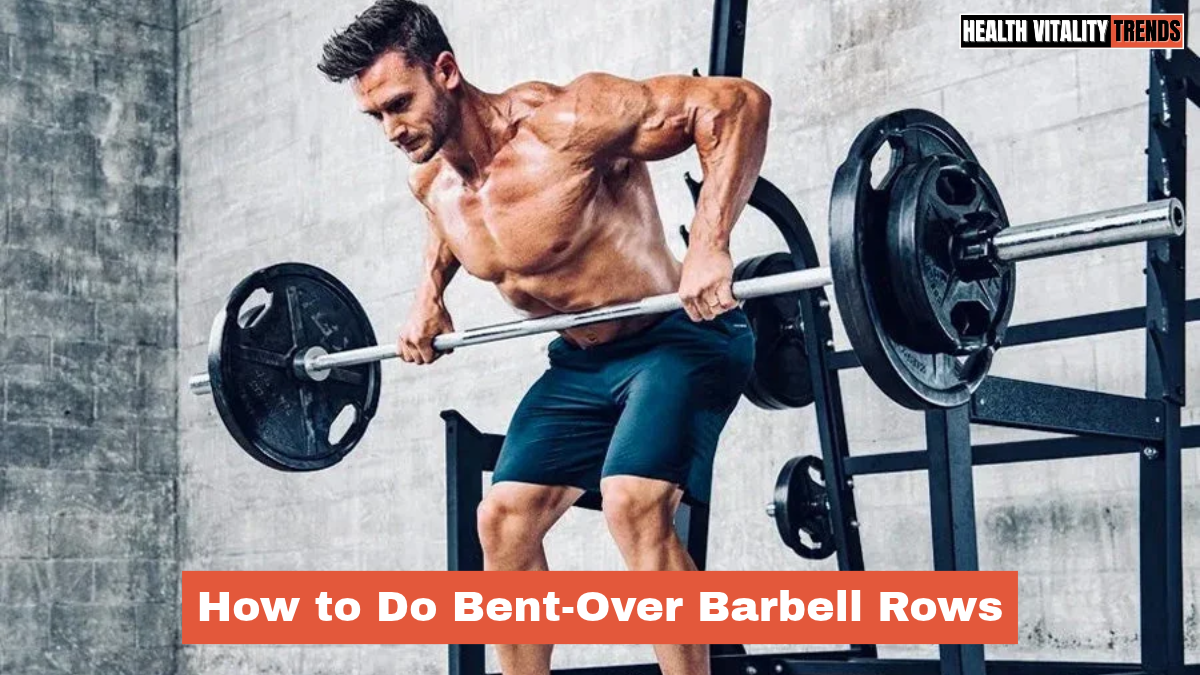
How to Do Bent-Over Barbell Rows: Master the King of Back Builders for Overall Mass
Build a thicker, stronger back with one of the most demanding compound rowing exercises.
If you want a thick, muscular back, you cannot rely entirely on pull-ups and lat pulldowns. You need rowing movements that challenge your back muscles through horizontal pulling. And when it comes to building overall back mass, few exercises have earned the reputation of the Bent-Over Barbell Row.
This is one of the foundational compound exercises in weight training. Beginners can use it to develop fundamental pulling strength and coordination, while experienced lifters can progressively overload it to build substantial back musculature.

Unlike machine-based rowing exercises, the Bent-Over Barbell Rows require you to maintain a hip-hinged position throughout the set. Your back muscles perform the pulling action, but your spinal erectors, glutes, hamstrings, and core must work continuously to stabilize your body.
That makes it more than just a middle-back exercise.
Modern lifters sometimes prefer Smith Machine Rows and Chest-Supported Variations because they reduce stabilization demands and allow more attention to the target muscles. But the traditional barbell row still deserves a place in strength training.
The secret is mastering your posture, controlling the bar path, and learning to contract your back muscles before chasing heavier weights.
🟧 READ MORE
- How to Do Smith Machine Bent-Over Rows: Lock In Your Bar Path for Pure Upper-Back Growth
- Why We Only Train Muscles We Can See in the Mirror — And How to Fix It
Muscles Worked During Bent-Over Barbell Rows
Primary Movers:
- Latissimus dorsi: The large muscles covering much of your back. They assist with shoulder extension and adduction as you pull the bar toward your torso.
- Rhomboids: Located between your shoulder blades, these muscles contribute to scapular retraction during the rowing movement.
- Middle trapezius: Works alongside the rhomboids to retract and stabilize the shoulder blades.
- Posterior deltoids: Assist with shoulder extension and horizontal abduction, depending on your elbow position.
Supporting and Stabilizer Muscles:
- Biceps brachii and brachialis: Assist with elbow flexion as you pull the bar upward.
- Forearm muscles: Maintain your grip and help control the barbell.
- Erector spinae: Stabilize your spine and maintain your hinged torso position.
- Gluteus maximus and hamstrings: Help maintain hip extension and support your hip-hinged posture.
- Core muscles: Provide trunk stabilization and help resist unwanted spinal movement.
Step-by-Step Execution: How to Do Bent-Over Barbell Rows
1. The Setup
Stand with your feet approximately hip-width apart and position a loaded barbell in front of your shins.
Bend your knees slightly and push your hips backward to establish a hip hinge. Lean your torso forward while maintaining a neutral spine.
A torso angle of approximately 30 to 45 degrees above horizontal is a practical starting position, although your exact angle will depend on your mobility and body proportions.
Grab the bar using a pronated (overhand) grip, with your hands slightly wider than shoulder-width apart.
Keep your chest open, shoulders positioned naturally, and core braced.
2. The Initiation
Begin the movement by pulling the bar toward your lower chest or upper abdomen.
Drive your elbows backward rather than simply curling the bar with your arms. Keep your wrists relatively straight and maintain your hip-hinged position.
Avoid jerking your torso upward to generate momentum. Your lower body should remain stable while your upper arms move through the rowing motion.
3. The Peak Contraction
When the bar reaches your torso, pause briefly and contract your lats, rhomboids, and middle trapezius.
Your elbows should travel behind your torso naturally, with the exact position depending on your grip width and individual mechanics.
Allow your shoulder blades to retract without excessively shrugging your shoulders toward your ears.
4. The Return
Lower the barbell slowly toward the starting position by extending your elbows and allowing your shoulder blades to move forward naturally.
Maintain your hip hinge and spinal position throughout the eccentric phase.
Once your arms are extended and the bar returns near your shins, begin the next repetition without bouncing the weight or losing your posture.
🟧 READ MORE
- 4 Functional Fitness Exercises That Support Healthy Movement For Life
- I’m a Personal Trainer — Here’s Why Yoga Can Be Useful Even if You Already Lift Weights
Common Mistakes to Avoid
The bent-over barbell row is an excellent compound exercise, but poor technique can turn it into an uncontrolled movement. Pay attention to these mistakes.
- Lifting excessively heavy weights: Beginners should first master the hip hinge, bar path, and back contraction using manageable weights. Increasing the load before learning proper mechanics often leads to excessive body movement.
- Ignoring muscular imbalances: Since this is a bilateral exercise, one arm may contribute more than the other. If you notice consistent side-to-side differences, consider incorporating light bent-over dumbbell rows or unilateral rows into your warm-up or accessory training.
- Changing your torso angle: Avoid repeatedly raising and lowering your torso during repetitions. Establish a comfortable hip-hinged position and maintain it throughout the set. A torso angle around 30 to 45 degrees above horizontal is a useful starting point, not a mandatory position.
- Rounding your lower back: Maintain a neutral spinal position and brace your core. Avoid excessive lumbar flexion or hyperextension, particularly when fatigue sets in.
- Neglecting your lower-body stabilizers: Your glutes, hamstrings, and spinal erectors help maintain the rowing position. Include appropriate warm-up movements such as glute bridges and hip hinges rather than focusing exclusively on your upper back.
- Using a weightlifting belt incorrectly: A belt is optional, not mandatory. It can provide additional feedback and support during heavy lifting when used with proper abdominal bracing, but it does not replace good technique or make excessive loading safe.
- Ignoring grip limitations: If your grip becomes the limiting factor before your back muscles are adequately challenged, lifting straps can help maintain your hold on the bar. However, develop your natural grip strength through regular training as well.
- Ignoring discomfort: If you experience persistent lower-back or spinal discomfort, stop the exercise and reassess your technique and loading. Chest-supported T-bar rows or Chest-Supported Machine Rows can be useful alternatives because they reduce the need to stabilize your torso.
- Forgetting your warm-up: Prepare your shoulders, upper back, hips, and trunk before heavy working sets. Face pulls and Light Reverse Pec Deck Flyes can warm up the posterior shoulder muscles, while lighter hip-hinge movements prepare your posterior chain.
- Cutting the range of motion: Avoid performing repeated partial repetitions simply to move heavier weights. Use a controlled range of motion that allows your arms to extend and the bar to reach your torso without compromising spinal position.
Enjoy practical strength-training advice and exercise breakdowns? Follow our Facebook page for more personal-training insights, workout techniques, and muscle-building guidance.

Sets, Reps, and Training Tips
Because the bent-over barbell row requires considerable trunk stabilization, you should approach your working sets with proper preparation.
Start with 2 to 3 progressively heavier warm-up sets before your working sets.
For muscle development, perform 3 to 4 working sets of 8 – 12 repetitions, resting approximately 2 to 3 minutes between challenging sets.
If you are a beginner, start with lighter weights and prioritize maintaining your hip hinge throughout the entire set.
Personally, I consider this exercise a strong candidate for the main rowing movement in a back workout. It allows you to train multiple back muscles together while developing overall pulling strength.
However, don’t force yourself to lift heavier every session. If maintaining your torso position becomes difficult or your lower back starts taking over the movement, reduce the weight.
A weightlifting belt can be useful for experienced lifters performing heavy sets, but wearing one is not compulsory for every repetition.
🟧 READ MORE
- Electrolytes vs Water: When Do Active People Actually Need Electrolytes?
- Does Smoking Affect Muscle Recovery?
Who Should Try Bent-Over Barbell Rows?
If your primary goal is to build a thicker, stronger back, the Bent-Over Barbell Row is worth learning.
Bodybuilders can use it to develop their lats, rhomboids, and trapezius, while strength-training enthusiasts can benefit from its combination of pulling strength and trunk stabilization.
Beginners can also benefit, provided they first develop the necessary hip-hinge technique and start with manageable loads.
Older adults can maintain back strength and muscle mass through appropriately prescribed resistance training. However, this particular exercise is not essential for maintaining an upright posture. Those with limited mobility or lower-back concerns may find supported rowing variations more suitable.
Alternative Exercises for Bent-Over Barbell Rows
If you want to develop your back without relying entirely on unsupported barbell rows, consider these alternatives.
Machine Exercises
- Chest-Supported Seated Row: Supports your chest against a pad, reducing lower-back stabilization demands while allowing you to focus on horizontal pulling. (Check Exercise Here)
- Chest-Supported T-Bar Rows: A useful alternative for developing back thickness while maintaining a supported torso position. (Check Exercise Here)
- Conventional T-Bar Rows: A compound rowing variation that recruits the lats, rhomboids, trapezius, and posterior deltoids while requiring trunk stabilization. (Check Exercise Here)
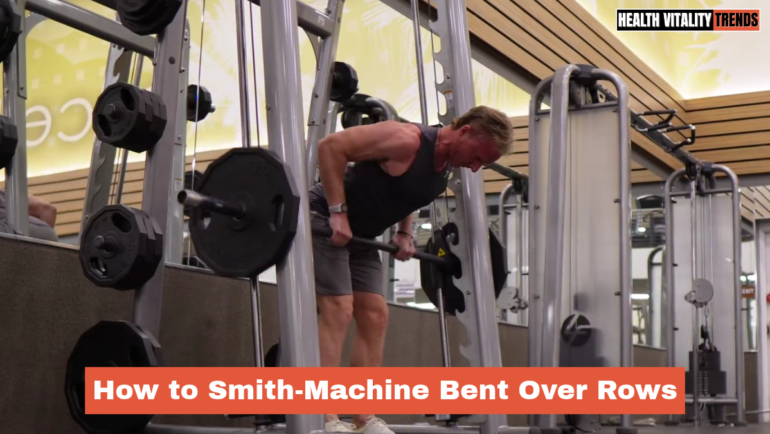
- Smith Machine Bent-Over Rows: Provides a guided bar path and allows you to perform a similar bent-over rowing movement with a fixed movement track. (Check Exercise Here)
Dumbbell Exercises
- Incline Chest-Supported Dumbbell Rows: Allow independent arm movement while the bench supports your chest and reduces lower-back loading.
- Bent-Over Dumbbell Rows: Closely resemble barbell rows but allow each arm to move independently, making them useful for addressing side-to-side differences.
- One-Arm Dumbbell Rows: Train each side separately and allow you to adjust your elbow path to emphasize different areas of the back.

Cable Exercises
- Wide-Grip Seated Cable Rows: Emphasize horizontal pulling with greater elbow flare, recruiting the rhomboids, middle trapezius, and posterior deltoids. (Check Exercise Here)
- Close-Grip Seated Cable Rows: Use a closer elbow position to emphasize shoulder extension and lat recruitment. (Check Exercise Here)
- Chest-Supported Incline Cable Rows: Combine cable resistance with chest support, providing consistent resistance while reducing the need for trunk stabilization.
Want more practical fitness advice beyond your workouts?
Join our WhatsApp community for short daily fitness tips, exercise guidance, strength-training advice, and nutrition insights. Get useful training knowledge that helps you build muscle, improve strength, and make smarter fitness decisions.
Editor’s Note: This content is for informational and educational purposes only and is not intended to diagnose, treat, or cure any medical condition. Always consult your physician or a qualified personal trainer before starting any workout or nutrition program.






1 Comment