


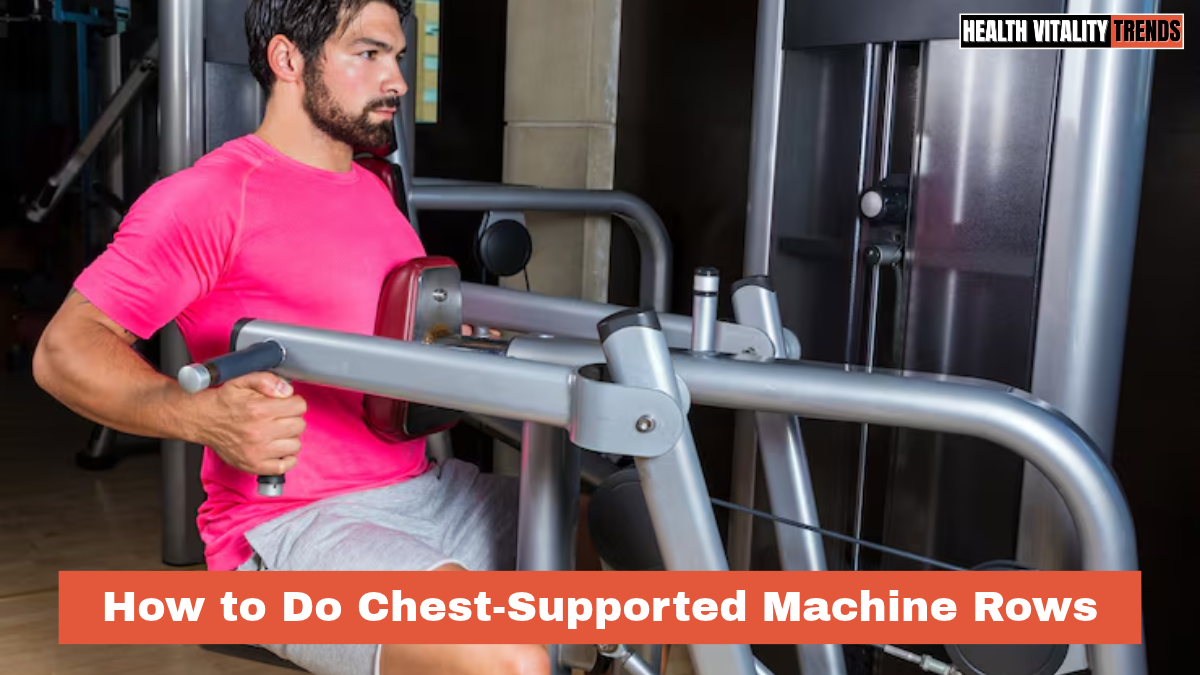
How to Do Chest-Supported Seated Machine Rows: Isolate Your Mid-Back Without Lower-Back Fatigue
Build a thicker middle back with controlled machine rows and less lower-back stabilization.
If your lower back gets tired before your back muscles during rowing exercises, Chest-Supported Seated Machine Rows can be an excellent addition to your workout.
The primary purpose of rowing exercises is to develop the muscles responsible for pulling your arms backward and controlling your shoulder blades. These include the rhomboids, trapezius, and latissimus dorsi. Developing these muscles gives your back greater muscular thickness and depth rather than focusing exclusively on width.
Unlike conventional Bent-Over Barbell or Dumbbell Rows, the Chest-Supported Seated Machine Rows allow you to rest your chest against a padded support. This reduces the need for your spinal erectors and other posterior-chain muscles to maintain an unsupported torso position throughout the exercise.
And that’s a major advantage.

You can concentrate more directly on the rowing movement without constantly worrying about maintaining your hip hinge. While no exercise is completely injury-proof, this machine-based variation is particularly useful for lifters who struggle with the additional lower-back fatigue associated with unsupported rowing.
As a personal trainer, I generally prefer using this exercise as a back-day finisher. After completing heavier compound movements, I can use the machine to accumulate additional training volume without placing the same stabilization demands on my lower back.
One limitation with some selectorized machines is their maximum weight capacity. If you eventually outgrow the available resistance, switching to a plate-loaded seated rowing machine is a practical alternative.
🟧 READ MORE
- How to Do Chest-Supported T-Bar Rows: Take Your Lower Back Out of the Equation
- Why We Only Train Muscles We Can See in the Mirror — And How to Fix It
Muscles Worked During Chest-Supported Seated Machine Rows
Primary Movers
The rhomboids and middle trapezius are important contributors to this exercise. They work together to retract your scapulae, bringing your shoulder blades toward your spine.
The latissimus dorsi also contributes to the pulling movement through shoulder extension, particularly when your elbows remain relatively close to your torso.
Your posterior deltoids assist with moving your upper arms backward, especially when using a wider grip and allowing your elbows to travel outward.
Supporting and Stabilizing Muscles
The biceps brachii, brachialis, and brachioradialis assist with elbow flexion as you pull the handles toward your body.
Your forearm muscles maintain grip strength, while your abdominal muscles help maintain trunk stability. The chest pad reduces the demand on your spinal erectors compared with unsupported rowing variations.
How to Do Chest-Supported Seated Machine Rows Correctly
1. The Setup
Adjust the seat height so the machine handles align approximately with your lower chest or upper abdomen when you grip them. Your chest should rest comfortably against the padded support.
Place both feet firmly on the floor or designated footplates. Keep your knees slightly bent and your torso upright against the pad.
For greater emphasis on your middle back, start with a pronated (overhand) grip and a relatively wide handle position, provided your machine accommodates it comfortably.
2. The Initiation
Extend your arms toward the starting position without allowing your chest to lose contact with the pad.
Let your shoulder blades move forward naturally as your arms extend, but avoid excessively rounding your upper back. Establish a firm grip, brace your core, and prepare to pull.
3. The Peak Contraction
Pull the handles toward your lower chest or upper abdomen, depending on the machine’s design.
Drive your elbows backward and allow your shoulder blades to retract naturally. At the top, squeeze your middle-back muscles briefly without shrugging your shoulders or leaning backward to generate momentum.
4. The Return
Slowly extend your arms and allow your shoulder blades to move forward under control.
This is the eccentric phase of the exercise. Resist the machine’s pulling force instead of allowing the weight stack to drop suddenly.
Maintain chest-pad contact throughout the movement and repeat.
🟧 READ MORE
- How To Do T-Bar Rows: Heavy Lifting Mechanics for Thick, Dense Lats
- How to Do Rear Delt Rows: Unlocking True Upper Back and Shoulder Balance
Common Chest-Supported Seated Machine Row Mistakes to Avoid
1. Leaning Backward During the Pull
This is one of the most common mistakes I notice with machine-based rowing exercises. Lifters sometimes lean backward to move heavier resistance, even though the machine provides a chest pad for support.
Keep your chest against the pad throughout the repetition. Your arms and back should perform the pulling movement, not your entire torso.
2. Using an Incorrect Seat Height
If the handles are positioned too high or too low, your pulling mechanics can become uncomfortable and inconsistent.
Adjust the seat so you can pull toward your lower chest or upper abdomen without excessively elevating your shoulders or changing your wrist position.
3. Performing Half Repetitions
Machine-based exercises can make it tempting to lift heavier than your actual strength allows. The result is often shortened repetitions with insufficient control.
Allow your arms to extend comfortably during the eccentric phase, then pull through a controlled range of motion. Reduce the weight if necessary. Quality repetitions matter more than the number displayed on the weight stack.
4. Using an Uncomfortable Grip
An overhand grip with a wider handle position can emphasize the rhomboids, middle trapezius, and posterior deltoids. However, it isn’t mandatory.
Avoid forcing an excessively wide grip if it causes shoulder discomfort. Choose a handle position that allows your elbows and wrists to move naturally.
5. Moving Your Feet During the Exercise
Keep both feet firmly planted on the floor or footplates. Avoid shifting your weight, lifting your heels, or placing one foot significantly ahead of the other without a specific reason.
A stable lower-body position helps you maintain consistent positioning against the chest pad.
6. Allowing Your Chest to Leave the Pad
The biggest advantage of this exercise is its chest-supported design. Leaning away from the pad defeats much of that purpose.
Maintain consistent contact throughout both the pulling and lowering phases.
Want more practical gym techniques and exercise breakdowns? Follow our Facebook page for regular strength-training advice and fitness guides.
Sets, Reps, and Training Tips
Since I generally use chest-supported seated machine rows as a finishing exercise, I prefer moderate resistance with controlled repetitions.
Start with one or two lighter warm-up sets before moving to your working sets. Perform 3 to 4 working sets of 10 – 12 repetitions, occasionally extending to 15 repetitions if your technique remains consistent.
Allow approximately 2 to 3 minutes of rest between challenging sets, adjusting the recovery period according to your effort and training goals.
Don’t chase the maximum weight available on the machine. Increase resistance gradually when you can complete your target repetitions without losing your range of motion or chest-pad contact.
🟧 READ MORE
- How to Stay Active on Your Rest Days Without Burning Out (Plus a Simple Home Yoga Flow)
- Trainers Say Pull-Ups After 40 Can Still Build Serious Upper-Body Strength — If You Avoid These Common Mistakes
Who Should Do Chest-Supported Seated Machine Rows?
If your primary goal is to develop a thicker middle back while reducing the stabilization demands placed on your lower back, this exercise is worth considering.
It’s particularly useful for bodybuilders, regular gym-goers, and lifters who find unsupported rowing exercises difficult to maintain with consistent technique.
Older adults can also benefit from appropriately programmed resistance exercises to maintain muscle mass and upper-body strength as they age. However, resistance and exercise selection should always reflect individual fitness levels and physical capabilities.
Alternative Exercises for Building Back Thickness
If you don’t have access to a chest-supported seated rowing machine, consider these alternatives:
Machine Exercises
- Chest-Supported T-Bar Rows (Check Exercise Here)
- Smith Machine Bent-Over Rows
Barbell Exercises
- Bent-Over Barbell Rows
Dumbbell Exercises
- Incline Chest-Supported Dumbbell Rows
- Bent-Over Dumbbell Rows
- One-Arm Dumbbell Rows
Cable Exercises
- Wide-Grip Seated Cable Rows
- Close-Grip Seated Cable Rows
- Chest-Supported Incline Cable Rows
Each variation offers different stabilization demands and pulling mechanics. Choose the exercise that allows you to train your back effectively with consistent technique.

Final Thoughts
Building a thick back requires more than endless pull-ups and lat pulldowns. Horizontal rowing movements deserve equal attention because they train the muscles responsible for scapular retraction and contribute to overall back development.
Chest-Supported Seated Machine Rows are an excellent way to accumulate additional back-training volume without demanding the same level of lower-back stabilization as conventional Bent-Over Rows.
Make this exercise your finishing movement, focus on controlled repetitions, and progressively challenge your back muscles.
For short daily fitness tips, practical training advice, and more exercise breakdowns, join the Health Vitality Trends WhatsApp community. Stay connected and keep improving your strength, one workout at a time.
Editor’s Note: This content is for informational and educational purposes only and is not intended to diagnose, treat, or cure any medical condition. Always consult your physician or a qualified personal trainer before starting any workout or nutrition program.


2 Comments