How to Do Bent-Over Dumbbell Rows: Unlock a Deeper Stretch and Fix Muscle Imbalances
Build a thicker, stronger back while developing balanced strength on both sides.
If you’re a beginner looking to build a thicker, stronger back, learning how to perform Bent-Over Dumbbell Rows is an excellent starting point. It’s a foundational free-weight exercise that develops the middle back while teaching you how to maintain proper body positioning under load.
The movement is very similar to Conventional Bent-Over Barbell Rows. Your torso stays hinged forward, your back remains stable, and your elbows travel backward as you pull the weights toward your torso.
But there’s one important difference.
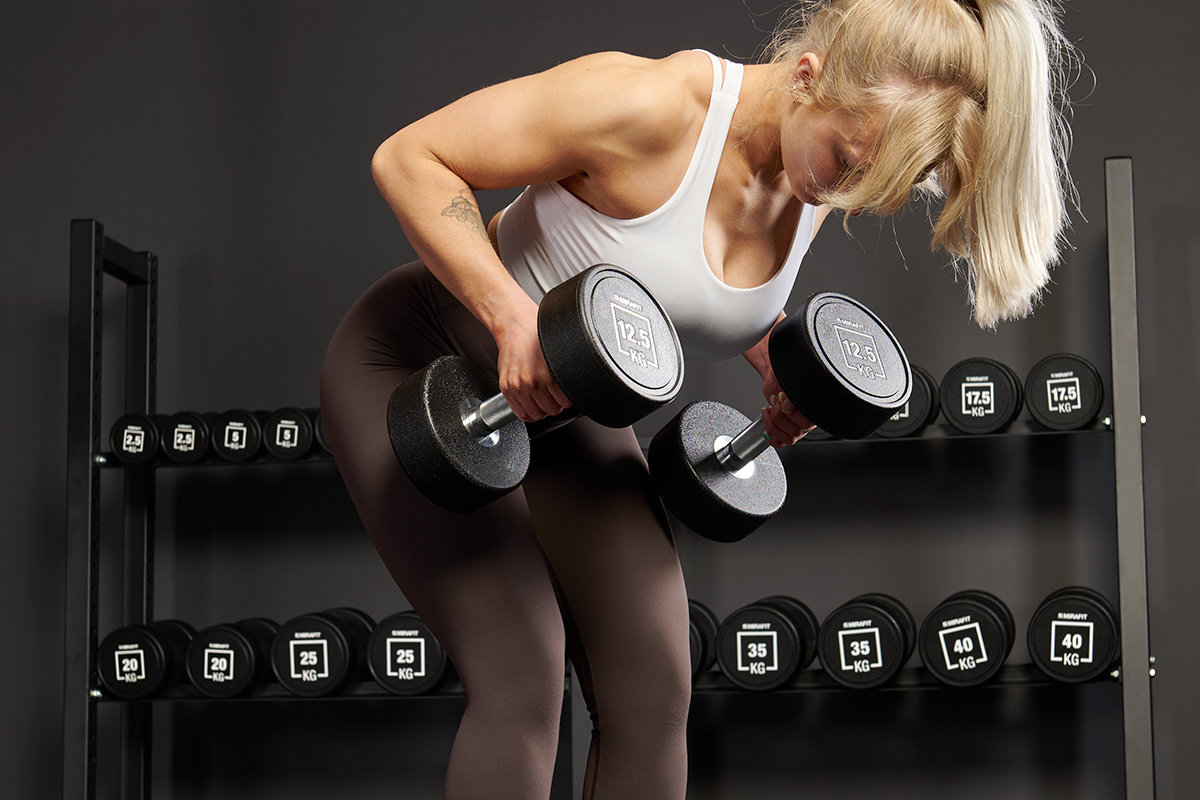
With dumbbells, each arm works independently. This allows your hands to maintain a more natural, neutral grip (palms facing each other) while giving both sides of your back the opportunity to produce force without relying on the stronger side to compensate for the weaker one.
Even with the availability of modern machines that provide additional support to the lower back, Bent-Over Dumbbell Rows remain a valuable exercise. Many experienced lifters continue using moderate weights to develop fundamental pulling strength, muscular coordination, and the ability to stabilize their torso under resistance.
And that’s what makes this exercise timeless. Machines can provide excellent alternatives, but foundational free-weight movements still have an important place in a well-rounded strength-training program.
🟧 READ MORE
- How to Do Bent-Over Barbell Rows: Master the King of Back Builders for Overall Mass
- Why We Only Train Muscles We Can See in the Mirror — And How to Fix It
Muscles Worked During Bent-Over Dumbbell Rows
Bent-Over Dumbbell Rows primarily develop the pulling muscles of your back. However, several other muscle groups work together to stabilize your body throughout the movement.
Primary Movers
- Latissimus dorsi (lats): These large back muscles contribute significantly to pulling your upper arms toward your torso, helping develop back width and thickness.
- Rhomboids: Located between your shoulder blades, the rhomboids help retract the scapulae (pull your shoulder blades toward each other).
- Middle trapezius: Works alongside the rhomboids to control scapular retraction and develop the thickness of your upper and middle back.
- Posterior deltoids: The rear shoulder muscles assist in moving your upper arms backward during the rowing movement.
Supporting and Stabilizer Muscles
- Erector spinae: These muscles run along your spine and work isometrically to maintain a stable, hinged torso position.
- Gluteus maximus and hamstrings: Help maintain hip extension and stabilize your lower body while you remain bent forward.
- Abdominal muscles: Brace your core to prevent excessive spinal movement under load.
- Biceps and brachialis: Assist with elbow flexion as you pull the dumbbells toward your torso.
- Forearm muscles: Maintain your grip throughout every repetition.
How to Do Bent-Over Dumbbell Rows Correctly
Proper body positioning is particularly important here. Unlike Chest-Supported Rows, your lower back and posterior chain must work continuously to stabilize your torso.
Here’s how to perform the movement.
1. The Setup: Establish Your Stance and Grip
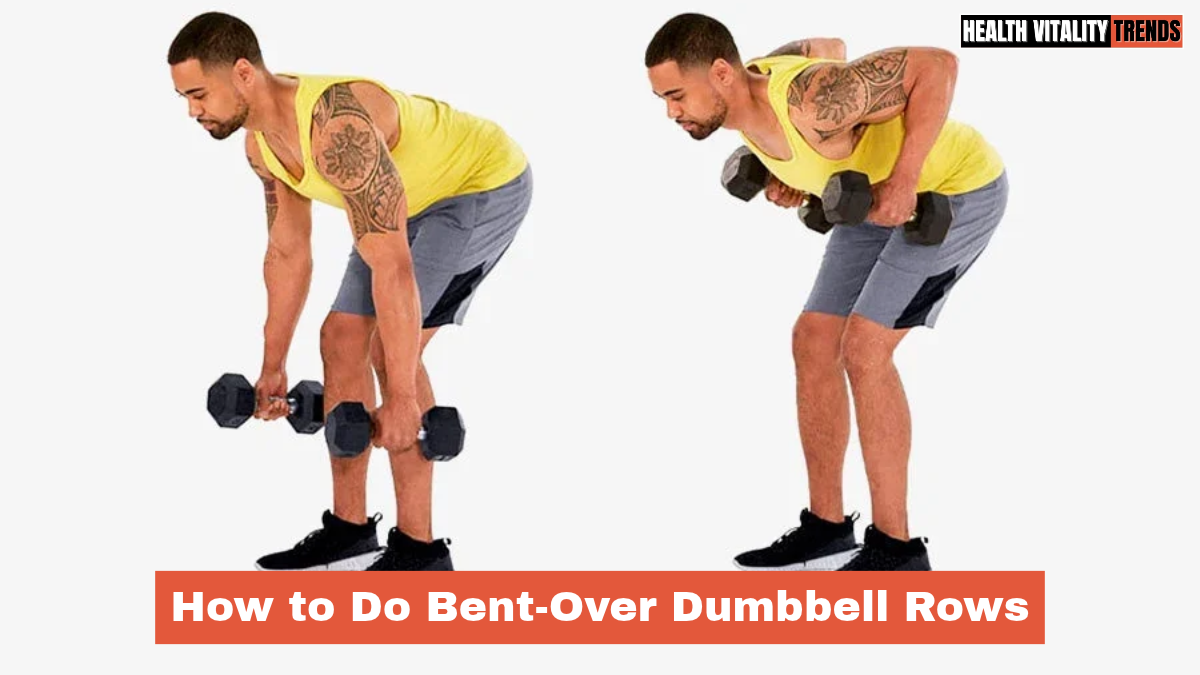
Stand with your feet approximately hip-width apart, holding a dumbbell in each hand with a neutral grip. Keep your knees slightly bent.
Push your hips backward and hinge forward until your torso is approximately 30 to 45 degrees above horizontal. Maintain a neutral spine, engage your core, and allow your arms to hang naturally beneath your shoulders.
2. The Initiation: Start the Row
From the starting position, pull both dumbbells upward by driving your elbows backward.
Keep your wrists neutral and avoid using momentum to lift the weights. Your elbows should travel close to your torso rather than flaring excessively outward.
Think about pulling with your back instead of simply curling the dumbbells with your arms.

3. The Peak Contraction: Squeeze Your Back
Continue pulling until the dumbbells reach approximately the sides of your lower rib cage or upper abdomen.
Briefly squeeze your shoulder blades together without excessively shrugging your shoulders or forcing your elbows too far behind your body.
You should feel your middle back and lats working together to complete the contraction.
4. The Return: Control the Eccentric Phase
Slowly lower both dumbbells toward the starting position, allowing your shoulder blades to move naturally forward as your arms extend.
This controlled lowering phase is the eccentric portion of the exercise. Avoid simply dropping the weights.
Allow a comfortable stretch in your back without rounding your spine or losing your hip-hinge position.
Repeat for your desired number of repetitions.
🟧 READ MORE
- Protein Quality vs. Quantity: The Hidden Factor Most Diets Ignore
- If You Are Over 60, Practicing This Essential Balance Exercise Can Protect Your Joints And Mobility
9 Common Bent-Over Dumbbell Row Mistakes to Avoid
Bent-Over Dumbbell Rows are among the foundational exercises worth mastering early in your weight-training journey. But several common mistakes can prevent you from getting the most out of them.
1. Starting With Excessively Heavy Dumbbells
If you’re a beginner, don’t rush into lifting heavy. First, learn the hip-hinge position, maintain a stable spine, and understand how to contract your back muscles.
Mastering the dumbbell variation with manageable resistance will also prepare you for more demanding exercises, including conventional barbell rows.
2. Ignoring Strength Differences Between Arms
One of the biggest advantages of dumbbell rows is independent loading. Each arm must handle its own resistance, making it easier to identify potential strength differences.
Start with your weaker side and match its repetitions with your stronger side. Avoid allowing the stronger arm to perform additional repetitions.
3. Losing Your Hip-Hinge Position
Your torso position determines the mechanics of the exercise. Aim for an approximately 30 to 45-degree torso angle above horizontal as a practical starting point.
Maintain a stable hip hinge throughout the set. Avoid repeatedly raising your torso to generate momentum or rounding your lower back as fatigue develops.
4. Assuming a Weightlifting Belt Is Mandatory
Your spinal erectors and core muscles already work to stabilize your torso. A weightlifting belt can provide additional abdominal bracing support during heavier lifting, but it isn’t compulsory for every lifter or every set.
Learn proper bracing and technique before considering additional equipment.
5. Losing Your Grip Before Your Back Gets Tired
Sometimes your forearms fatigue before your back muscles reach their intended training stimulus.
If grip strength becomes a limiting factor, lifting straps can help you maintain your hold on the dumbbells. However, continue developing your natural grip strength through regular training.

6. Using Incorrect Lower-Body Positioning
Keep your feet approximately hip-width apart, knees slightly bent, and weight distributed across your feet.
Your knees should track naturally in line with your toes. Avoid excessively bending them, locking them out, or allowing them to collapse inward.
7. Neglecting Your Posterior Chain
Your lower back, glutes, and hamstrings aren’t the primary targets, but they play an important stabilizing role.
Make sure your general warm-up prepares these muscles for the hip-hinge position. Light hip hinges, bodyweight glute bridges, and controlled back extensions can be useful options depending on your training needs.
8. Continuing Despite Lower-Back Discomfort
If maintaining the bent-over position causes discomfort, don’t force yourself to complete the exercise.
Consider Chest-Supported T-Bar Rows or Chest-Supported Seated Machine Rows. These alternatives reduce the need for your spinal erectors to maintain a prolonged unsupported torso position.
9. Using Partial Repetitions and Excessive Momentum
Avoid swinging your torso or cutting the range of motion short just to lift heavier dumbbells.
Prioritize controlled repetitions, a comfortable stretch at the bottom, and a strong contraction at the top.
For more practical exercise demonstrations, training advice, and strength-building tips, follow our Facebook page. We regularly share useful guidance to help you improve your workouts and build a stronger physique.
Sets, Reps, and Training Tips
Bent-Over Dumbbell Rows can serve as a primary back exercise or as a secondary movement after pull-ups and pulldowns.
For general muscle development, start with:
- Working sets: 3 to 4 sets.
- Repetitions: 10 – 12 repetitions, with up to 15 when using lighter resistance.
- Rest periods: 2 to 3 minutes between working sets.
- Intensity: Choose a weight that allows you to maintain proper technique throughout every repetition.
Perform a few lighter warm-up sets before your working sets. Gradually increase the resistance rather than immediately starting with your heaviest dumbbells.
And remember, a weightlifting belt isn’t a substitute for proper technique. If you cannot maintain your torso position, reduce the resistance.
🟧 READ MORE
- If Your Hips Always Feel Tight, Try Adding These Game-Changing Stretches To Your Routine
- Dead Bug vs. Plank: Here Is the Exact Core Exercise a Personal Trainer Recommends Above All Else
Who Should Do Bent-Over Dumbbell Rows?
If your primary goal is to develop thicker, stronger back muscles, this exercise deserves a place in your training program.
Many lifters spend considerable time performing pull-ups and lat pulldowns to develop their lats and create a wider-looking back. However, horizontal pulling exercises such as dumbbell rows also contribute to developing the rhomboids, middle trapezius, and other upper-back muscles.
It’s also a useful movement for experienced lifters who want to address side-to-side strength differences.
Older adults can benefit from resistance training that includes appropriate rowing variations to maintain upper-body strength and muscle mass. However, those who struggle to maintain a bent-over position may find supported rowing exercises more comfortable and practical.
Best Alternatives to Bent-Over Dumbbell Rows
If you want to develop your middle back using different equipment or reduce the stabilization demands on your lower back, consider these alternatives.
Machine Exercises
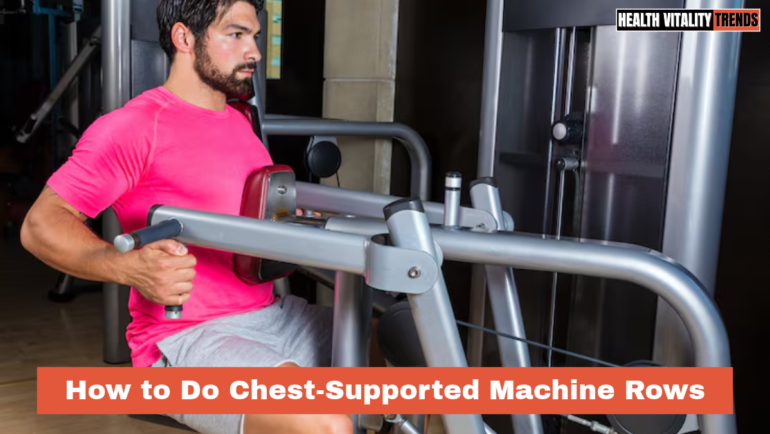
1. Chest-Supported Seated Row: Supports your chest against a pad, allowing you to concentrate on pulling resistance without maintaining an unsupported bent-over position. (Check Exercise Here)
2. Chest-Supported T-Bar Rows: A powerful horizontal pulling variation that allows you to train your middle back with additional torso support. (Check Exercise Here)
3. Conventional T-Bar Rows: Uses a landmine or T-bar setup to provide heavy rowing resistance and develop overall back thickness. (Check Exercise Here)
4. Smith Machine Bent-Over Rows: Uses a guided bar path to perform a conventional bent-over rowing movement with a fixed movement track. (Check Exercise Here)
Barbell Exercises
1. Conventional Bent-Over Barbell Rows: A foundational compound pulling exercise that allows both arms to work together while lifting a barbell. It develops the lats, rhomboids, and trapezius muscles. (Check Exercise Here)
Dumbbell Exercises
1. Incline Chest-Supported Dumbbell Rows: Performed face-down on an inclined bench, this variation minimizes lower-back stabilization demands while allowing independent arm movement.
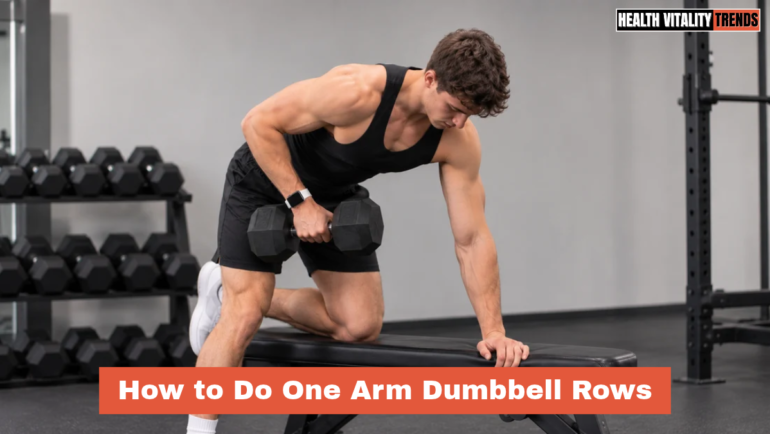
2. One-Arm Dumbbell Rows: Uses one arm at a time, with the opposite hand supported on a bench. Excellent for identifying and addressing individual strength differences. (Check Exercise Here)

Cable Exercises
1. Wide-Grip Seated Cable Rows: Uses a wider handle position to emphasize the upper and middle back, including the rhomboids and middle trapezius. (Check Exercise Here)
2. Close-Grip Seated Cable Rows: Allows a neutral or close-grip pulling position, emphasizing the lats and other back muscles. (Check Exercise Here)
3. Chest-Supported Incline Cable Rows: Combines cable resistance with chest support, providing consistent tension throughout the rowing movement.
4. One-Arm Seated Cable Rows: Allows each side to work independently while providing controlled cable resistance.
Final Thoughts
Bent-Over Dumbbell Rows are more than just another back-building exercise. They teach you how to coordinate your pulling muscles, stabilize your torso, and develop balanced strength on both sides of your body.
You don’t need exceptionally heavy dumbbells to benefit from them. Master the hip hinge, control every repetition, and gradually increase resistance as your technique improves.
For more practical fitness tips, strength-training guidance, and daily workout advice, join our WhatsApp community. Get short, actionable fitness tips to help you train smarter, build strength, and maintain a healthier lifestyle.
Editor’s Note: This content is for informational and educational purposes only and is not intended to diagnose, treat, or cure any medical condition. Always consult your physician or a qualified personal trainer before starting any workout or nutrition program.