This Quick, Full-Body Yoga Flow Is Specifically Designed To Upgrade Your Daily Balance And Mobility
You don’t have to be a professional athlete or spend hours in the gym to benefit from better mobility, balance, and stability. Whether you’re a regular fitness enthusiast, a muscle-building gym-goer, or a track and field athlete, these three physical attributes influence how efficiently your body moves and performs.

But here’s something worth testing — Can you control your body through a series of simple yoga movements without losing balance, compensating with your lower back, or struggling with restricted hips?
This six-pose sequence does two things. It exposes potential weaknesses in your movement patterns while providing a progressive routine to improve those same attributes with consistent practice.
🟧 READ MORE
- These 6 Beginner-Friendly Yoga Poses Melt Away Lower Back Tension and Tight Hips in Minutes
- Why Thoracic Mobility Is Important for Healthy Movement
1. Mountain Pose (Tadasana): Establish Your Foundation
Start by standing upright with your feet approximately hip-width apart. Distribute your weight evenly across both feet, gently engage your thighs, and keep your pelvis in a neutral position. Draw your shoulders back and down without exaggerating your posture. Hold for 30 seconds while breathing naturally.
Notice whether you shift your weight toward one leg or struggle to maintain a steady position. Mountain Pose develops postural awareness and foundational stability, which matters when lifters perform standing exercises and athletes generate force through their feet. From here, slowly shift your weight onto your right foot to enter the next pose.
2. Tree Pose (Vrikshasana): Test Your Single-Leg Balance
Transfer your weight onto your right leg and place the sole of your left foot against your right ankle or inner calf. Avoid placing it directly against your knee. Bring your palms together at chest level and maintain a fixed gaze. Hold for 20 to 30 seconds before switching sides. If your standing foot keeps shifting or your hips tilt excessively, your single-leg control needs attention.
This pose challenges ankle stability, hip control, and coordination, all essential for running, jumping, lunging, and maintaining balance during unilateral strength exercises. Return your left foot to the floor and prepare for a forward fold.
3. Standing Forward Fold (Uttanasana): Improve Posterior Chain Mobility
Stand with your feet hip-width apart and slowly hinge forward from your hips. Allow your torso to move toward your thighs while keeping your knees slightly bent if your hamstrings feel tight. Let your head and arms relax, without forcing your hands toward the floor. Hold for 20 to 30 seconds, breathing steadily.
This movement explores mobility through the hamstrings and posterior chain, areas that influence hip-hinge mechanics in exercises such as deadlifts and athletic sprinting. Slowly bend your knees, lift your torso, and step your right foot backward into a low lunge.
🟧 READ MORE
- The 50-Minute Bodyweight Circuit Every Adult Over 60 Needs for Daily Strength
- 10 Yoga Poses to Add to Your Warm-Up for Better Lunges and Squats
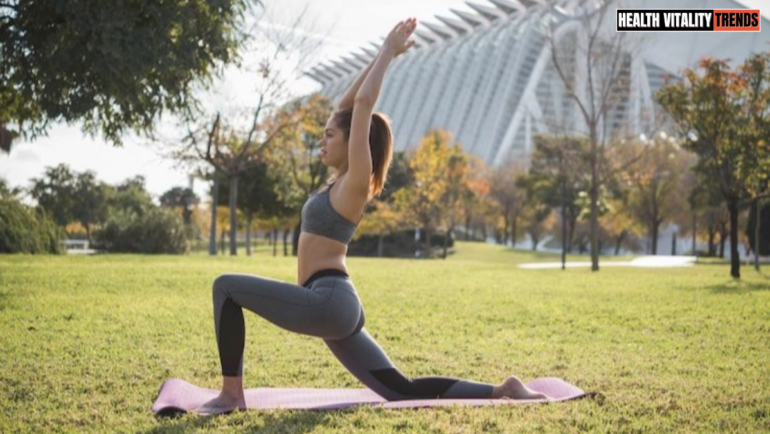
4. Low Lunge (Anjaneyasana): Open Your Hip Flexors
Place your right knee on the mat and keep your left foot planted forward, with your front knee positioned comfortably above your ankle. Gently tuck your pelvis by engaging your glutes, then shift your hips forward until you feel a stretch at the front of your right hip. Keep your torso upright and avoid arching your lower back. Hold for 20 to 30 seconds before switching sides.
Restricted hip extension can affect stride mechanics and make certain lower-body exercises feel uncomfortable. This pose encourages hip mobility while teaching you to stabilize your pelvis under movement. After completing both sides, return to your hands and knees.
Enjoy practical fitness routines that help you move and perform better? Follow Health Vitality Trends on Facebook for more trainer-guided mobility exercises, strength training advice, and everyday fitness insights.
5. Bird Dog (Parsva Balasana Variation): Build Core Stability
On a yoga mat, position yourself on all fours, with your wrists beneath your shoulders and knees beneath your hips. Tighten your abdomen gently and extend your right arm forward while simultaneously extending your left leg backward. Keep your hips facing the floor and avoid allowing your lower back to sag or rotate. Hold for 5 to 8 seconds before returning to the starting position. Repeat with the opposite arm and leg for 8 – 10 repetitions per side.
This movement challenges your core’s ability to resist unwanted spinal rotation and extension. That’s particularly useful for runners, athletes, and lifters who need to transfer force while maintaining a stable trunk. From this position, lower your torso and prepare for the final pose.
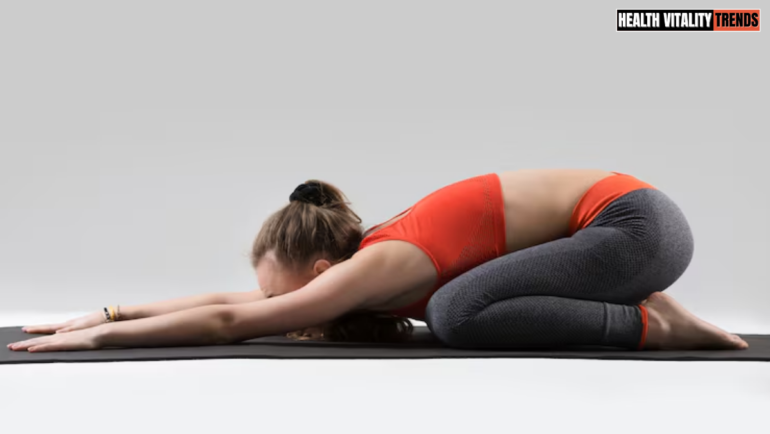
6. Child’s Pose (Balasana): Finish With Controlled Recovery
Kneel on your mat and gradually move your hips toward your heels. Extend your arms forward, allowing your forehead to rest on the floor or a cushion. If your hips feel restricted, place a folded blanket between your thighs and calves. Breathe slowly and hold for 30 to 45 seconds.
This position provides a gentle opportunity to relax your back muscles and explore comfortable hip and spinal movement after the preceding exercises. It also gives you a chance to notice whether your body feels more relaxed and controlled than when you started.
🟧 READ MORE
- Here’s a Simple Yoga Routine for Beginners Who Want Better Balance After 50
- I’m a Personal Trainer — Here’s Why Yoga Can Be Useful Even if You Already Lift Weights
Make This Six-Pose Flow Part of Your Training
Think of this sequence as both a movement assessment and a daily mobility practice. If you struggle with Tree Pose, your single-leg balance may need attention. If your forward fold feels restricted, posterior chain mobility could be an area to work on. And if Bird Dog causes your hips to rotate, your core and pelvic stability deserve more practice.

Start with one round, gradually improving your control before increasing hold times. You don’t need perfect flexibility. You need consistent, controlled movement.
For more short daily fitness tips, practical training advice, mobility routines, and nutrition insights, join the Health Vitality Trends WhatsApp Channel. Make better movement and smarter training part of your everyday routine.
Editor’s Note: This content is for informational and educational purposes only and is not intended to diagnose, treat, or cure any medical condition. Always consult your physician or a qualified personal trainer before starting any workout or nutrition program.