


How to Do Chest-Supported T-Bar Rows: Take Your Lower Back Out of the Equation
Build a thicker, stronger back without making your lower back do all the stabilizing work.
If you enjoy heavy rowing exercises but struggle to maintain your bent-over position, the Chest-Supported T-Bar Row deserves a place in your back workout.
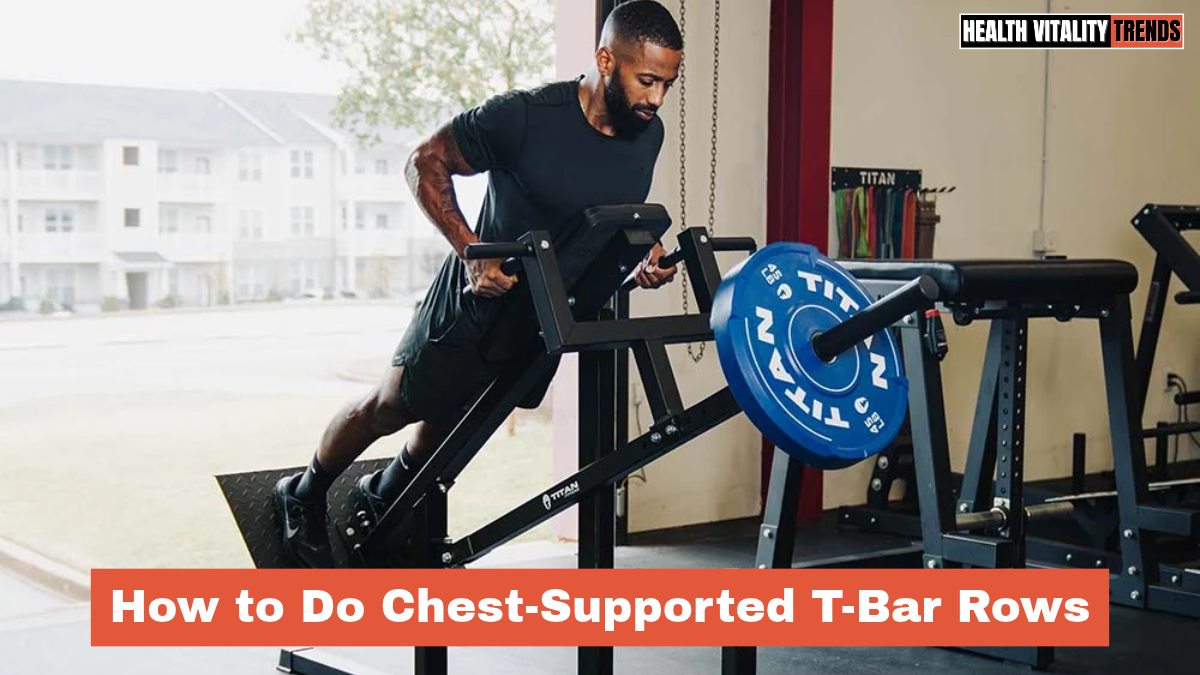
The Chest-Supported T-Bar Row follows the same basic rowing mechanics as a Conventional T-Bar Row. The biggest difference is the chest pad. Instead of holding your torso in a bent-over position using your spinal erectors, glutes, and hamstrings, you allow the machine’s chest support to stabilize your upper body.
Your feet remain planted on the footplates, your torso rests against the pad, and your arms do the pulling. This reduces the need for your lower-back muscles to work continuously as postural stabilizers.
And that’s precisely why I like this exercise.

Traditional Bent-Over Rows require you to manage two things simultaneously — Rowing the weight and maintaining a stable hip-hinge position.
With Chest-Supported T-Bar Rows, you can concentrate more directly on the pulling movement without worrying as much about your torso position.
As a personal trainer, this remains one of my favourite back exercises. I particularly like using it early in a back workout because it allows me to train the middle back with challenging resistance while limiting the additional stabilization demands placed on my lower back.
If your goal is to develop a thick, three-dimensional back rather than simply a wider appearance, this exercise deserves your attention.
🟧 READ MORE
- Why We Only Train Muscles We Can See in the Mirror — And How to Fix It
- The Rookie Gym Mistake That Guarantees Zero Muscle Growth for Months
Muscles Worked During Chest-Supported T-Bar Rows
Primary Movers
The rhomboids, middle trapezius, and latissimus dorsi are the major muscles involved in this rowing movement. The rhomboids and middle trapezius help retract your shoulder blades, bringing them toward your spine, while the latissimus dorsi contributes to shoulder extension and pulling your upper arms toward your torso.
Your elbow position and grip influence which back muscles receive relatively greater emphasis. Pulling with your elbows closer to your body generally increases the contribution of the lats, whereas a wider elbow path places greater emphasis on the upper and middle back.
Supporting and Stabilizing Muscles
Your posterior deltoids assist with shoulder extension and horizontal abduction, depending on your elbow path. The biceps brachii, brachialis, and brachioradialis assist with elbow flexion as you pull the handle toward your body.
Your forearms and grip muscles maintain a secure hold on the handles. Meanwhile, your abdominal muscles help maintain trunk stiffness, although the chest pad reduces the stabilization demands compared with unsupported rowing variations.
How to Do Chest-Supported T-Bar Rows Correctly
1. The Setup
Adjust the chest pad so it supports your torso comfortably without restricting your shoulder movement. Position your feet firmly on the footplates, with your chest against the pad and your spine in a neutral, comfortable position.
Grab the handles using the grip provided by your machine. A pronated (overhand) grip is common, but neutral-grip handles are equally useful. Choose a grip that allows comfortable shoulder and wrist positioning.
2. The Initiation
Allow your arms to extend toward the starting position without rounding your lower back or losing contact with the chest pad. Keep your shoulders controlled rather than letting them collapse forward excessively.
Brace your core, establish a firm grip, and prepare to pull. You don’t need to jerk the weight or generate momentum from your hips.
3. The Peak Contraction
Pull the handles toward your lower chest or upper abdomen, depending on the machine’s design. Drive your elbows backward while keeping your torso firmly supported.
At the top, squeeze your shoulder blades toward each other to produce scapular retraction. Hold the contraction briefly without shrugging your shoulders or excessively arching your lower back.
4. The Return
Slowly extend your arms and allow your shoulder blades to move forward naturally. This controlled lowering phase is the eccentric portion of the repetition.
Avoid dropping the weight or allowing the plates to crash. Maintain contact with the chest pad and repeat the movement through a comfortable range of motion.
🟧 READ MORE
- I Realized My Right Leg Was Doing All The Work — So I Fixed It
- Stop Doing Crunches If You Actually Want A Visible Six-Pack
Common Chest-Supported T-Bar Row Mistakes to Avoid
1. Lifting Heavier Than Your Technique Allows
One advantage of chest-supported rowing is that you don’t have to maintain an unsupported bent-over position. But that doesn’t mean you should load the machine recklessly.
Choose a weight that allows you to complete every repetition with controlled shoulder movement, a stable torso, and a full, comfortable range of motion. Don’t turn a rowing exercise into a short-range movement just to lift heavier plates.
2. Rounding Your Back
Your chest pad is there to support your torso, not to encourage excessive spinal flexion. Maintain a neutral spinal position and avoid hunching your upper back throughout the movement.
3. Using Momentum
Jerking your shoulders, bouncing against the chest pad, or using your body weight to move the handles reduces your control over the exercise. Keep the pulling movement deliberate, particularly during the eccentric phase.
4. Ignoring Your Grip Strength
Sometimes your back muscles can handle more resistance than your hands can comfortably hold. If grip strength becomes the limiting factor, lifting straps can help you maintain your hold on the handles. However, don’t use them to justify lifting more weight than your back can control.
5. Skipping Your Warm-Up Sets
I recommend performing one or two progressively heavier warm-up sets before your working sets. Start with a light load for approximately 15 – 20 repetitions, then increase the resistance gradually.
You can also perform light Face Pulls or Reverse Dumbbell Flyes to prepare your posterior deltoids. There’s no need to fatigue your biceps with additional curls before rowing; simply warming up through lighter rowing repetitions is generally sufficient.
6. Ignoring Lower-Back Discomfort
This is particularly important. If conventional bent-over rows aggravate your lower back, chest-supported variations may be a more comfortable alternative because they reduce the need to hold your torso unsupported.
However, chest support does not eliminate spinal loading or guarantee injury prevention. If you experience persistent pain, radiating symptoms, or discomfort during the movement, stop and seek an appropriate assessment rather than trying to train through it.
A Quick Training Tip: Want more practical exercise breakdowns, gym techniques, and strength-training advice? Follow our Facebook page to stay connected with our latest fitness guides.

Sets, Reps, and Training Tips
The back is a large muscle group, and developing it requires consistent training volume across different pulling movements.
I prefer using Chest-Supported T-bar Rows as one of the primary exercises during back day, particularly when the goal is to develop middle-back thickness.
Start with one or two warm-up sets, followed by 3 to 4 working sets of 10 – 12 repetitions. You can occasionally work up to 15 repetitions, provided you maintain proper technique.
Allow approximately 2 – 3 minutes of rest between challenging working sets. If this is your primary back exercise, you can give it priority early in your workout while your pulling muscles are relatively fresh.
Progressively increase resistance when you can complete your target repetitions with consistent technique. A weightlifting belt is not compulsory for this exercise, especially when the chest pad adequately supports your torso. But I recommend you wear it for safety.
🟧 READ MORE
- No Mat? No Problem. Use a Blank Wall for These 5 Deep Flexibility Poses
- If Your Hips Always Feel Tight, Try Adding These Game-Changing Stretches To Your Routine
Who Should Do Chest-Supported T-Bar Rows?
If building a thicker back is your priority, this exercise is an excellent option.
Many lifters concentrate heavily on pull-ups and lat pulldowns to develop back width. While these exercises are valuable, horizontal rowing movements provide another important stimulus for the rhomboids, trapezius, and lats.
It’s also a useful option for people who find prolonged unsupported bent-over positions uncomfortable or struggle to maintain their hip-hinge posture.
Older adults can incorporate appropriately loaded rowing exercises into resistance-training programs to help maintain upper-body strength and muscle mass. However, the resistance and training volume should match their individual fitness levels and physical capabilities.
Alternative Exercises for Building Back Thickness
You don’t need to rely exclusively on one rowing machine. Here are some alternatives that train similar back muscles using different equipment.
Machine Exercises
- Chest-Supported Seated Machine Row (Check Exercise Here)
Barbell Exercises
- Bent-Over Barbell Rows
Dumbbell Exercises
- Incline Chest-Supported Dumbbell Rows
- Bent-Over Dumbbell Rows
- One-Arm Dumbbell Rows
Cable Exercises
- Wide-Grip Seated Cable Rows
- Close-Grip Seated Cable Rows
- Chest-Supported Incline Cable Rows
Each variation offers a slightly different resistance profile, grip position, and stabilization demand. Choose the one that allows you to train your back effectively without compromising your technique.

Final Thoughts
The Chest-Supported T-Bar Row is more than just another variation of a conventional rowing exercise. It changes how your body manages stabilization during the movement, allowing you to concentrate more directly on developing your back.
If you want stronger rhomboids, thicker traps, and well-developed lats without constantly fighting to maintain an unsupported torso position, give this exercise a place in your next back workout.
And for short daily fitness tips, practical training advice, and more exercise breakdowns, join our Health Vitality Trends WhatsApp community. Stay connected and keep making every workout count.
Editor’s Note: This content is for informational and educational purposes only and is not intended to diagnose, treat, or cure any medical condition. Always consult your physician or a qualified personal trainer before starting any workout or nutrition program.



1 Comment