


How to Do Reverse Pec Deck Fly: The Ultimate Hypertrophy Hack for Stubborn Rear Delts
Build fuller, more balanced shoulders by giving your often-neglected rear delts the direct training stimulus they need.
The Reverse Pec Deck Fly is one of the most useful isolation exercises for developing your Posterior Deltoids (rear delts). If your shoulders look well-developed from the front but lack thickness and definition from the side or back, this exercise deserves a place in your shoulder workout.
The problem is that many gym-goers devote most of their shoulder training to overhead presses and lateral raises. These exercises primarily develop the anterior (front) and lateral (side) deltoids, leaving the posterior deltoids with comparatively less direct attention.

Yes, your rear delts participate in back exercises such as T-bar Rows, Barbell rows, and Dumbbell rows. But their involvement doesn’t automatically guarantee sufficient stimulus for optimal muscle growth. Their contribution depends on your rowing technique, grip, elbow path, and the amount of shoulder extension or horizontal abduction involved.
That’s where the Reverse Pec Deck Fly comes in.
Unlike compound rowing exercises, it allows you to train shoulder horizontal abduction with relatively little involvement from the larger back muscles. You can concentrate on moving through a controlled range of motion and making your rear delts do the work.
If stubborn rear delts are holding back your shoulder development, here’s how to perform this exercise correctly.
🟧 READ MORE
- The Rookie Gym Mistake That Guarantees Zero Muscle Growth for Months
- Can You Build Muscle Without Spending Hours in the Gym?
Muscles Worked During the Reverse Pec Deck Fly
Primary Mover: Posterior Deltoid
The Posterior Deltoid is the primary target. Its main function during this exercise is horizontal abduction of the shoulder, meaning it helps move your upper arms backward and away from the front of your body.
This is precisely the movement performed when you open your arms against the resistance of the reverse pec deck machine.
Supporting and Stabilizing Muscles
The Posterior Deltoid doesn’t work entirely alone. Several other muscles contribute to the movement and help stabilize your shoulder blades and upper body.
- Middle trapezius: Helps retract the shoulder blades as your arms move backward.
- Rhomboids: Assist with scapular retraction and stabilization.
- Middle and lower trapezius: Contribute to scapular control and positioning.
- Rotator cuff muscles: Help stabilize the shoulder joint throughout the movement.
Remember, the objective isn’t to squeeze your shoulder blades together as hard as possible. Excessive scapular movement can shift some of the emphasis away from the rear delts. Focus on controlled arm movement while keeping your torso stable.
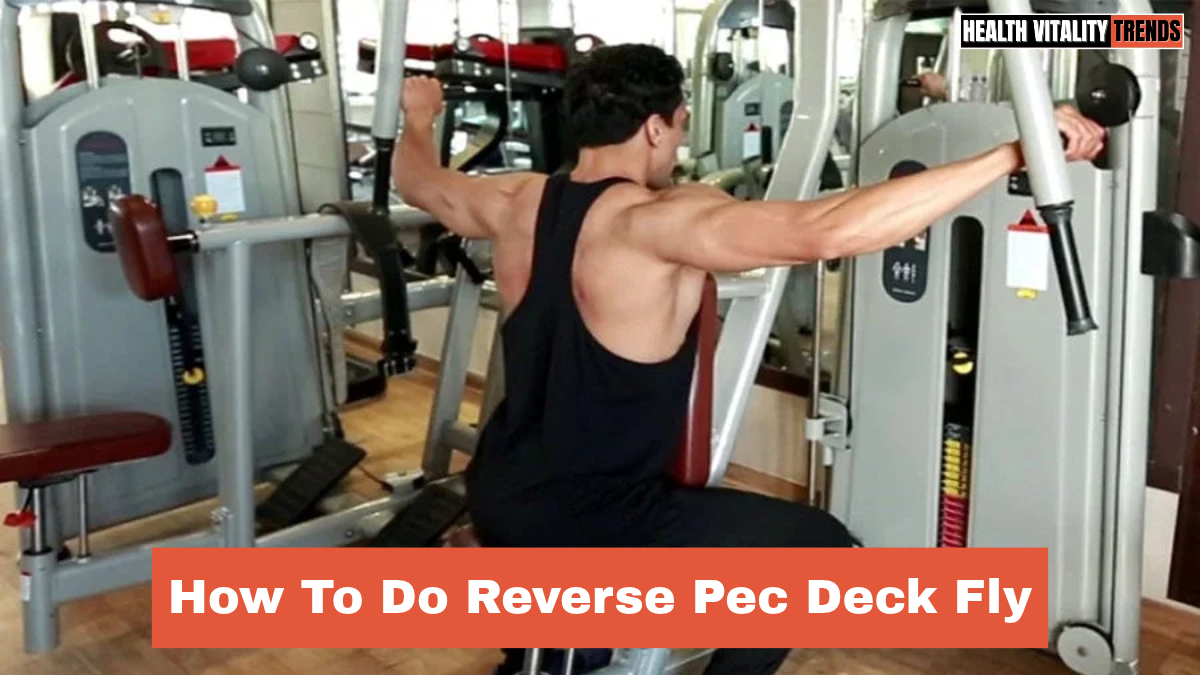
How to Do Reverse Pec Deck Fly Correctly
Follow these four steps to maximize rear-delt involvement and maintain proper shoulder mechanics.
1. The Setup: Adjust the Machine and Your Grip
Start by adjusting the seat so the machine handles are approximately level with your shoulders. Sit facing the backrest, with your chest supported firmly against it.
Depending on the machine design, grip the handles with your palms facing inward or use the designated neutral grip. Keep your feet planted firmly on the floor.
Maintain a slight bend in your elbows. Your arms shouldn’t be completely straight or excessively bent.
2. The Initiation: Start the Movement
Take a controlled breath and begin moving both arms outward and backward.
Think about leading the movement with your elbows rather than pulling with your hands. Keep your wrists neutral and avoid using momentum to move the machine.
Your torso should remain against the chest pad throughout the movement.
3. The Peak Contraction: Squeeze Your Rear Delts
Continue opening your arms until they reach approximately the line of your torso, or as far as your comfortable shoulder range of motion allows.
Pause briefly and concentrate on contracting your posterior deltoids.
You don’t need to force your arms excessively far behind your body. Going beyond your comfortable range won’t necessarily produce better muscle growth.
4. The Return: Control the Eccentric Phase
Slowly bring the handles back toward the starting position.
This is where many people make a mistake. Instead of allowing the weight to pull their arms forward, maintain control throughout the eccentric phase.
Let your rear delts lengthen under resistance without allowing the weight stack to crash or the handles to slam together.
And that’s one complete repetition.
🟧 READ MORE
- I Traded The Leg Press For Unilateral Movements — My Knees Have Never Felt Better.
- Stop Doing Crunches If You Actually Want A Visible Six-Pack
Common Reverse Pec Deck Fly Mistakes to Avoid
Even though this is a relatively simple machine exercise, a few common mistakes can prevent you from getting the rear-delt stimulus you’re looking for.
1. Lifting Too Heavy
The posterior deltoid is one of the three portions of the deltoid muscle, and you don’t need excessively heavy weights to train it effectively.
Choose a light-to-moderate resistance that allows you to perform controlled repetitions without swinging your upper body. Remember, the objective is muscle development, not moving the heaviest weight on the machine.
2. Pulling With Your Hands Instead of Your Upper Arms
Your hands are simply holding the handles. They shouldn’t be the driving force behind the movement.
Think about moving your upper arms outward while keeping your wrists neutral. If you find yourself gripping aggressively, bending your wrists, or using momentum to move the handles, reduce the resistance.
3. Losing Control During the Return
Don’t allow the weight stack to pull your arms forward uncontrollably. The eccentric phase is an important part of resistance training.
Return slowly, maintain tension, and avoid letting the machine handles crash together.
4. Using the Wrong Elbow Position
Keeping your elbows completely straight or bending them excessively can make the movement uncomfortable and change its mechanics.
Maintain a slight, consistent elbow bend throughout the repetition. Your elbow angle shouldn’t change significantly as you open and close your arms.

Sets, Reps, and Training Tips for Rear-Delt Hypertrophy
If your primary goal is posterior deltoid hypertrophy, start with 3 – 4 sets of 15 to 20 repetitions.
But don’t treat this repetition range as a strict scientific requirement. Muscle growth is possible across a broad range of loads and repetitions, provided your sets involve sufficient effort and appropriate technique.
My biggest recommendation as a personal trainer is to prioritize muscle control over weight selection. Choose a resistance that allows you to feel your rear delts working and finish most sets with approximately 1 to 3 repetitions left in reserve.
Progressively increase repetitions or resistance as your technique improves.
For additional context, current ACSM resistance-training recommendations emphasize progressive overload and sufficient weekly training volume rather than prescribing one mandatory repetition range for hypertrophy.
And if you’re building a complete shoulder routine, don’t forget to distribute your training across all three deltoid portions.
Enjoy practical training advice, exercise breakdowns, and fitness tips? Follow our Facebook page for more straightforward guidance from Health Vitality Trends.
🟧 READ MORE
- Start Here if You Want to Build Muscle Without Feeling Overwhelmed
- How Your Cortisol Levels Drop 10 Minutes After Holding This Exact Yoga Pose
Who Should Try the Reverse Pec Deck Fly?
Almost everyone who performs resistance training can benefit from giving their posterior deltoids appropriate attention.
If you’re someone who primarily trains chest, shoulders, and arms, this exercise can help address an often-neglected part of your shoulder development.
It is also useful for beginners because the machine provides external stability and makes it easier to learn controlled shoulder horizontal abduction without having to balance dumbbells.
Older adults can also consider this exercise as part of an appropriately adjusted resistance-training program, provided they can perform it comfortably and have no contraindications.
One important clarification — Strengthening your rear delts and upper-back muscles can contribute to better muscular balance and shoulder function. However, the Reverse Pec Deck alone won’t automatically correct rounded shoulders or guarantee better posture.
Reverse Pec Deck Fly Alternatives
Don’t have access to a Reverse Pec Deck Machine? No problem. You can train your Posterior Deltoids using Dumbbells, Cables, and other Machines.
Here are some useful alternatives to include in your shoulder or upper-body routine.
Machine Exercise
- Rear Delt / Row Machine: A dedicated rear-delt or rowing machine with an appropriate chest-supported setup can provide a similar horizontal-abduction movement.
Dumbbell Exercises
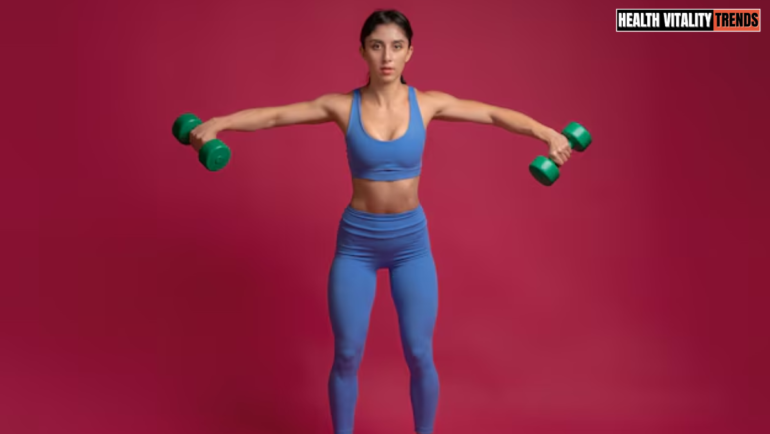
- Bent-Over Reverse Fly (Standing): Bend forward at your hips and raise your dumbbells outward, keeping a slight bend in your elbows.
- Seated Reverse Lateral Raises: Sit on a bench, lean forward, and raise the dumbbells sideways to emphasize your posterior deltoids.
Cable Exercises
- Face Pull: Pull the rope attachment toward your upper face while allowing your elbows to move outward. Your rear delts, trapezius, and external rotators contribute to this movement. (Check Exercise Here)
- Cable Reverse Fly: Stand between two cable pulleys and pull the handles outward in a controlled horizontal-abduction movement.
- Reverse Cable Crossover: Cross the cables at the starting position and open your arms outward, maintaining controlled resistance throughout the movement.
Each alternative offers slightly different resistance characteristics and movement mechanics. Choose the variation that allows you to train comfortably and progressively.

Final Thoughts
The Reverse Pec Deck Fly isn’t a complicated exercise, but it can make a meaningful difference to your shoulder-training routine.
Stop chasing heavier weights on every shoulder exercise. Give your posterior deltoids the direct attention they deserve, focus on controlled repetitions, and progressively challenge the muscle.
If you want more practical exercise guidance, strength-training advice, and short daily fitness tips, join the Health Vitality Trends WhatsApp community. Stay connected and keep improving your training, one exercise at a time.
Editor’s Note: This content is for informational and educational purposes only and is not intended to diagnose, treat, or cure any medical condition. Always consult your physician or a qualified personal trainer before starting any workout or nutrition program.



2 Comments