How to Do Cable Face Pulls: The Non-Negotiable Exercise for Posture and Shoulder Health
Learn proper face-pull technique to strengthen your rear delts, support shoulder function, and improve upper-body training.
If you regularly train your shoulders but still struggle to develop your rear delts, the Cable Face Pull might be the exercise you’re overlooking.
Face pulls are commonly included in shoulder workouts because they train the posterior deltoids while also involving several muscles responsible for controlling your shoulder blades and rotating your shoulders.

But there’s a problem.
I’ve seen plenty of gym-goers perform Face Pulls by simply pulling a rope toward their face. They move the weight, complete their repetitions, and assume they’ve trained their rear delts. In reality, their technique often turns the movement into a combination of elbow flexion, upper-back retraction, and shoulder movement without enough emphasis on the posterior deltoids.
As a personal trainer, I include face pulls in shoulder-training programs. However, I personally prefer Dumbbell Reverse Flyes when my primary objective is isolating the rear delts.
That doesn’t make Face Pulls ineffective. It simply means you need to understand what you’re training and how to perform the movement.
Let’s break it down.
🟧 READ MORE
- How to Do Reverse Pec Deck Fly: The Ultimate Hypertrophy Hack for Stubborn Rear Delts
- Want Wider Shoulders? Try These 5 Lateral Raise Variations for Your Middle Delts
Muscles Worked During Cable Face Pulls
Face Pulls are not exclusively a posterior deltoid exercise. They involve multiple muscles working together to control shoulder movement.
Primary Movers:
- Posterior deltoids: Help to move your upper arms backward through shoulder horizontal abduction.
- Infraspinatus and teres minor: These rotator cuff muscles contribute to external rotation of the shoulder, particularly when you pull the rope toward your face with your hands separating.
Supporting and Stabilizing Muscles:
- Middle trapezius: Assists with pulling the shoulder blades together.
- Rhomboids: Contribute to scapular retraction and upper-back stability.
- Lower trapezius: Helps control scapular positioning.
- Biceps brachii and brachialis: Assist with elbow flexion as you pull the rope.
- Other rotator cuff muscles: Help stabilize the shoulder joint.
This explains why Face Pulls can feel like an upper-back or biceps exercise when performed incorrectly. The objective is to coordinate these muscles without allowing your arms and upper back to dominate the movement.
How to Do Cable Face Pulls Correctly
Follow these four steps to perform face pulls with better control and posterior shoulder engagement.
1. The Setup: Adjust the Cable and Rope
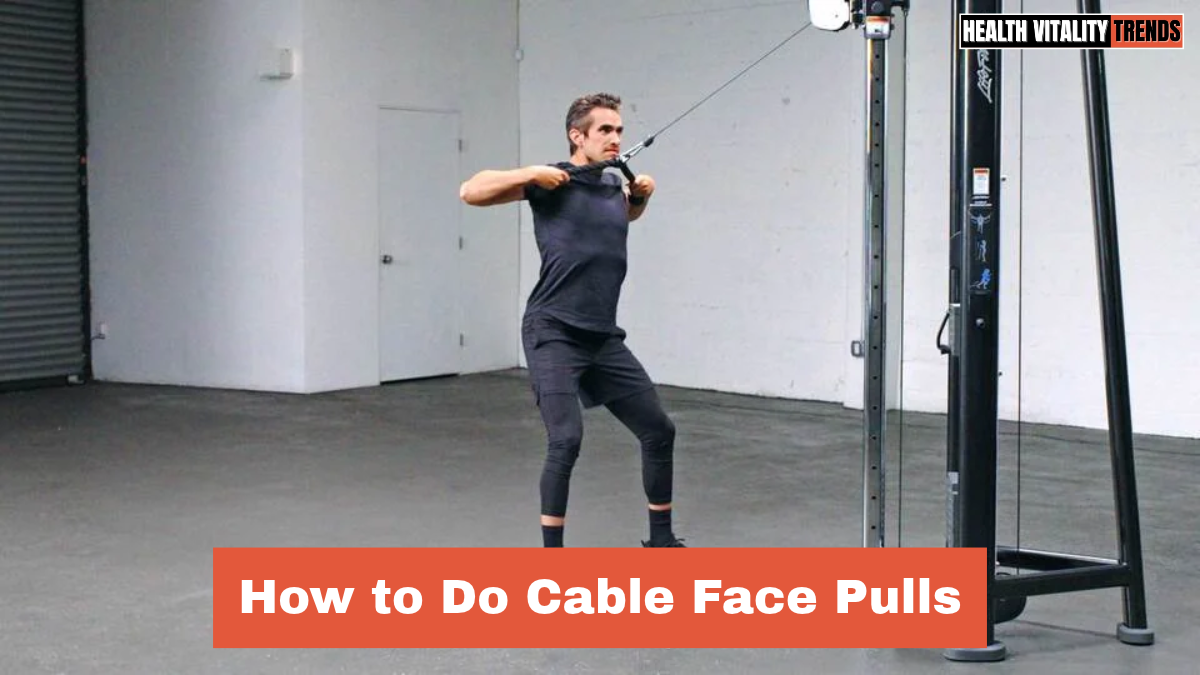
Attach a rope handle to a cable pulley positioned approximately at upper-chest to face height. Stand facing the machine and grip the rope with both hands using a neutral grip, with your palms facing each other.
Take a step backward to create tension in the cable. Stand with your feet approximately shoulder-width apart, knees slightly bent, and torso upright.
Keep your chest comfortably lifted without excessively arching your lower back.
2. The Initiation: Pull Toward Your Face
Begin pulling the rope toward your forehead or upper face.
As the rope approaches you, allow your elbows to move outward rather than keeping them tucked against your sides.
Your upper arms should move backward while your hands gradually separate. This combination helps incorporate shoulder horizontal abduction and external rotation.
Avoid leaning backward to move heavier resistance.
3. The Peak Contraction: Separate Your Hands
When the rope reaches your face, separate your hands and bring them toward the sides of your head.
Your elbows should be positioned outward, approximately in line with your shoulders or slightly below, depending on your comfort and shoulder mobility.
Pause briefly. Concentrate on your posterior deltoids and upper-back muscles contracting together.
Don’t force your elbows excessively behind your body or exaggerate the movement.
4. The Return: Control the Eccentric Phase
Slowly extend your arms and allow your hands to move toward the starting position.
Maintain control as the cable pulls the rope forward. Your shoulders should remain stable, and your torso should not collapse or round forward.
Don’t let the weight stack crash down. The return is part of the exercise, not a break between repetitions.
🟧 READ MORE
- Why We Only Train Muscles We Can See in the Mirror — And How to Fix It
- The Shoulder Exercise Personal Trainers Swear By for Joint-Friendly Growth
Common Face Pull Mistakes to Avoid
Face pulls are relatively easy to learn, which is probably why people sometimes underestimate how much technique matters. Here are five mistakes I recommend avoiding.
1. Treating Face Pulls as a Heavy Lifting Exercise
Unlike heavy compound movements, Face Pulls are generally better suited to controlled accessory work.
Don’t increase the resistance simply because you can pull a heavier weight. Excessive loading can encourage you to lean backward, shrug your shoulders, and use momentum.
Choose a manageable weight that allows you to maintain proper technique.
2. Forgetting the Rear Delts
This is probably the biggest mistake.
If you’re simply pulling the rope toward your face without controlling your upper-arm movement, you’re missing an important part of the exercise.
Concentrate on moving your elbows outward and backward while separating your hands near the end of the movement.
Your biceps will naturally assist with elbow flexion, but they shouldn’t become the primary focus of your effort.
3. Rounding Your Shoulders and Upper Back
Maintain an upright torso throughout the exercise. Avoid collapsing your chest, rounding your upper back, or allowing your shoulders to roll forward uncontrollably.
Your shoulder blades should move naturally as your arms travel, rather than remaining artificially pinned together.
4. Using Too Much Weight
Face Pulls aren’t a competition to see who can lift the heaviest cable stack.
If you cannot complete the movement without swinging your body, shrugging, or shortening your range of motion, reduce the resistance.
Remember, controlled repetitions are more valuable than impressive-looking numbers on the weight stack.
5. Neglecting the Return Phase
The eccentric phase deserves as much attention as the pulling movement.
Don’t allow the cable to drag your arms forward or let the weight stack slam down. Extend your arms gradually while maintaining control and allowing your posterior shoulder muscles to lengthen under resistance.

Sets, Reps, and Training Tips for Face Pulls
For general shoulder development and posterior deltoid training, you can start with:
- Sets: 3 to 4
- Repetitions: 15 – 20
- Resistance: Light to moderate
- Rest: 60 – 90 seconds between sets
This is a practical starting point, not a mandatory prescription. Adjust the training volume according to your overall shoulder and upper-back workload.
My biggest training tip is simple
Learn to coordinate your shoulder movement before increasing the resistance.
You should feel your rear shoulders and upper back contributing to the movement. If you’re struggling to maintain your technique, lower the weight.
And remember, face pulls are an accessory exercise. You don’t need to perform excessive sets or train them to failure every time. Your posterior deltoids also receive work from other shoulder and back exercises.
Want more practical exercise guides and personal-trainer insights? Follow Health Vitality Trends on Facebook Page for regular strength-training and fitness advice.
🟧 READ MORE
- The Rookie Gym Mistake That Guarantees Zero Muscle Growth for Months
- Stop Doing Crunches If You Actually Want A Visible Six-Pack
Who Should Try Cable Face Pulls?
Face Pulls can be useful for beginners, experienced lifters, bodybuilders, and older adults who want to include controlled posterior shoulder and upper-back training in their routines.
If your shoulder workouts consist almost entirely of overhead presses and lateral raises, Face Pulls offer a different movement pattern that involves the posterior deltoids and external rotators.
They’re also useful for people who spend considerable time sitting at desks or working in front of computers. Strengthening the muscles around the shoulder blades can form part of a broader exercise program supporting shoulder function.

However, let’s get one thing clear
Face pulls aren’t a guaranteed solution for rounded shoulders, poor posture, or shoulder pain. Posture depends on several factors, and strengthening one group of muscles doesn’t automatically correct it.
If you have existing shoulder pain or a previous injury, choose exercises and resistance appropriate to your condition rather than assuming Face Pulls are automatically safe.
Face Pull Alternatives for Posterior Deltoid Development
Not everyone enjoys Cable Face Pulls. And that’s perfectly fine. You have several other options for training your posterior deltoids.
Machine Exercises
- Rear Delt / Row Machine: Provides a supported pulling movement that can emphasize the rear delts when performed with an appropriate elbow path.
- Reverse Pec Deck Fly: An excellent isolation option for directly training shoulder horizontal abduction. (Check Exercise Here)
Dumbbell Exercises
- Bent-Over Reverse Fly (Standing): Bend forward at your hips and raise your dumbbells outward while maintaining a slight elbow bend.
- Seated Reverse Lateral Raises: Sit on a bench, lean forward, and raise your arms sideways to target the posterior deltoids.
Cable Exercises
- Cable Reverse Fly: Uses cable resistance to train the rear delts through controlled horizontal abduction.
- Reverse Cable Crossover: Cross the cables at the starting position and open your arms outward against resistance.
Each exercise has its own advantages. If your primary goal is rear-delt hypertrophy, reverse pec deck flyes and reverse fly variations are particularly useful alternatives to consider.
Final Thoughts
Face Pulls are a valuable addition to a well-rounded shoulder-training routine, but their effectiveness depends on how you perform them.
Don’t turn every repetition into a heavy cable pull. Focus on controlled movement, proper shoulder positioning, and coordinating your rear delts with your upper-back muscles.
And remember, you don’t have to choose between Face Pulls and Reverse Dumbbell Flyes. Both can have a place in your shoulder program.
If you want more practical strength-training advice, exercise breakdowns, and short daily fitness tips, join the Health Vitality Trends WhatsApp community. Stay connected and make every workout count.
Editor’s Note: This content is for informational and educational purposes only and is not intended to diagnose, treat, or cure any medical condition. Always consult your physician or a qualified personal trainer before starting any workout or nutrition program.