Why We Only Train Muscles We Can See in the Mirror — And How to Fix It
Your physique may look strong from the front while important muscles remain undertrained. Here’s how to correct that.
Let’s say you’re someone who takes weight training seriously. You never miss your workouts, follow a reasonably disciplined nutrition plan, and make sure you’re eating enough protein to support muscle growth.
That’s excellent. Consistency is one of the most important habits you can develop in fitness.
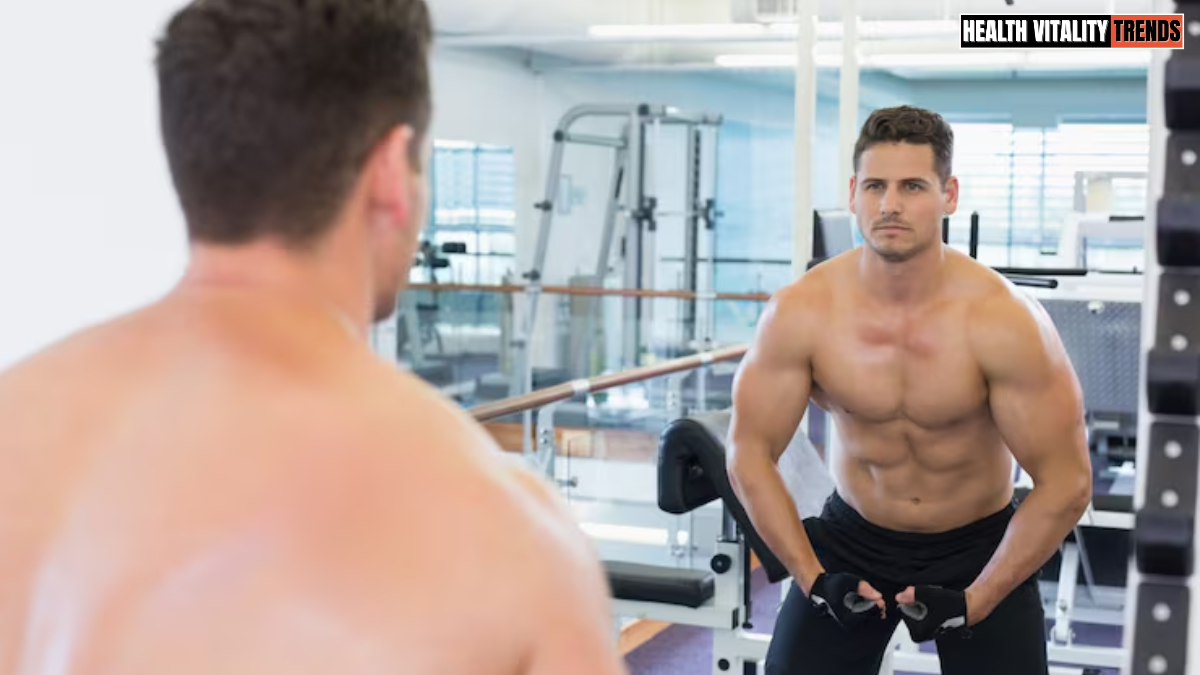
But let me ask you something — Are you training your entire body equally, or are you repeatedly giving more attention to the muscles that you see only in the mirror?
As a personal trainer, I’ve noticed a common pattern among general gym-goers. They spend considerable time developing their chest, biceps, quadriceps, and front shoulders, yet give considerably less attention to the muscles at the back of their bodies.

It isn’t necessarily intentional. People naturally gravitate toward exercises that produce visible changes in the areas they care about most.
Men might prioritize bigger arms, a fuller chest, and broader shoulders. Women might focus more on their glutes, legs, and shoulders. These are perfectly reasonable training goals.
But here’s the problem
A well-developed physique requires more than developing the muscles you can see.
Your posterior deltoids, rhomboids, hamstrings, glutes, and several smaller supporting muscles deserve attention too. Neglecting them can leave gaps in your muscular development, strength, and physical capabilities.
Let’s identify the muscles you’re probably overlooking and the exercises I recommend to start training them.
🟧 READ MORE
- The Rookie Gym Mistake That Guarantees Zero Muscle Growth for Months
- Can You Build Muscle Without Spending Hours in the Gym?
The Muscles You Cannot See in the Mirror Are Just as Important

When I am talking about training muscles behind the mirror, I’m referring primarily to posterior-chain muscles, smaller supporting muscle groups, and other areas that don’t receive enough attention in conventional gym routines.
Here are 10 areas worth examining:
1. Triceps long head: The long head contributes significantly to upper-arm mass and crosses the shoulder joint, unlike the other two triceps heads.
2. Posterior deltoids: These muscles contribute to shoulder horizontal abduction and external rotation, helping with movements such as reverse flyes.
3. Lower lats: The lower fibers of the latissimus dorsi contribute to shoulder extension and adduction, supporting pulling movements.
4. Rhomboids and middle trapezius: These muscles help retract and stabilize your shoulder blades.
5. Hamstrings: Located at the back of your thighs, they contribute to knee flexion and hip extension.
6. Gluteal muscles: Particularly the gluteus maximus, medius, and minimus, which contribute to hip extension, pelvic control, and hip stability.
7. Rotator cuff: This group consists of the supraspinatus, infraspinatus, teres minor, and subscapularis. These muscles help stabilize and control your shoulder joint.
8. Tibialis anterior: Located along the front of your lower leg, this muscle dorsiflexes your ankle, bringing your toes toward your shin.
9. Erector spinae: These muscles run along your spine and help extend and stabilize your trunk.
10. Hip adductors and abductors: These muscle groups help control movement of your thighs toward and away from your body’s midline. The sartorius is another important thigh muscle, but it isn’t an adductor or abductor.
And here’s something I want you to remember
These muscles aren’t necessarily inactive just because you don’t train them directly. Many participate in compound exercises. The problem is that indirect involvement doesn’t always provide sufficient stimulus for your individual development goals.
🟧 READ MORE
- I Realized My Right Leg Was Doing All The Work — So I Fixed It
- Your Tight Lower Back Isn’t The Problem — Your Locked Hips Are
What Happens When You Keep Ignoring These Muscle Groups?
You might be training five or six days a week and still develop an imbalanced physique. Here are four signs I would look for as a trainer.
1. Some muscles develop while others lag behind.
You might have impressive triceps development but insufficient attention to the long head. Your quadriceps might be considerably stronger and more developed than your hamstrings. Similarly, your shoulders might look broad from the front but lack posterior development.
2. Your posture and movement control may suffer.
If you repeatedly train chest-pressing muscles without giving sufficient attention to your upper-back musculature, you may develop strength differences between opposing muscle groups.
However, rounded shoulders aren’t automatically caused by weak rhomboids or tight chest muscles. Posture is influenced by several factors, including mobility, habitual positioning, strength, and individual anatomy.
3. Your physique may lack overall muscular balance.
A developed chest combined with comparatively underdeveloped upper-back muscles, or large quadriceps with relatively small hamstrings, can create noticeable differences in muscular proportions.
4. Your strength development may become incomplete.
Neglecting hip extensors, hamstrings, shoulder stabilizers, and other supporting muscles means missing opportunities to develop strength across different movement patterns.
The solution isn’t to stop training your favorite muscles. It’s to stop allowing them to dominate your entire training program.
If you enjoy these practical training corrections and want more insights from a personal-trainer perspective, follow our Facebook page. I regularly share exercise guidance to help you develop a stronger, more balanced physique.
🟧 READ MORE
- I Traded The Leg Press For Unilateral Movements — My Knees Have Never Felt Better.
- Stop Doing Crunches If You Actually Want A Visible Six-Pack
10 Exercises to Start Training Your Neglected Muscles
You don’t need to introduce all these exercises into your next workout at once. But you can start by identifying the muscle groups that need more attention and add these exercise movements into your existing routine next time.
1. Reverse Pec Deck – Posterior Deltoids
- Sit facing the machine with your chest supported against the pad.
- Hold the handles with your arms approximately shoulder-height, keeping a slight bend in your elbows.
- Move your arms outward and backward by contracting your posterior deltoids.
- Stop when your arms reach approximately the line of your torso.
- Slowly return to the starting position without allowing the weights to slam together.
Alternatives: Face Pulls, Rear-Delt Rows, and Chest-Supported Reverse Flyes.
2. Band External and Internal Rotations – Rotator Cuff
External rotation: Attach a resistance band at approximately your elbow height. Stand sideways to the anchor, hold the band with your outside hand, and keep your elbow bent at 90 degrees against your torso. Rotate your forearm outward without moving your elbow away from your body.
Internal rotation: Turn around so the band pulls your forearm outward. Keeping your elbow tucked against your side, rotate your forearm inward toward your abdomen.
Perform both movements slowly with light resistance. Avoid using your shoulder or torso to generate momentum.
3. T-Bar Rows – Rhomboids and Middle Trapezius
- Stand over the T-bar machine or use a supported T-bar row setup.
- Grip the handles and maintain a stable trunk.
- Pull the handles toward your lower chest or upper abdomen.
- Allow your shoulder blades to move backward naturally as you pull.
- Pause briefly, then lower the weight under control.
Avoid excessively shrugging your shoulders or jerking your torso.
Alternatives: Seated Cable Rows, Bent-Over Barbell Rows, and Dumbbell Rows.
4. Barbell Hip Thrusts – Gluteus Maximus
- Position your upper back against a bench and place a padded barbell across your hips.
- Keep your feet approximately hip-width apart and your knees bent.
- Lower your hips toward the floor under control.
- Push through your feet and extend your hips until your torso approaches a horizontal position.
- Squeeze your glutes at the top without excessively arching your lower back.
Alternatives: Romanian Deadlifts, Bulgarian Split Squats, and Single-Leg Romanian Deadlifts.
5. Lying Leg Curls – Hamstrings
- Lie face down on the machine with the roller positioned just above your heels.
- Hold the machine handles and keep your hips against the bench.
- Bend your knees and bring your heels toward your glutes.
- Pause briefly when you reach your comfortable range of motion.
- Slowly lower the weight until your knees are nearly straight.
Avoid lifting your hips or using momentum.
Alternatives: Romanian Deadlifts, Single-Leg RDLs, and Nordic Hamstring Curls.
🟧 READ MORE
- Why Looking Jacked Won’t Save You: The Bodyweight Moves That Build True Survival Strength.
- Swap Your Heavy Squats for This Single Step-Up Variation to Transform Your Stability
6. Seated Tibialis Raises – Tibialis Anterior
- Sit on a tibialis raise machine with your feet positioned against the footplate.
- Keep your heels supported and allow your toes to point slightly downward.
- Pull your toes and forefoot upward toward your shins.
- Pause briefly at the top.
- Slowly lower your feet and repeat.
The movement is called Ankle Dorsiflexion. It trains a muscle that conventional calf raises don’t directly target.
Alternative: Resistance-Band Dorsiflexion.
7. Barbell Good Mornings – Erector Spinae and Posterior Chain
- Position a lightly loaded barbell across your upper back, as you would for a squat.
- Stand with your feet approximately shoulder-width apart and knees slightly bent.
- Push your hips backward while hinging forward at the hips.
- Maintain a stable, neutral spinal position throughout the movement.
- Lower until you feel a comfortable hamstring stretch, then extend your hips to return upright.
Don’t turn this into a squat or allow your lower back to round.
Alternative: Machine Back Extensions.
This is an advanced hip-hinge exercise. Start light and master the movement before increasing resistance.
8. Underhand Seated Cable Rows – Lower Lats
- Sit facing the cable machine and grip a suitable close-grip handle with your palms facing upward.
- Keep your torso upright and your knees slightly bent.
- Pull the handle toward your lower abdomen by driving your elbows backward.
- Avoid excessive torso movement or shrugging.
- Slowly extend your arms to return to the starting position.
Alternatives: Underhand Barbell Rows, Straight-Arm Lat Pulldowns, and Incline Single-Arm Lat Pulldowns.
Remember that no rowing grip isolates the lower lats completely. Your latissimus dorsi works as a broad muscle, with different fibers contributing to shoulder movement.
9. EZ-Bar Skull Crushers – Triceps Long Head
- Lie flat on a bench while holding an EZ-bar with a comfortable grip.
- Extend your arms above your chest, keeping your upper arms relatively stable.
- Bend your elbows and lower the bar toward your forehead or slightly behind your head.
- Extend your elbows to bring the bar back to the starting position.
Use a manageable weight and avoid allowing your elbows to flare excessively.
Alternatives: Overhead Cable Triceps Extensions and Triceps kickbacks. Overhead extensions are particularly useful for training the long head at longer muscle lengths.
10. Hip Adductor Machine – Adductor Magnus and Longus
- Sit on the machine with your back supported.
- Position your legs against the outer pads, with your knees comfortably apart.
- Adjust the starting range to avoid excessive stretching.
- Squeeze your thighs together against the machine’s resistance.
- Pause briefly, then slowly return your legs to the starting position.
This movement primarily trains the hip adductors, including the adductor longus and adductor magnus.
Don’t confuse the adductors with abductors: they perform opposite actions at the hip.
How to Include These Exercises Without Overcomplicating Your Routine
One mistake I don’t want you to make is adding all 10 exercises to your existing workout immediately.
You still need to manage your training volume, recovery, and exercise frequency. The objective is to correct neglected areas, not create another unnecessarily exhausting routine.
Here’s what I recommend:
- Identify two or three muscle groups that receive insufficient attention.
- Introduce one or two suitable exercises for those muscles.
- Start with 2 to 3 working sets per exercise, adjusting according to your existing training volume.
- Prioritize controlled repetitions and gradually increase resistance.
- Monitor your progress rather than judging development by how your muscles look after every workout.
The American College of Sports Medicine’s 2026 resistance-training position stand emphasizes progressive resistance training, appropriate weekly volume, and training all major muscle groups to improve muscular strength and hypertrophy.
Also, remember that compound movements already train several muscles simultaneously. Rows involve your rhomboids and rear deltoids, hip hinges train your hamstrings and glutes, and squats involve your gluteal muscles and adductors.
You don’t need an isolation exercise for every muscle. You need a program that provides sufficient stimulus to the muscles you’re trying to develop.

Stop Training Only What You See in the Mirror
As a personal trainer, my recommendation is straightforward — Don’t allow your favorite body parts to dictate your entire workout routine.
A well-developed physique isn’t simply about having bigger arms, a fuller chest, or impressive quadriceps. Your posterior deltoids, rhomboids, hamstrings, glutes, rotator cuff, and other supporting muscles deserve the same consideration when planning your training.
And don’t assume that an underdeveloped muscle is automatically responsible for poor posture or an injury. Those problems are multifactorial and require individual assessment. A 2024 systematic review found that strengthening interventions can improve certain postural measures, but the relationship between individual muscle imbalances and posture is more complicated than popular fitness advice suggests.
My advice is to train with a bigger picture in mind. Build strength across different movement patterns, develop your neglected muscle groups, and give your body the balanced training stimulus it needs.
You can also join our WhatsApp community for short daily fitness tips, training advice, and practical guidance to help you build a stronger, more balanced physique.
Because the goal isn’t just to look strong in the mirror. It’s to become stronger from every angle.
Editor’s Note: This content is for informational and educational purposes only and is not intended to diagnose, treat, or cure any medical condition. Always consult your physician or a qualified personal trainer before starting any workout or nutrition program.