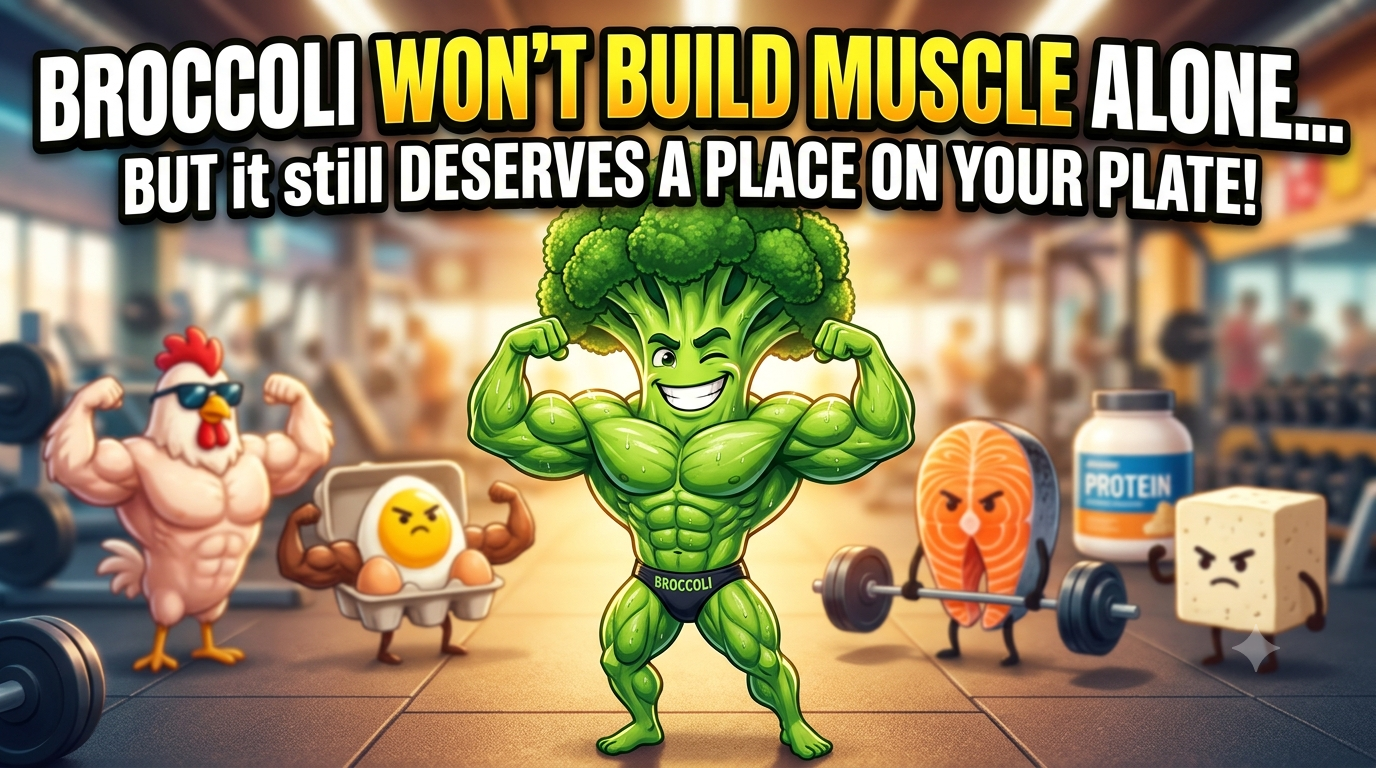
Broccoli Won’t Build Muscle Alone, But It Still Deserves a Place on Your Plate
If you are a fitness enthusiast and go to gym regularly, then you have probably heard the classic muscle-building joke — Chicken, Rice and Broccoli. Yeah, it’s a funny catchphrase in the fitness community.
Anyway, the chicken gets the protein credit, rice provides the carbs, then what about broccoli? It often becomes the punchline.
Regardless, as a certified personal trainer, I would advise beginners not to skip broccoli at all, just because it is not a muscle-building powerhouse like eggs, meat or fish. In fact, it has another job worth paying attention to, especially if you are eating more protein to support your training.
🟧 READ MORE
- Dietitian Shares 10 High-Protein Vegetarian Foods That Can Help Support Muscle Growth
- These Protein-Rich Foods Can Help Support Muscle Maintenance After 50
- Why Some Lightweight Workouts Still Build Impressive Muscle

Broccoli Doesn’t Build Muscle Like Protein Does
To build muscles the right way it requires — resistance training, adequate calories, and enough dietary protein to support muscle protein synthesis (MPS), a natural process that your body uses to repair and build muscle tissue.
Research published in the Journal of the International Society of Sports Nutrition explains that resistance exercise and protein intake work together to stimulate this process. Read the research here.
The truth is — Broccoli does contain some protein, but it is not a particularly concentrated source. A serving will not replace protein-rich foods such as chicken, eggs, fish, dairy, tofu, or beans.
The takeaway? Prioritize your daily protein intake and progressive strength training. Treat broccoli as a supporting player, not the main event.
Here’s Where Broccoli Earns Its Place
Think about this — What will happen when you increase your protein intake but neglect fruits, vegetables, and whole grains? In this case, your diet might contain plenty of quality proteins while falling short on dietary fiber.
This is where broccoli comes into action.
Broccoli provides fiber — which is essential for normal bowel movements and helps keep your digestive system functioning properly. According to the National Institute of Diabetes and Digestive and Kidney Diseases, broccoli is among the vegetables that can help you increase your fiber intake very easily and cost efficiently.
And this matters a lot because meat, fish, eggs, and many dairy products contain little or no fiber. Adding broccoli to meals helps to fill that nutritional gap.

One important distinction, though: fiber does not directly make your body digest protein more efficiently or build more muscle. Its value is in supporting digestive health as part of a balanced diet.
Follow our Facebook page for more practical, science-informed fitness and nutrition advice that helps you make smarter everyday choices.
🟧 READ MORE
- Your Muscles Grow While You Sleep, Not While You Lift
- Does Smoking Affect Muscle Recovery?
- Electrolytes vs Water: When Do Active People Actually Need Electrolytes?
How to Put This Into Practice
Well, you do not need to eat mountains of broccoli with every meal. Instead, you can start with a serving of broccoli alongside your usual protein sources and carbohydrates.
You do not need to eat mountains of broccoli with every meal. Start with a serving alongside your usual protein source and carbohydrate.
For example — pair grilled chicken, steamed rice, and steamed broccoli for a balanced post-workout meal. If you prefer plant-based foods, try tofu, brown rice, and broccoli instead.
Also, increase your fiber intake gradually and drink enough fluids. Suddenly eating much more fiber can cause gas or bloating, particularly if your usual diet is low in fiber.
The National Institutes of Health offers further guidance on fiber’s role in digestion and overall health.
Remember: Broccoli won’t build your muscles on its own. But a balanced diet needs more than protein, and broccoli is a simple way to make your meals more nutritious.
Want short daily fitness tips and practical training advice? Join our WhatsApp community and make smarter choices for your health, one meal and workout at a time.
Editor’s Note: This content is for informational and educational purposes only and is not intended to diagnose, treat, or cure any medical condition. Always consult your physician or a qualified personal trainer before starting any workout or nutrition program.