How to Do Rear Delt Rows: Unlocking True Upper Back and Shoulder Balance
Learn to target your rear delts with a wide-elbow rowing technique instead of turning every repetition into a back exercise.
Are you performing rows to build your back but struggling to develop your Rear Deltoids? Here’s something worth understanding — not every rowing exercise has to be a back-dominant movement.
Traditional rows primarily target the upper and middle back muscles, including the rhomboids, middle trapezius, and latissimus dorsi. But by changing your elbow position, grip, and movement mechanics, you can turn a rowing variation into an effective posterior deltoid exercise.
That’s where Rear Delt Rows come in.

As a personal trainer, I don’t consider this my first choice for isolating the rear delts. I generally prefer Chest-Supported Reverse Flyes or Reverse Pec Deck Flyes. However, Rear Delt Rows are a useful alternative, particularly when equipment availability or limited gym time becomes a factor.
The trick is knowing how to perform them correctly.
🟧 READ MORE
- Why We Only Train Muscles We Can See in the Mirror — And How to Fix It
- Why Looking Jacked Won’t Save You: The Bodyweight Moves That Build True Survival Strength.
Muscles Worked During Rear Delt Rows
Primary Muscle: Posterior Deltoid
The posterior deltoid is the primary target when performing rear delt rows with your elbows positioned outward.
Its primary contribution is shoulder horizontal abduction, which means moving your upper arms outward and backward relative to your torso.
This is different from a conventional lat-focused row, where the elbows generally travel closer to the body, emphasizing shoulder extension.
Supporting and Stabilizing Muscles
Although the rear delts receive targeted stimulation, several other muscles contribute to the movement:
- Rhomboids: Assist with scapular retraction, helping pull the shoulder blades toward each other.
- Middle trapezius: Supports scapular retraction and controls shoulder-blade movement.
- Rotator cuff muscles: Help stabilize the shoulder joint during the pulling movement.
- Biceps brachii and brachialis: Assist with elbow flexion.
- Forearm muscles: Maintain grip and control over the resistance.
Remember, Rear Delt Rows are not a pure isolation exercise. Your upper-back muscles will contribute to the movement. The objective is to emphasize the posterior deltoids through appropriate technique.
How to Do Rear Delt Rows Correctly
You can perform Rear Delt Rows using a dedicated rowing machine with a chest pad or a chest-supported dumbbell setup on an incline bench.
For this guide, let’s focus on the machine variation.
1. The Setup
Adjust the machine seat and chest pad so your chest is comfortably supported and the handles are approximately within reach without excessive shoulder stretching.
Choose a neutral or pronated grip, depending on the machine’s handle design. A pronated grip, with your palms facing downward, is a useful option when available.
Keep your torso against the pad and your feet firmly planted.
Your arms should be extended naturally in front of you, with a slight bend in your elbows.
2. Initiate the Movement
Begin pulling the handles outward and backward while keeping your elbows flared away from your torso.
Think about driving your elbows outward rather than pulling your hands toward your waist.
This is the most important technical difference between a conventional back row and a rear delt row.
Keep your wrists neutral and avoid shrugging your shoulders.
3. The Peak Contraction
Continue pulling until your upper arms reach approximately the plane of your torso, or a comfortable range that your shoulder mobility allows.
Pause briefly and concentrate on contracting your posterior deltoids.
Your shoulder blades will naturally retract to some extent. However, avoid aggressively squeezing them together, as this can increase the contribution of your rhomboids and middle trapezius.
4. The Controlled Return
Slowly extend your arms toward the starting position.
Control the eccentric phase, which is the lowering or returning portion of the repetition.
Don’t allow the machine to pull your shoulders forward abruptly. Maintain control and repeat the movement without using momentum.
🟧 READ MORE
- I Realized My Right Leg Was Doing All The Work — So I Fixed It
- Choline — Is Your Diet Missing This Key Recovery Nutrient?
Common Rear Delt Row Mistakes to Avoid
The biggest challenge with this exercise is that it resembles a conventional back row.
And that’s precisely why people often perform it incorrectly.
1. Keeping Your Elbows Too Close to Your Body
If your elbows remain tucked against your torso, the exercise becomes more shoulder-extension dominant, increasing the contribution of the latissimus dorsi.
For greater posterior deltoid emphasis, allow your elbows to travel outward.
Think wide elbows, controlled movement.
2. Using Excessively Heavy Weights
This is another common mistake.
When you load the machine too heavily, you may start pulling aggressively with your upper back, using momentum, and shortening your range of motion.
The posterior deltoids can still contribute, but the intended emphasis becomes harder to maintain.
Choose a resistance that allows you to control every repetition and feel the rear shoulders working.
3. Pulling Only With Your Shoulder Blades
Remember that the posterior deltoid produces movement at the shoulder joint, while the rhomboids and middle trapezius primarily contribute to scapular movement.
If you focus exclusively on squeezing your shoulder blades together, you risk turning the exercise into a conventional upper-back row.
Instead, concentrate on moving your upper arms outward.
4. Using Excessive Range of Motion
Don’t force your elbows excessively behind your torso.
Once your upper arms reach approximately torso level, additional movement may come increasingly from scapular retraction rather than additional shoulder horizontal abduction.
Maintain a comfortable range without compromising shoulder positioning.

Sets, Reps, and Training Tips
For rear delt rows, I recommend starting with the following training structure:
- Sets: 3 or 4
- Repetitions: 12 to 20
- Rest: 60 – 90 seconds
- Resistance: Light to moderate
The posterior deltoid is a relatively small muscle compared with larger muscle groups such as the chest and back. Therefore, there’s little reason to sacrifice technique just to lift heavier weights.
My biggest training tip is to establish the mind-muscle connection first. Learn to recognize the difference between contracting your rear delts and simply squeezing your upper back.
Once you can maintain proper mechanics, gradually increase the resistance.
Want more practical exercise tutorials and personal-training insights? Follow our Facebook Page for straightforward strength-training advice, workout techniques, and fitness education.
Who Should Include Rear Delt Rows in Their Workout?
Almost anyone following a structured resistance-training program can benefit from including direct posterior deltoid work.
Your rear delts contribute to several pulling movements, and strengthening them helps develop balanced shoulder musculature.
For bodybuilders and physique-focused lifters, well-developed posterior deltoids also contribute to the rounded appearance of the shoulders and add visual depth when viewed from behind.
However, rear delt training isn’t just about aesthetics.
People who spend long hours sitting or performing pressing-dominant workouts may benefit from including posterior shoulder strengthening as part of a balanced training routine.
Just remember that strengthening the rear delts alone won’t automatically correct rounded shoulders or poor posture. Overall shoulder health also depends on mobility, scapular control, and balanced muscular development.
🟧 READ MORE
- Stop Doing Crunches If You Actually Want A Visible Six-Pack
- The Rookie Gym Mistake That Guarantees Zero Muscle Growth for Months
Alternative Exercises for Rear Delts
If rear delt rows aren’t your preferred exercise, there are several other ways to train the posterior deltoids.
Machine Exercises
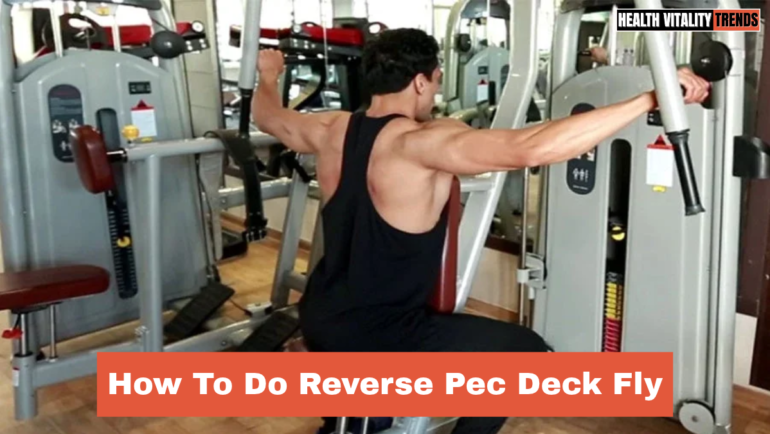
- Reverse Pec Deck Fly: A dedicated machine variation that emphasizes shoulder horizontal abduction. (Check Exercise Here)
Dumbbell Exercises
- Standing Bent-Over Reverse Fly: Targets the posterior deltoids while requiring additional trunk stabilization.
- Seated Reverse Lateral Raises: A seated variation that reduces the need to maintain a standing hip-hinge position.
- Chest-Supported Reverse Flyes: Provides torso support and helps minimize momentum during rear-delt training. (Check Exercise Here)
Cable Exercises
- Cable Face Pull: Targets the posterior deltoids and upper-back muscles while incorporating external rotation, depending on execution. (Check Exercise Here)
- Reverse Cable Crossover: Provides cable resistance during shoulder horizontal abduction.
- Bent-Over Cable Rear Delt Raise: Targets the posterior deltoids using a bent-over position and cable resistance.

Final Thoughts
Rear Delt Rows are an effective alternative for developing your posterior shoulders, provided you understand how to perform them differently from conventional back rows.
Keep your elbows wide, choose manageable resistance, and concentrate on moving your upper arms rather than aggressively squeezing your shoulder blades.
As a personal trainer, I would still prioritize Chest-Supported Reverse Flyes or Reverse Pec Deck Flyes when my primary goal is direct rear-delt isolation.
But Rear Delt Rows deserve a place in your exercise library.
Looking for short daily fitness tips and practical training advice? Join our Health Vitality Trends WhatsApp Community for regular guidance on strength training, workouts, nutrition, and a healthier lifestyle.
Editor’s Note: This content is for informational and educational purposes only and is not intended to diagnose, treat, or cure any medical condition. Always consult your physician or a qualified personal trainer before starting any workout or nutrition program.