


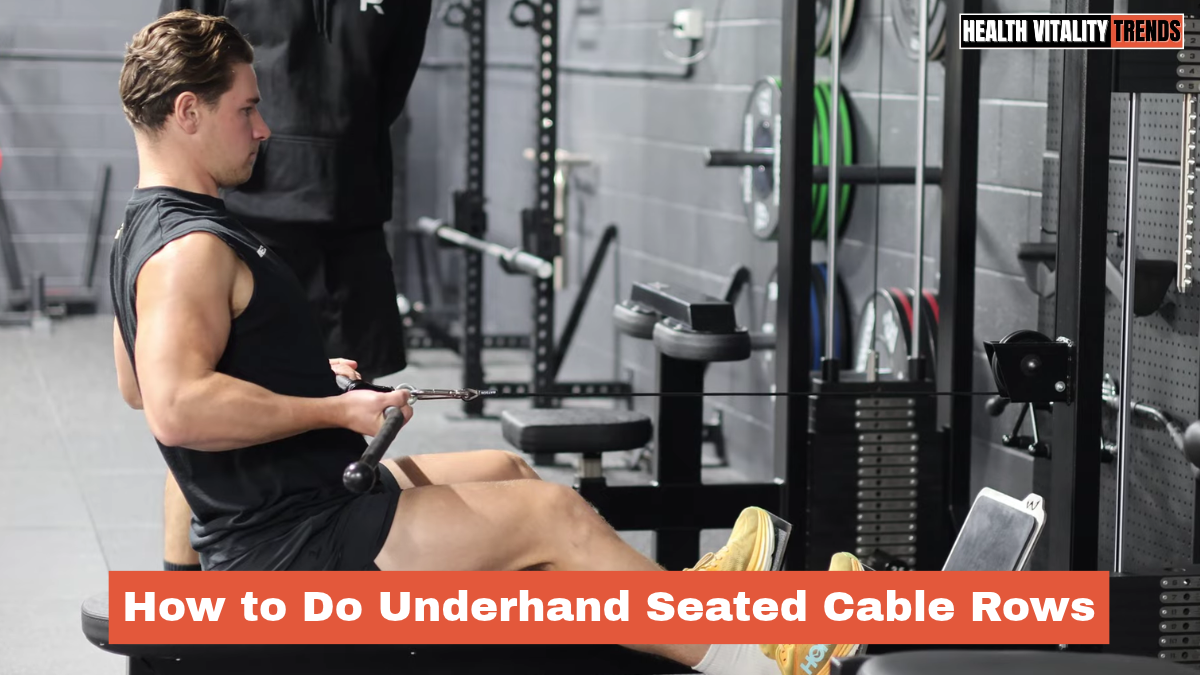
How to Do Underhand Grip Seated Cable Rows: Target Your Lower Lats and Mid-Back Effectively
Build lower-lat thickness and mid-back strength with a close, underhand rowing movement.
If your goal is to build a muscular, thick back rather than just a wide V-taper, you need more than pull-ups and lat pulldowns. You also need rowing exercises.
Vertical pulling movements are excellent for developing your lats and improving upper-body pulling strength. But horizontal rowing movements offer a different stimulus by emphasizing shoulder extension, scapular movement, and the muscles responsible for developing back thickness.
That’s where Underhand Grip Seated Cable Rows come in.

This variation uses a supinated (palms-up) grip and a relatively close elbow position to emphasize the latissimus dorsi, particularly when you drive your elbows toward your hips. It also recruits the rhomboids and middle trapezius, contributing to overall mid-back development.
Many lifters perform rowing exercises but struggle to develop the lower portion of their lats. If that’s one of your training priorities, adding underhand grip seated cable rows after a vertical pulling movement, such as lat pulldowns, can be a useful strategy.
🟧 READ MORE
- Trainers Say Pull-Ups After 40 Can Still Build Serious Upper-Body Strength — If You Avoid These Common Mistakes
- Why We Only Train Muscles We Can See in the Mirror — And How to Fix It
Muscles Worked During Underhand Grip Seated Cable Rows
Primary Movers:
- Latissimus dorsi (lats): The primary target muscles. They contribute to shoulder extension and adduction, helping you pull your upper arms backward and toward your torso. Keeping your elbows relatively close and pulling toward your lower abdomen can emphasize the lat-driven portion of the movement.
- Teres major: Assists the lats with shoulder extension and adduction, contributing to overall upper-back and posterior shoulder development.
Supporting and Stabilizer Muscles:
- Rhomboids: Assist with scapular retraction, helping draw your shoulder blades toward your spine.
- Middle trapezius: Supports scapular retraction and helps stabilize the shoulder blades during the rowing motion.
- Biceps brachii and brachialis: Assist with elbow flexion as you pull the handle toward your body.
- Posterior deltoids: Assist with shoulder extension, although their involvement depends on your elbow path.
- Forearm and grip muscles: Maintain your grip on the handle throughout the exercise.
- Erector spinae and core muscles: Stabilize your trunk and help maintain an upright torso throughout the movement.
Step-by-Step Execution: How to Do Underhand Grip Seated Cable Rows
1. The Setup
Attach a short, straight cable handle to a low pulley. Sit on the rowing bench with your feet firmly positioned against the footplates and your knees slightly bent.
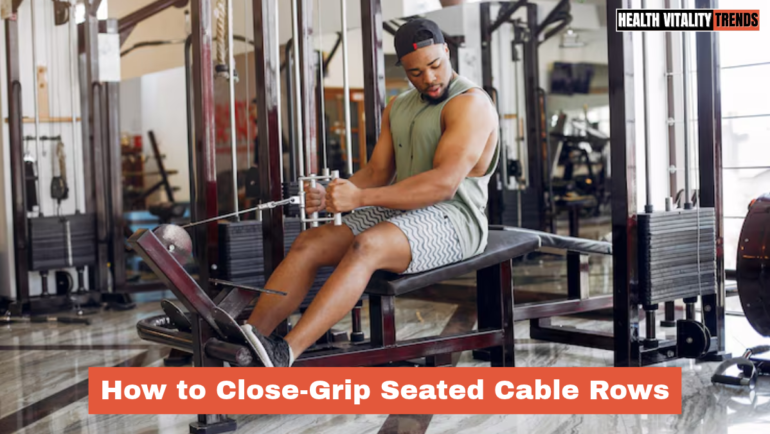
Grab the handle using a supinated grip, with both palms facing upward. Keep your hands relatively close together, similar to the grip used during close-grip V-bar seated cable rows.
Extend your arms forward, maintain a neutral spine, and allow your shoulder blades to move slightly forward without rounding your lower back.
2. The Initiation
Begin the movement by driving your elbows backward while keeping them relatively close to your torso.
Pull the handle toward your lower abdomen, around the belly-button or lower-chest region, depending on your arm length and body proportions.
Keep your chest lifted and avoid using excessive upper-body movement to generate momentum. The pulling action should come primarily from your shoulders and elbows rather than swinging your torso backward.
3. The Peak Contraction
Once the handle reaches your lower abdomen, pause briefly.
Squeeze your lats and mid-back muscles while keeping your elbows close to your sides. Your upper arms should travel behind your torso as far as comfortable without forcing your shoulders into an excessive range of motion.
Allow your shoulder blades to retract naturally, but avoid aggressively squeezing them together at the expense of the lat-focused movement.
4. The Return
Slowly extend your arms and allow the handle to travel forward.
Control the eccentric phase instead of letting the cable pull your arms forward suddenly. Allow your shoulder blades to protract naturally as your arms extend, maintaining a stable torso and neutral spinal position.
Once you reach the starting position, repeat the movement without losing control of the cable.
🟧 READ MORE
- Electrolytes for Gym-Goers: Necessary or Just Hype?
- Why Your Chest Isn’t Growing (Even Though You Bench Every Week)
Common Mistakes to Avoid
Even though this exercise looks similar to Close-Grip V-bar Seated Cable Rows, maintaining the correct grip and pulling mechanics makes a difference.
- Using the wrong handle or grip: Use a short, straight handle with a supinated grip. Keep your hands close together and pull toward your lower abdomen rather than positioning the handle high against your chest.
- Allowing your elbows to flare outward: Keep your elbows relatively close to your torso throughout both the concentric and eccentric phases. Excessive elbow flaring can shift more emphasis toward the upper back and posterior shoulders.
- Using excessive momentum: Avoid swinging your upper body backward to complete repetitions. Maintain controlled movement instead of using your body weight to move the cable.
- Leaning too far forward or backward: A slight natural forward reach is acceptable at the starting position. However, excessive torso movement, particularly when lifting heavy weights, compromises exercise control and increases unnecessary spinal loading.
- Choosing excessively heavy weights: Prioritize a controlled range of motion and meaningful muscular contraction. If you cannot maintain your elbow position and torso stability, reduce the weight.
- Ignoring muscular imbalances: If one arm consistently pulls harder than the other, consider incorporating light unilateral cable rows during your warm-up. This can help identify side-to-side differences and improve movement control.
- Moving your feet unnecessarily: Keep your feet firmly planted against the footplates. Avoid pushing through your legs or jerking your feet to generate additional pulling force.
- Performing excessive repetitions: This exercise may feel relatively comfortable once you master the technique. However, that doesn’t mean you need endless repetitions. Maintain productive working sets and progress gradually.

Want more practical exercise breakdowns and personal training insights? Follow our Facebook page for regular strength-training guides, exercise techniques, and fitness advice.
Sets, Reps, and Training Tips
Your back contains several large muscle groups, so organizing your exercises properly can make your training sessions more productive.
For Underhand Grip Seated Cable Rows, start with 2 to 3 warm-up sets using progressively heavier weights before moving to your working sets.
Perform 3 to 4 working sets of 10 – 12 repetitions, with 15 repetitions as an optional upper limit when using lighter loads. Rest approximately 2 to 3 minutes between challenging working sets.
Personally, I prefer incorporating this exercise after a vertical pulling movement, such as lat pulldowns. This allows me to train the lats through different pulling patterns within the same session.
You can also use it as your final rowing exercise when your primary goal is additional lat-focused volume.
Remember, progressive overload matters, but increasing the weight should never come at the expense of proper technique. If you experience back discomfort, reduce the load, reassess your positioning, and stop if the discomfort persists.
Who Should Try Underhand Grip Seated Cable Rows?
If your primary goal is to improve lat development and build a thicker-looking back, this exercise deserves a place in your training routine.
It’s particularly useful for lifters who already perform pull-ups and lat pulldowns but want to incorporate more horizontal pulling movements.
Bodybuilders can use it to add targeted lat volume, while recreational lifters can benefit from developing their overall pulling strength and back musculature.
Older adults can also incorporate appropriately loaded rowing exercises into resistance-training programmes to help maintain muscle mass and upper-body strength. However, the exercise should be adjusted to individual mobility, strength, and training experience.
🟧 READ MORE
- The Grip Strength Exercise That Improves Nearly Every Lift
- Eggs for Breakfast: A Simple Habit That Could Support Muscle Gain
Alternative Exercises for Underhand Grip Seated Cable Rows
You don’t have to depend on one cable exercise to develop your lats and mid-back. Here are some useful alternatives using different equipment.
Machine Exercises
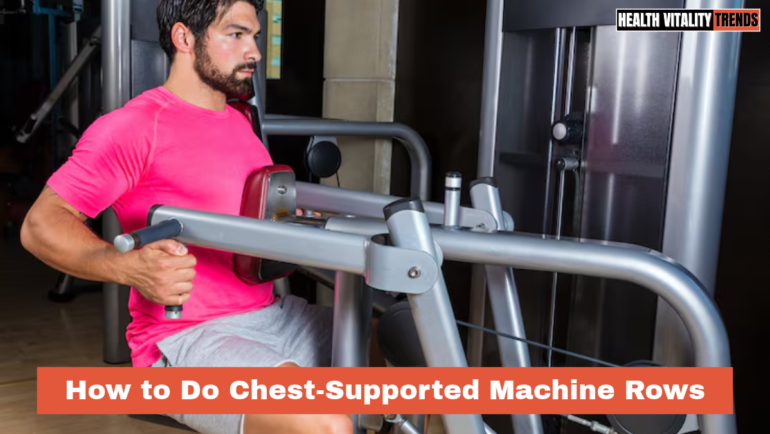
- Chest-Supported Seated Row (Underhand Grip): Provides similar underhand rowing mechanics while the chest pad supports your torso and reduces the need for active trunk stabilization. (Check Exercise Here)
- Underhand Grip Lat Pulldown: Uses a supinated grip during vertical pulling to train the lats through shoulder adduction and extension.
- Chest-Supported T-Bar Rows (Underhand Grip): A useful rowing variation for building back thickness while the chest support limits excessive torso movement. (Check Exercise Here)
- Smith Machine Underhand Bent-Over Rows: Allows controlled bar movement while emphasizing horizontal pulling and lat recruitment with a supinated grip. (Check Exercise Here)
- Nautilus Machine Pullover: Trains the lats through shoulder extension without requiring repeated elbow flexion, making it a useful complementary exercise.
Barbell Exercises
- Underhand Grip Bent-Over Barbell Rows: A compound rowing movement that trains the lats, rhomboids, trapezius, and elbow flexors while requiring substantial trunk stabilization.
Dumbbell Exercises
- Incline Chest-Supported Dumbbell Rows: Allow independent arm movement while the incline bench supports your chest, making it easier to control your rowing mechanics.
- One-Arm Dumbbell Rows: Train each side independently and allow you to adjust your elbow path to emphasize shoulder extension and lat recruitment.

Cable Exercises
- V-Bar Lat Pulldown: Uses a close neutral grip to train the lats through vertical pulling, offering a useful alternative to traditional wide-grip pulldowns. (Check Exercise Here)
- Single-Arm Cable Rows: Allow independent movement on each side and help you work on individual arm control and pulling strength.
- Straight-Arm Cable Pulldowns: Emphasize shoulder extension with relatively little elbow movement, making them a useful accessory for additional lat training. (Check Exercise Here)
Want to improve your training beyond the gym?
Join our WhatsApp community for short daily fitness tips, practical exercise guidance, strength-training advice, and nutrition insights. Whether you’re building muscle, improving strength, or simply trying to stay active, you’ll find useful advice to support your fitness journey.
Editor’s Note: This content is for informational and educational purposes only and is not intended to diagnose, treat, or cure any medical condition. Always consult your physician or a qualified personal trainer before starting any workout or nutrition program.



2 Comments