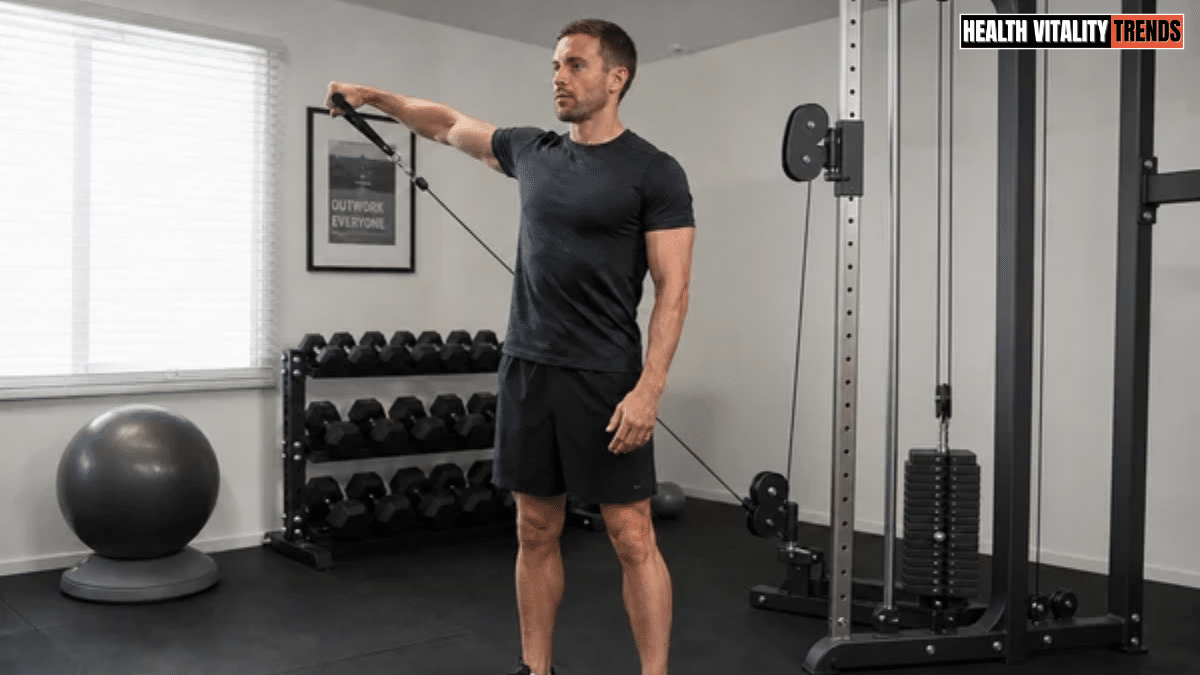
Want Wider Shoulders? Try These 5 Lateral Raise Variations for Your Middle Delts
If you have been doing standard standing dumbbell lateral raises for months but still feel like your shoulders are not getting that broad, rounded look, it may be time to change the way you train your side delts.
As a personal trainer, I often recommend using different lateral raise variations rather than relying on one exercise every shoulder day. The five variations below use dumbbells, cables — as well as different body positions to challenge the middle deltoids in slightly different ways.
The goal isn’t simply to lift heavier. It is to keep tension where you want it — on the middle deltoids — and perform every repetition with control.
1. Chest-Supported Incline Lateral Raises
This variation removes much of the temptation to use your torso to swing the weights. Your chest stays supported against an incline bench, allowing you to concentrate on moving through the shoulder.
How to do it
- Lie with your chest-down on an incline bench with a light dumbbell in each hand.
- Let your arms hang naturally beside your waist, and lock your elbows in place.
- Raise both arms outward until they are around shoulder height, then slowly bring them down to the starting position.
Why I like it: The chest-supported position makes it easier to isolate the lateral delts and avoid excessive body momentum. Thus targeting the middle delts more efficiently.
🟧 READ MORE
- This 10-Minute Routine Can Help Strengthen Your Abs and Improve Posture
- Yoga After 40: The Mobility Habit Experts Recommend
- Want a Better Warm-Up Before Strength Training? I’m a Personal Trainer — Try These Yoga-Inspired Moves
2. Overhead Dumbbell Lateral Raises
While holding dumbbells and stopping them at your shoulder height in a regular lateral raise, in this variation the dumbbells are lifted higher above the head. Therefore, it is recommended to do this variation with a lighter weight.
How to do it
- Stand tall with light to moderate weight dumbbells in each hand.
- To begin with, keep the dumbbells close to your body and elbows locked.
- Raise your arms out to your sides and continue upward in a controlled arc.
- Avoid shrugging your shoulders toward your ears.
- Bring the weights down slowly and repeat.
Why it can help: The larger range of motion gives you another way to challenge the deltoids, although you should use a manageable weight and stop if the movement causes shoulder discomfort.
3. Behind-the-Back Cable Lateral Raises
This is one of my favorite cable variations because the cable setup changes the resistance compared with a dumbbell lateral raise.
How to do it
- Set up a dual pulley cable machine and stand facing it from behind.
- Grab the right cable with your left hand and vice versa, behind your back.
- Bring one leg forward and lock your body position.
- Now lift the weight up similar to dumbbell raises, with your arms moving outward till your shoulder level.
- Bring the weight down slowly to maintain momentum and repeat the movement.
Why it can help: Starting the arm behind the body can provide a different resistance profile and give you a more dominant way to train the middle delt through its range of motion.
4. Incline Bench Side-Lying Lateral Raises
This variation changes your body position and can make it easier to focus on the working shoulder rather than generating momentum from your entire body.
How to do it
- Set up an incline bench and lie sideways while holding a light weight dumbbell in your upper hand, as shown in the demonstration video.
- Keep your elbows slightly bent, and raise the dumbbell away from your body.
- Lower the weight with controlled momentum and repeat repetition.
Why it can help: The bench limits excessive body movement, helping you to keep the exercise focused on the shoulder. If you are new to the exercise, try it with the lightest weight to avoid any shoulder injuries.
For more simple strength, mobility, and posture tips, follow our Facebook page for practical fitness guidance you can use at home or in the gym.
🟧 READ MORE
- You Might Be Eating Enough Protein — But Still Missing This Key Nutrient
- Strength Training or Hypertrophy? Coaches Explain How to Choose
- 6 Low-Impact Exercises That Support Healthy Aging
5. Lean-Away Lateral Raises
The lean-away position changes the angle of the exercise and can make the beginning portion of the movement feel particularly challenging.
How to do it
- Grab the dumbbell in one hand and stand close to a support as shown in the demonstration video.
- Now, hold the support with one hand and lean your body slightly away from it.
- Raise the dumbbell outward with a controlled motion, keeping your shoulder down rather than shrugging.
Why it can help: The altered body angle changes how resistance is applied, giving your middle delts a different challenge from a conventional standing lateral raise.
How I Would Use Them
Ultimately, you don’t need to perform all five exercises in the same workout. For the next shoulder workout, pick one or two of the explained lateral raise variations and add them to your exercise routine. If you are new to the variation, start with a weight so that you can control the range of motion better.
Want short, practical fitness tips and training advice every day? Join our WhatsApp community for simple guidance on strength, core training, mobility, nutrition, and healthier habits.
Editor’s Note: This content is for informational and educational purposes only and is not intended to diagnose, treat, or cure any medical condition. Always consult your physician or a qualified personal trainer before starting any workout or nutrition program.