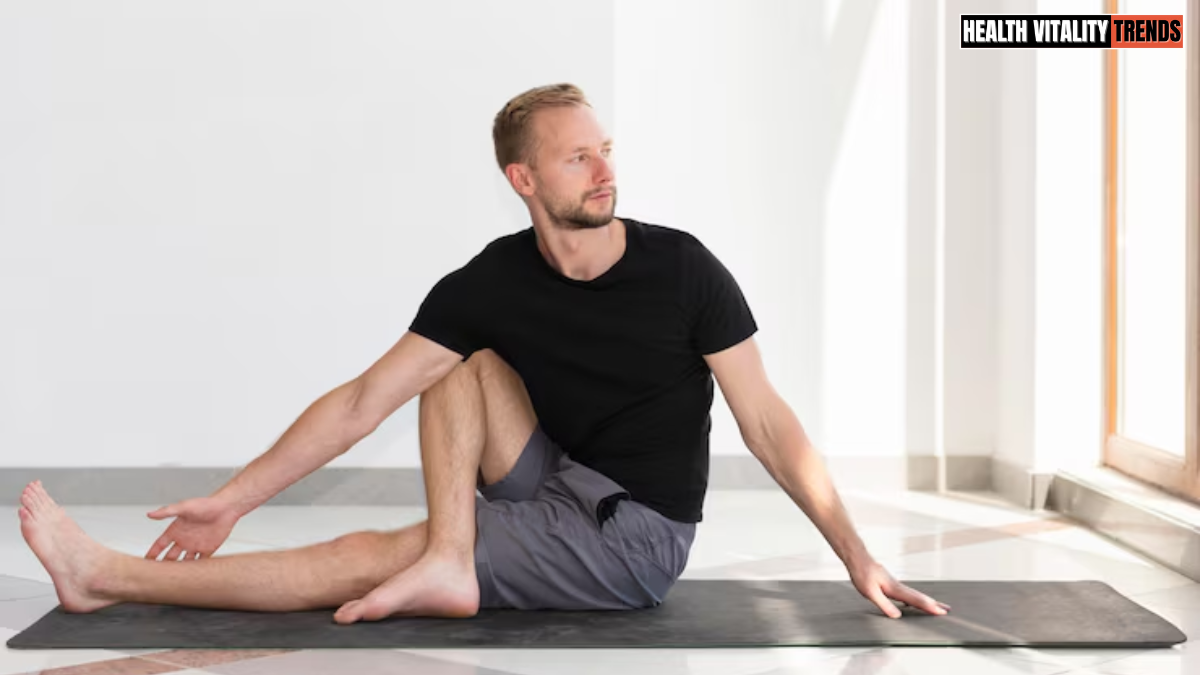
Yoga After 40: The Mobility Habit Experts Recommend
If you are over 40 and starting to notice that your hips feel tighter, your back feels stiff after sitting, or reaching overhead is not as easy as it used to be, you are not necessarily alone.
As a personal trainer, I often see people assume they need an intense workout program to improve mobility. But that is not always necessary.
One of the biggest problems is simply not moving enough throughout the day. Long hours at a desk, driving, watching TV, and other sedentary habits can mean your body spends much of the day in the same positions.
You do not need to become a yoga expert to change that. Adding a few simple yoga movements to your routine can give you an easy way to move your hips, spine, shoulders, and legs through comfortable ranges of motion.

🟧 READ MORE
- Want a Better Warm-Up Before Strength Training? I’m a Personal Trainer — Try These Yoga-Inspired Moves
- 6 Low-Impact Exercises That Support Healthy Aging
- This Gentle Yoga Pose Can Help Release Lower Back Tension
1. Downward-Facing Dog
This familiar yoga pose combines movement through your shoulders, hips, legs, and spine.
How to do it:
- Start on your hands and knees.
- Lift your hips upward and backward.
- Keep your knees slightly bent if needed.
- Press your hands gently into the floor.
- Hold for several comfortable breaths.
Do not worry about getting your heels to the floor.
2. Low Lunge With Rotation
This movement combines hip mobility with gentle upper-body rotation.
How to do it:
- Step your right foot forward from a kneeling position.
- Keep your left knee on the floor.
- Place your left hand down for support.
- Slowly rotate your torso and reach your right arm upward.
- Return slowly and switch sides.
Move within a comfortable range rather than forcing the rotation.
3. Warrior II
Warrior II is a useful full-body standing pose that challenges your legs while encouraging movement through your hips and upper body.
How to do it:
- Stand with your feet comfortably wide.
- Turn one foot outward.
- Bend your front knee while keeping your back leg relatively straight.
- Extend your arms to the sides.
- Hold for several breaths, then switch sides.
4. Cat-Cow
If your back feels stiff after hours of sitting, this is an easy movement to add to your day.
- Start on your hands and knees.
- Slowly round your spine, then reverse the movement by gently lifting your chest and extending your spine.
- Perform 6–10 slow repetitions.
For more simple mobility routines and practical fitness advice after 40, follow our Facebook page for regular training ideas that fit into everyday life.
🟧 READ MORE
- You Might Be Eating Enough Protein — But Still Missing This Key Nutrient
- Strength Training or Hypertrophy? Coaches Explain How to Choose
- Why Some Lightweight Workouts Still Build Impressive Muscle
5. Child’s Pose
- From your hands and knees, slowly move your hips toward your heels and reach your arms forward.
- Stay for 20–30 seconds while breathing comfortably.
Make Mobility a Habit
As a personal trainer, I would rather see someone spend 10 minutes moving consistently than attempt an exhausting mobility session once every few weeks.
Try these movements several times throughout the week. You can also take short walking breaks during your workday to avoid spending hours in the same position.
You do not need perfect flexibility. You need regular opportunities to move.
If a movement causes pain, stop and adjust it. If you have an injury, medical condition, or persistent mobility problem, consider getting individualized advice from an appropriate healthcare professional.
The Bottom Line
Turning 40 does not mean your mobility has to decline overnight.
But it can be a good time to pay more attention to how much you move each day. A few simple yoga poses can help you build a regular mobility habit without requiring a complicated workout routine.
Want short, practical fitness tips and training advice every day? Join our WhatsApp community for simple guidance on mobility, strength, conditioning, nutrition, and healthier habits.
Editor’s Note: This content is for informational and educational purposes only and is not intended to diagnose, treat, or cure any medical condition. Always consult your physician or a qualified personal trainer before starting any workout or nutrition program.