Forget Gym Machines — These Free-Weight Exercises Build Functional Strength
If you spend most of your workout moving from one gym machine to another, you may be building strength — but not necessarily the kind that carries over well to day-to-day life.
Machines are useful for targeting specific muscles. However, because they guide your movement along a fixed path, your body does not have to work as hard to control and stabilize the weight. Conversely, free weights are different.
As a personal trainer, I often recommend including free-weight exercises because they challenge multiple muscle groups while requiring balance, coordination, and core stability. In other words, they can help you build functional strength, which is the ability to produce and control force during real-world movements.
Here are some of the best exercises to include in your routine.
1. Dumbbell Goblet Squat

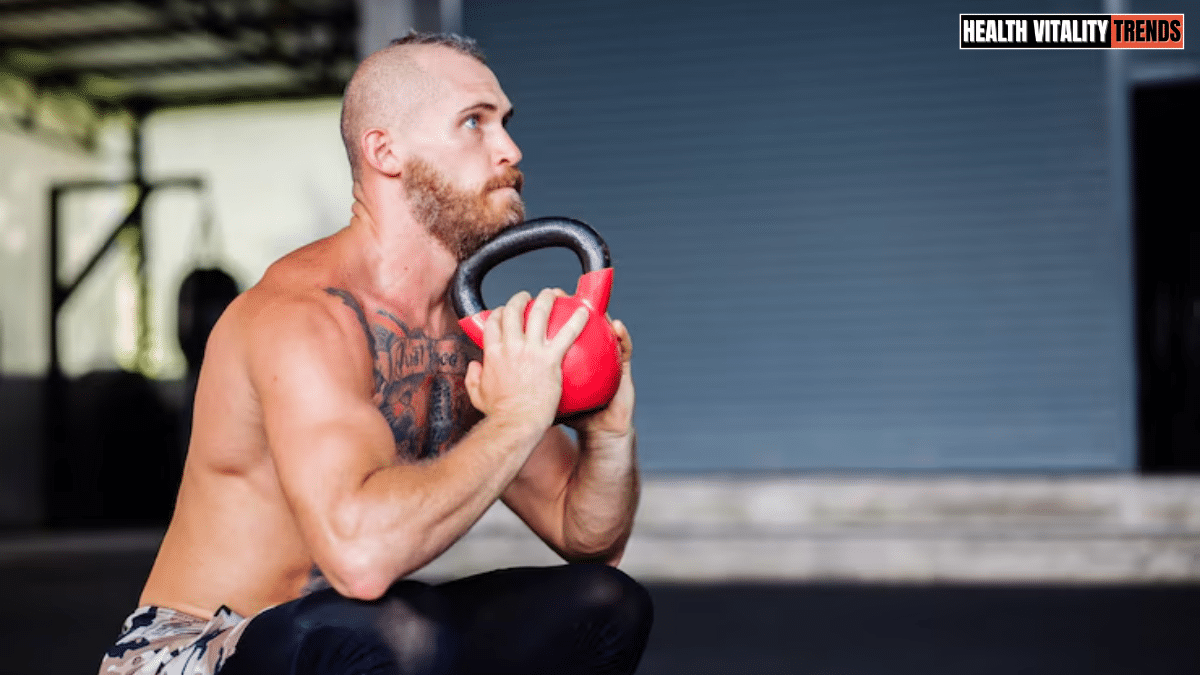
Holding a dumbbell/kettlebell in front of your chest while squatting trains your legs, glutes, and core at the same time. This movement also reinforces a basic pattern you use every day — sitting down and standing back up.
How to do it:
- Hold one dumbbell vertically in front of your chest with both hands.
- Stand with your feet about shoulder-width apart.
- Brace your core and push your hips back as you bend your knees.
- Lower yourself as far as your mobility allows while keeping your chest up.
- Push through your feet to return to the starting position.
Try it: Keep your chest up, brace your core, and squat as deeply as your mobility allows while maintaining control.
🟧 READ MORE
- 9 Signs You’re Gaining Muscle and Losing Fat at the Same Time
- Does Strength Training Burn More Fat Than Cardio? Here’s What Actually Works for Fat Loss
- Muscle Building vs Fat Loss — Can You Really Do Both at the Same Time?
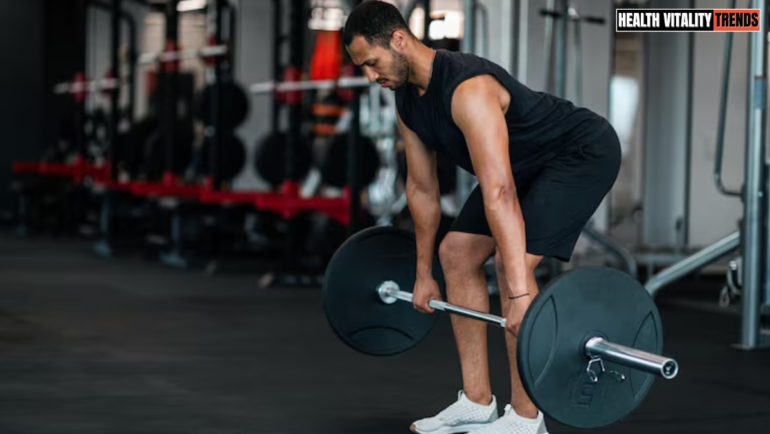
2. Dumbbell Romanian Deadlift

The Romanian deadlift strengthens your hamstrings and glutes while teaching you how to properly hinge at the hips.
This movement pattern is useful whenever you bend down to pick something up. Focus on pushing your hips backward rather than simply bending at the waist.
How to do it:
- Stand tall while holding a dumbbell in each hand in front of your thighs.
- Keep a slight bend in your knees and brace your core.
- Push your hips backward and lower the dumbbells toward the floor.
- Keep your back neutral and the weights close to your legs.
- Once you feel a stretch in your hamstrings, drive your hips forward to return to standing.
3. Dumbbell Overhead Press

Unlike a machine press, pressing dumbbells overhead requires you to control each arm independently while keeping your torso stable.
How to do it:
- Stand tall with a dumbbell in each hand at shoulder height.
- Keep your feet firmly planted and brace your core.
- Press the dumbbells overhead until your arms are extended.
- Avoid excessively leaning backward or arching your lower back.
- Slowly lower the dumbbells back to shoulder height and repeat.
Try it: Stand tall, brace your core, and press the weights overhead without excessively leaning backward.
4. One-Arm Dumbbell Row

Rows strengthen the muscles of your upper back and arms while challenging your core to resist unwanted rotation.
How to do it:
- Place one hand and the same-side knee on a bench for support.
- Hold a dumbbell in the opposite hand with your arm extended.
- Keep your back neutral and brace your core.
- Pull the dumbbell toward your hip by driving your elbow backward.
- Lower the weight slowly and repeat before switching sides.
Perform the movement slowly and avoid twisting your torso to pull the weight upward.
🟧 READ MORE
- 8 Yoga Poses Expert Swears By Help Unlock Tight Hips And Improve Mobility
- Are You Getting Enough Magnesium? Experts Say Active Adults Should Watch For These Subtle Warning Signs
- Cardiologists Say Simple Walking Habit May Support Better Heart Health
5. Dumbbell Walking Lunge

Walking lunges challenge your legs one side at a time while demanding balance and coordination.
That makes them particularly useful for improving unilateral strength, which is the ability to control your body when one leg is doing more of the work.
How to do it:
- Stand tall while holding a dumbbell in each hand by your sides.
- Take a controlled step forward with one leg.
- Lower your body by bending both knees until your back knee moves toward the floor.
- Push through your front foot and bring your back leg forward into the next step.
- Continue by alternating legs with each step.
The Bottom Line
You do not need to abandon gym machines completely. But if your goal is to build strength that helps you move, lift, carry, and control your body more effectively, free weights deserve a place in your training.
Start with manageable weights, focus on proper technique, and gradually increase the challenge as you get stronger.
Want simple fitness advice without the noise? Join our WhatsApp Community for short daily tips on fitness, strength and conditioning, nutrition, and healthier lifestyle habits.
Editor’s Note: This content is for informational and educational purposes only and is not intended to diagnose, treat, or cure any medical condition. Always consult your physician or a qualified personal trainer before starting any workout or nutrition program.