5 Yoga Exercises That Can Help Improve Stability After 50
As we get older, staying steady on our feet can become something we notice more in everyday life. Stepping off a curb, climbing stairs, getting dressed while standing, or simply walking on an uneven surface all require a combination of balance, strength, and coordination.
As a personal trainer, I often remind people over 50 that improving stability does not have to mean doing complicated exercises. Simple movements that challenge your balance while helping you control your body can be a practical place to start.
Yoga offers several beginner-friendly poses that can help you practice these skills.
🟧 READ MORE
- This 10-Minute Morning Yoga Flow Helps Wake Up Stiff Muscles
- These Wall Yoga Poses Can Help Improve Flexibility and Balance
- A Personal Trainer Says This Desk Habit May Be Hurting Your Posture
1. Mountain Pose
It may look simple, but standing with awareness is a useful starting point.
How to do it:
- Stand with your feet comfortably apart.
- Distribute your weight evenly through both feet.
- Stand tall and relax your shoulders.
- Breathe slowly while maintaining a comfortable, steady position.
Try holding the pose for 20 to 30 seconds.
2. Tree Pose With Support
Tree Pose challenges your ability to balance on one leg. Beginners can use a wall or sturdy chair for support.
How to do it:
- Stand next to a wall or chair.
- Shift your weight onto one foot.
- Place the other foot against your ankle or lower leg.
- Avoid placing your foot directly against the knee.
- Hold for a few comfortable breaths before switching sides.
If balancing is difficult, keep your toes lightly touching the floor.
3. Chair Pose
This pose challenges your legs while requiring you to control your body position.
How to do it:
- Stand tall with your feet comfortably apart.
- Bend your knees and move your hips backward as if sitting into a chair.
- Keep your torso comfortably upright.
- Hold briefly, then slowly return to standing.
You can keep a chair nearby for extra confidence and support.
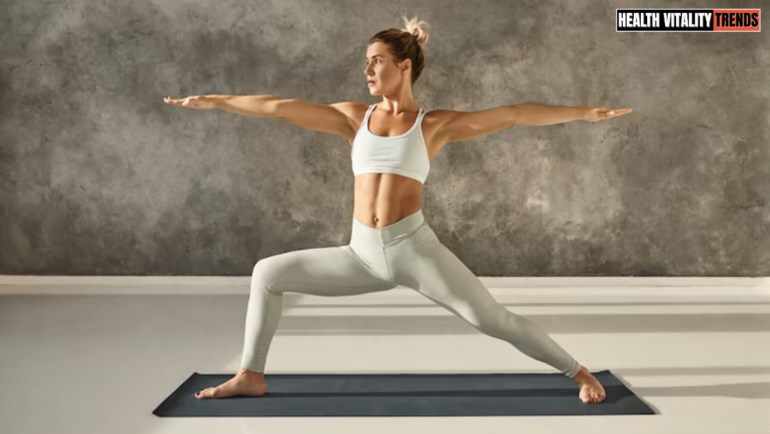
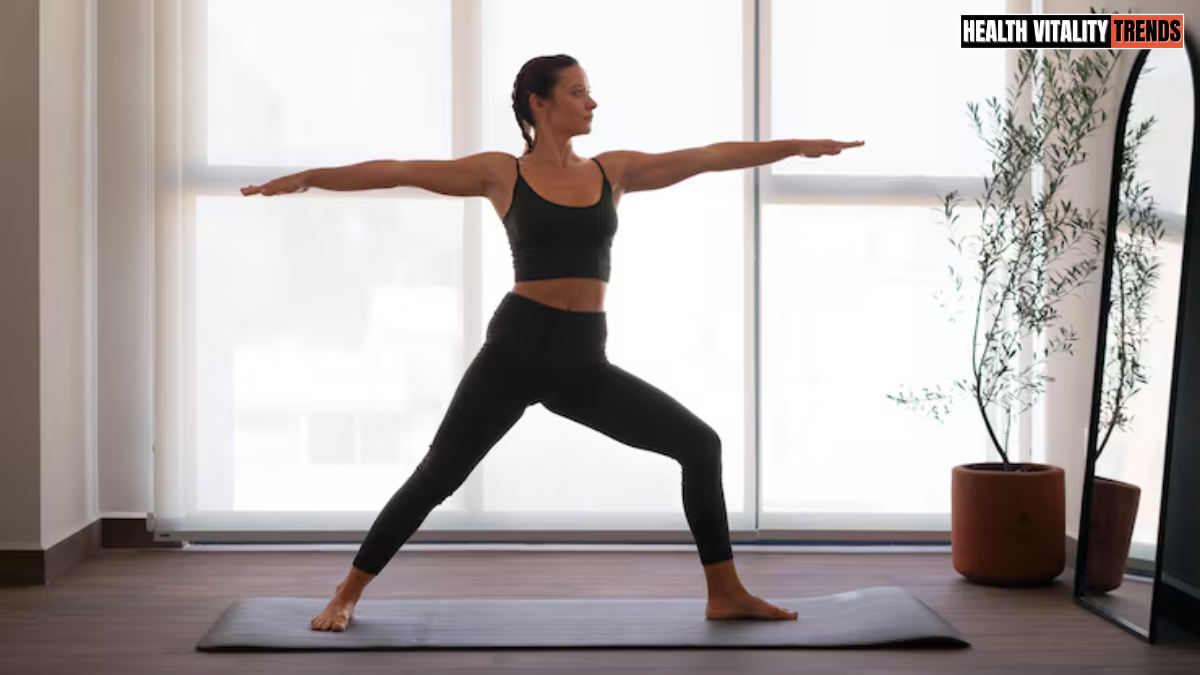
4. Warrior II
Warrior II helps you practice lower-body control while maintaining a stable standing position.
How to do it:
- Stand with your feet wide apart.
- Turn one foot outward.
- Bend your front knee while keeping your back leg relatively straight.
- Extend your arms to the sides at shoulder height.
- Hold for a few breaths before switching sides.
Move only as far as feels comfortable.
For more practical mobility and fitness guidance, follow our Facebook Page for simple training ideas you can adapt to your current ability.
🟧 READ MORE
- 8 Yoga Poses Expert Swears By Help Unlock Tight Hips And Improve Mobility
- The 10-Minute Mobility Routine Your Hips Are Begging For
- The Wall Yoga Pose That Helps Relieve Tight Hamstrings
5. Supported Single-Leg Balance
This simple exercise may not be a traditional yoga pose, but it fits naturally into a yoga-inspired stability routine.
How to do it:
- Stand next to a wall or sturdy chair.
- Lightly hold the support with one hand.
- Shift your weight onto one leg.
- Lift the opposite foot slightly off the floor.
- Hold for 10 to 20 seconds, then switch sides.
As your confidence improves, gradually reduce the amount of support you use.
Start Where You Are
You do not need to perform every pose perfectly or hold difficult positions for a long time. As a personal trainer, I would rather see someone move slowly and stay controlled than rush through an exercise.
Use support whenever needed and avoid pushing through pain. If you have a condition that affects your balance or movement, consider speaking with a qualified healthcare professional before starting a new exercise routine.
The Bottom Line
Improving stability after 50 is not about performing impressive poses. It is about regularly practicing the balance, strength, and coordination you use in everyday life.
Start small, stay consistent, and allow your confidence to build over time.
Want short, practical fitness tips and training advice every day? Join our WhatsApp Community for simple guidance on strength, mobility, balance, and healthier habits.
Editor’s Note: This content is for informational and educational purposes only and is not intended to diagnose, treat, or cure any medical condition. Always consult your physician or a qualified personal trainer before starting any workout or nutrition program.