These 6 Beginner-Friendly Yoga Poses Melt Away Lower Back Tension and Tight Hips in Minutes
You know that uncomfortable feeling when your lower back feels stiff after sitting at a desk for hours? Perhaps your hips feel tight too when you stand up, bend forward, or try to get moving after a long day.
As a certified personal trainer with nearly a decade of experience, I’ve seen this pattern in people who spend most of their day sitting, as well as those who exercise regularly but repeatedly neglect mobility work.
And there’s a reason why these problems often appear together.
First of all — Your hip flexors, particularly the muscles at the front of your hips, remain in a shortened position due to prolonged sitting. Secondly, your glutes may become less active, making it harder for them to contribute effectively to pelvic stability. This can change how your pelvis moves and increase the workload on the muscles surrounding your lumbar spine.

The solution isn’t necessarily always more stretching or another intense workout. Sometimes, your body needs a combination of gentle mobility, controlled movement, and muscular engagement.
That’s where yoga comes in. These six beginner-friendly poses can help you release stiffness around your hips and lower back without requiring advanced flexibility.
🟧 READ MORE
- The Classic Ab Exercise That Trainers Are Bringing Back
- How to Stay Active on Your Rest Days Without Burning Out (Plus a Simple Home Yoga Flow)
1. Thread the Needle Pose
If your lower back feels stiff after prolonged sitting, start with this gentle rotational stretch. Thread the Needle targets the upper back, shoulders, and surrounding spinal muscles while encouraging controlled movement through your trunk.
On a yoga mat, sit on your hands and knees. Keep your wrists beneath your shoulders and knees beneath your hips. Slowly slide your right arm underneath your left arm, rotating your upper body until your right shoulder and the side of your head approach the mat. Keep your hips relatively stable and breathe naturally. Hold for 20 to 30 seconds before returning to the starting position and repeating on the opposite side.
2. Low Lunge with a Pelvic Tuck
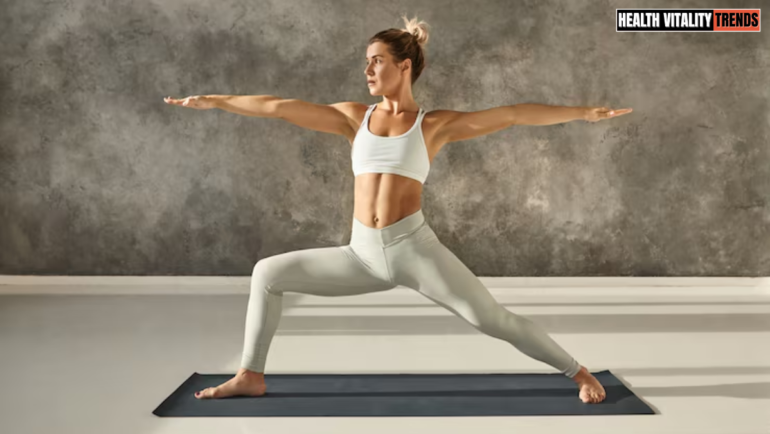
Tight hip flexors are particularly common among people who spend hours sitting. This variation of the low lunge helps to target the front of the hip while encouraging better pelvic control.
Start in a kneeling position and bring your right foot forward, keeping your knee bent at approximately 90 degrees. Place your hands on your thigh for support. Gently tuck your pelvis underneath by tightening your glutes and drawing your lower abdomen inward. Now shift your hips slightly forward until you feel a comfortable stretch through the front of your left hip. Avoid arching your lower back to force a deeper stretch. Hold for 20 to 30 seconds and switch sides.
3. Reclined Figure-Four Stretch
Sometimes, lower back discomfort is accompanied by tightness around the glutes and outer hips. The reclined Figure-Four stretch offers a gentle way to work on that area without putting unnecessary pressure on your spine.
On a yoga mat, lie on your back with both knees bent and feet flat on the floor. Cross your right ankle over your left thigh, just above the knee. Slowly draw your left thigh toward your chest by holding behind it with both hands. You should feel a stretch around your right glute and outer hip. Keep your head relaxed and avoid pulling aggressively. Hold the pose for 20 to 30 seconds before changing sides.
🟧 READ MORE
- Can You Build Muscle Without Spending Hours in the Gym?
- Why Thoracic Mobility Is Important for Healthy Movement
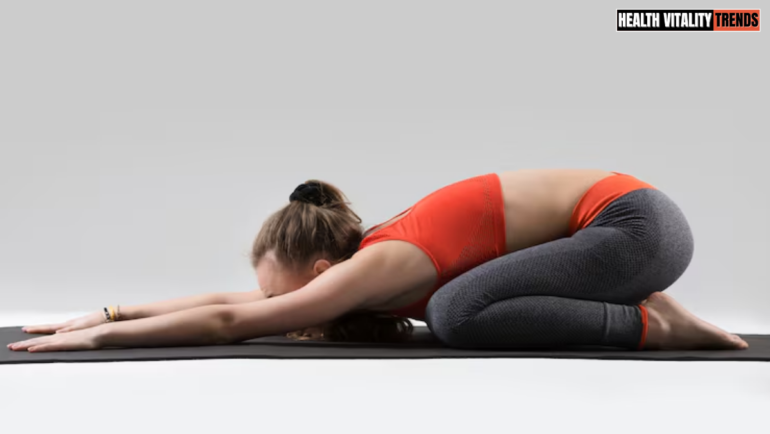
4. Supported Child’s Pose with Side Reach
This is a useful variation when your lower back and sides feel restricted after a long workday. The side reach adds a gentle stretch through the lateral trunk and surrounding muscles.
Kneel on your mat and sit your hips toward your heels, extending both arms forward. If your hips don’t comfortably reach your heels, place a cushion underneath them. Walk both hands toward the right side while keeping your hips grounded. Breathe slowly and notice the stretch along the left side of your torso. Stay there for 20 – 30 seconds, then repeat on the other side.
5. Supine Windshield Wipers
Not every effective yoga movement requires holding a stretch. Sometimes, controlled movement through a comfortable range is exactly what your body needs.
Lie on your back with your knees bent and feet flat on the mat, slightly wider than hip-width apart. Extend your arms out to the sides for stability. Slowly allow both knees to fall toward your right side while keeping your shoulders relaxed against the floor. Bring them back to the center and repeat toward the left. Move gently without forcing your knees toward the floor. Continue for 8 – 10 controlled repetitions on each side.
6. Bridge Pose
Here’s something I often explain to beginners — relieving tightness isn’t just about stretching muscles. You also need to strengthen the muscles that support your movement.
Bridge Pose helps to activate your glutes and encourages controlled hip extension.
Lie on your back with your knees bent and feet flat on the floor, approximately hip-width apart. Keep your arms beside your body with your palms facing down. Tighten your abdominal muscles gently and squeeze your glutes as you lift your hips toward the ceiling. Stop when your shoulders, hips, and knees form a comfortable diagonal line. Avoid pushing your lower back into an excessive arch. Hold for 5 to 10 seconds before slowly lowering. Repeat 8 – 12 times.
🟧 READ MORE
- You Can Maintain Your Physique Forever in Your 30s When These Daily Habits Back Up Your Workout
- The 50-Minute Bodyweight Circuit Every Adult Over 60 Needs for Daily Strength
Make These Yoga Poses Part of Your Daily Routine
You don’t need an hour-long yoga session to start working on hip mobility and lower back stiffness. Even 8 to 12 minutes of these six movements can provide a practical starting point.
If you’re a beginner, start with one round and focus on controlled movement rather than stretching as deeply as possible. Consistency matters more than intensity.
And if you enjoy practical fitness advice like this, follow our Facebook page, Health Vitality Trends, for more trainer-guided exercises, mobility routines, and everyday fitness tips.

One important reminder — these movements should feel comfortable, not painful. If you experience sharp pain, numbness, weakness, or pain radiating down your leg, stop and seek appropriate medical assessment. Persistent lower back discomfort also deserves professional evaluation.
Want more simple fitness guidance? Join the Health Vitality Trends WhatsApp Channel for short daily fitness tips, practical training advice, mobility exercises, and nutrition insights that help you make healthier choices without overcomplicating your routine.
Editor’s Note: This content is for informational and educational purposes only and is not intended to diagnose, treat, or cure any medical condition. Always consult your physician or a qualified personal trainer before starting any workout or nutrition program.