From Wobbly to Stable: How the Supported Single-Leg RDL Fixes Your Posterior Chain
If you have tried the balance test from my previous article, Balance Test That Reveals Why Your Stride Is Imbalanced, you may have discovered that one leg feels noticeably less stable than the other. And while the single-leg glute bridge helps address unilateral hip strength, there is another important piece of the puzzle — Your posterior chain.

As a certified personal trainer, I look beyond glute strength when assessing running mechanics. Your hamstrings, glutes, calves, and ankle stabilizers all contribute to controlling your body during each foot strike. When one side struggles, your movement can become less coordinated and unnecessarily inefficient.
That’s why I recommend the Supported Single-Leg Romanian Deadlift (RDL). It bridges the gap between isolated hip strength and functional single-leg stability.
🟧 READ MORE
- Protein Quality vs. Quantity: The Hidden Factor Most Diets Ignore
- Why Thoracic Mobility Is Important for Healthy Movement
Why the Supported Single-Leg RDL Matters
A common mistake I see with beginners is attempting free-standing single-leg exercises before developing sufficient balance and coordination.
They spend so much effort trying not to fall that maintaining proper movement becomes difficult.
Adding a light support from a wall, chair, or gym rack changes that experience.
It reduces the balance challenge enough for you to concentrate on the actual movement — hinging at your hips while controlling your pelvis and engaging your hamstrings and glutes.
This is particularly relevant for runners. During the stance phase, your supporting leg must help absorb and control forces while your body moves forward.
The supported single-leg RDL trains unilateral hip-hinge mechanics and posterior-chain strength without making balance the only challenge.
For more practical movement assessments and exercise guidance, Follow our Facebook page. I regularly share personal-trainer insights to help you understand the mechanics behind stronger, more efficient movement.
How to Perform the Supported Single-Leg RDL
You only need a sturdy support and enough space to move freely.
Step 1: Establish your position
Stand beside a wall, sturdy chair, or gym rack. Place one hand lightly against the support for balance.
Shift your weight onto the leg closest to the support and maintain a slight bend in that knee.
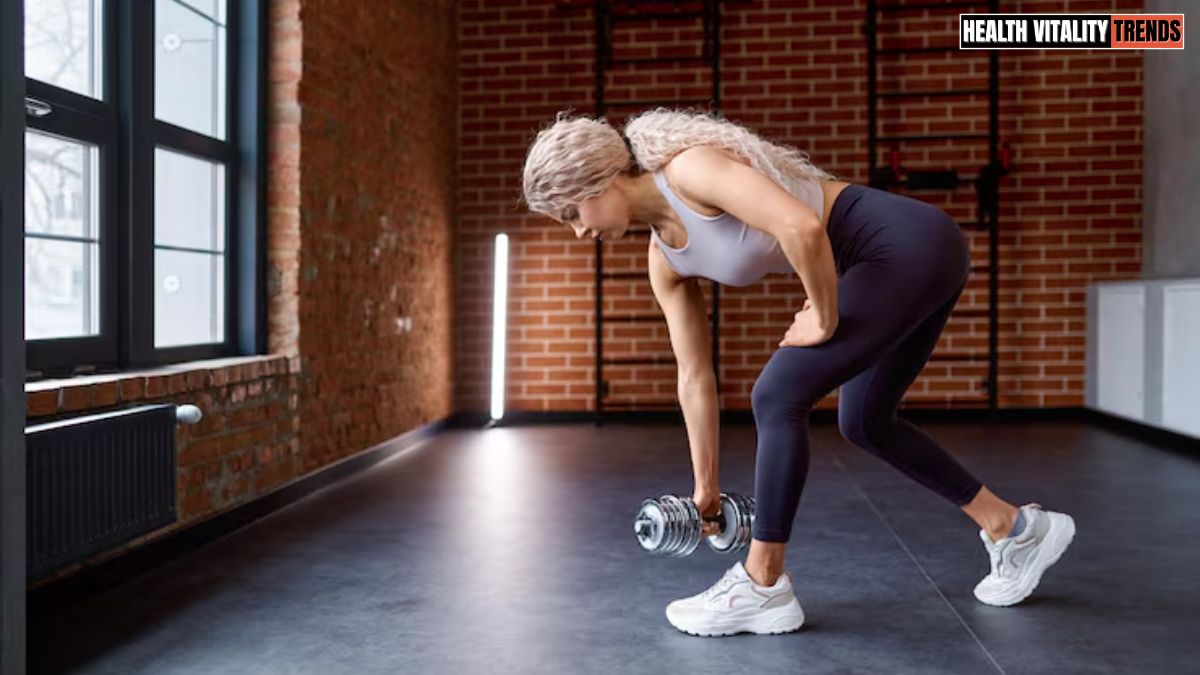
Step 2: Initiate the hip hinge
Keep your spine neutral and push your hips backward, as if trying to close a door behind you with your glutes.
Avoid turning the movement into a squat.
Step 3: Extend your free leg
As your torso moves forward, extend your opposite leg behind you. Your torso and raised leg should move in opposite directions to create a controlled counterbalance.
Keep your hips facing the floor rather than rotating outward.
Step 4: Return with control
Lower until you feel a comfortable stretch through your hamstrings, then drive your hips forward to return to standing.
Your training prescription: Perform 3 sets of 8 to 10 repetitions per side, taking approximately three seconds to lower during each repetition.
🟧 READ MORE
- You Can Maintain Your Physique Forever in Your 30s When These Daily Habits Back Up Your Workout
- 10 Yoga Poses to Add to Your Warm-Up for Better Lunges and Squats
Three Mistakes That Make Your RDL Less Effective
Pay attention to these common movement errors:
- Rotating your hips: Keep your pelvis relatively square to the floor instead of opening your free-side hip outward.
- Bending your knee excessively: Maintain a soft, slightly bent supporting knee rather than turning the exercise into a squat.
- Rounding your lower back: Reduce your hinge depth if you cannot maintain a comfortable, neutral spinal position.
If you feel unstable, shorten your range of motion and use your free leg as a counterbalance. Remember, the objective is controlled movement, not reaching the floor.

Build Stability Before Chasing More Miles
Using support isn’t cheating. It’s a smart training progression.
By reducing unnecessary wobbling, you can concentrate on strengthening your hamstrings, glutes, and hip-hinge mechanics independently on each side.
Combine this exercise with your single-leg glute bridges and other appropriate strength exercises to develop a more balanced lower body.
Running efficiency requires coordination throughout your kinetic chain, not just stronger legs.
Want more practical fitness and training advice? Join the Health Vitality Trends WhatsApp community for short daily exercise tips, strength-training insights, and simple ways to build a stronger, more stable body.
Editor’s Note: This content is for informational and educational purposes only and is not intended to diagnose, treat, or cure any medical condition. Always consult your physician or a qualified personal trainer before starting any workout or nutrition program.