A Trainer Says This Quick Balance Test Can Expose Weak Glutes And Poor Stability
Most people assume that if they spend an hour in the gym daily, it means they are becoming fitter and stronger. Whether it is strength training, CrossFit, yoga or even simple cardiovascular exercises, it is true that exercising regularly is definitely beneficial. But according to fitness experts, simply working out does not always mean that your body is moving efficiently.
The reason to say this is – if you are dependent on doing only one format of exercise, some muscles will tend to dominate movement patterns, while other non-dominant muscles quietly become weaker over time. And out of all the muscles in the human body, the most underactive and untrained muscles are the glutes.
Weak glutes are often associated with inactive lifestyles, but to your disbelief, even people who lift heavy weights or train regularly can have poor glute function. According to Andrew Pafford (CrossFit Level 2 Trainer), weak glutes can affect balance, stability, posture, and even contribute to aches in the lower back and knees.
In a video on his YouTube Channel – Primedy, Pafford explains that glute strength matters for both active and inactive individuals because the glutes play a major role in stabilizing the hips and supporting efficient movement.
What Causes Weak Glutes
According to Pafford – our modern lifestyle is one of the biggest reasons why our glutes have become weaker over time. Nowadays, people are spending more and more hours sitting. Yes, sitting at the work desk, driving, or lying on the couch at home. This habit of minimal lower body movement is what causing little to no usage and activation of glute muscles.
He explains that muscles that are not frequently used eventually become forgotten and become harder to activate when needed. And over time, the body adapts to this pattern.
We also need to understand that the human body is extremely good at adaptation. Which means that, during a movement, if any one of the muscle groups is not functioning efficiently, the body will find another way to complete the movement. This is why many of us experience poor glute activation when the movement is too athletic.
This is the exact reason why many people begin to experience discomfort in their lower back, hips, or knees after starting a new workout program or going to the gym for the first time.
🟧 READ MORE
- A Physical Therapist Says This Daily Stretch May Help Ease Stubborn Lower Back Tightness
- The Hip Mobility Exercise That Makes Squats Feel Easier Instantly
- The 10-Minute Mobility Routine Your Hips Are Begging For
How Weak Glutes Affect Your Body?
Pafford explains that the hips are designed to be a mobile joint. Consequently, when the hip’s mobility or glute function decreases, the body starts to rely more on the nearby joints or muscles to compensate for the movement.
For example, during squats – the hips and glutes are suppose to help to control the squatting movement and stabilize the body. But if the glutes are weak, the stress of the weight is shifted onto the knees. This is why you will see that your knees get inward when you lift the weight up (concentric movement) during a squat, affecting your overall balance, squat depth, and even lifting of the heels.
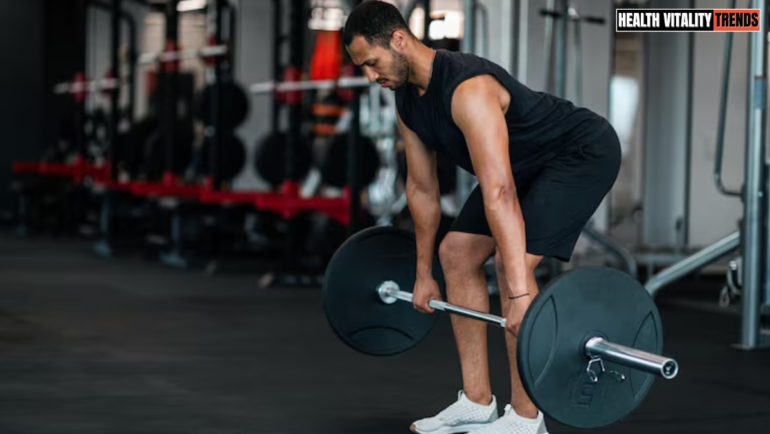
The same concept applies to the movement, like deadlifts or bending down to pick up something from the floor. Ideally, the glutes and hips should provide stability and power. Again, if the glutes are not functioning well, the lower back may compensate for lifting your body or deadlift’s weight up. Thus increasing strain on your lumbar region.
This is one of the reasons why weak glutes are often associated with lower back discomfort and poor lower body stability.
What Is The Cook Bridge Test For
To assess whether your glutes are functioning well, Pafford recommends to try the “Cook Bridge Exercise” – a movement that was developed by Dr. Gray Cook to test glute strength.
Unlike the traditional glute bridge exercise, this variation is designed to test whether the glutes can generate force and show stability without excessive help from the lower back or hamstrings.
How To Perform The Cook Bridge Exercise
- Lay a yoga mat on the floor and lie down flat on your back.
- Bring one heel close to your hips. With the same leg, get your toes off the floor, and only heels touching the floor.
- Bring the other knee close to the chest, and grab it with your arms.
- Now, raise your body upwards using only your glute muscles. Hold this position for 5 seconds.
- Repeat the same movement with the other leg.
According to Pafford, the movement should feel controlled and stable. If you struggle to lift the hips up, feel cramps in the hamstrings, shake excessively, or feel unstable during the movement, it may indicate that you have poor glute function.
Final Learnings
It is now clearly understood why training the glutes is so important. It is because weak glutes can quietly affect the way your body moves long before pain or injuries become serious. Strong glutes contribute to prevent instability during exercise like squats and deadlifts, while reducing stress from the lower back and knees during other daily physical activities.
Consequently, the Cook Bridge Exercise offers a simple way to check whether your glutes are functioning properly or not. So, if the movement feels difficult or unstable, it may be a sign that your glutes need more focused training.
Exercises like glute bridges, hip thrusts, split squats, and resistance band movements can help to strengthen the glutes and improve overall lower-body stability over time.
Editor’s Note: This content is for informational and educational purposes only and is not intended to diagnose, treat, or cure any medical condition. Always consult your physician or a qualified personal trainer before starting any workout or nutrition program.