The Grip Strength Exercise That Improves Nearly Every Lift
In weight training, if there is one limiting factor that most lifters often overlook – it’s not the strength, size or even endurance – it’s the gripping power. This may sound absurd, but several lifters with strong backs and solid technique still struggle to progress – simply because their hands give out first – not the working muscle. That’s exactly where a simple exercise like Dumbbell Static Hold can make a noticeable difference in your complete workout, which can increase your pulling efficiency.
Grip strength isn’t just about holding onto weights. From a training perspective, it directly impacts the pulling movements like – Deadlifts, Rowing, Pull-ups and even cable-based exercises. So, if your grip fails early, before the targeted muscle – then the targeted muscle never gets fully stimulated at all. Over time, this can create limitations in your overall strength development.
From a physiological standpoint, the grip strength relies heavily on forearm flexors and the neural connection between your hands and the Central Nervous System (CNS). The stronger this connection becomes – the more efficiently your body can recruit muscles during any compound lifts. That is why improving grip isn’t isolated, as it carries over into almost every major movement pattern.
[Also See: Why the Triceps Pushdown Is Still One of the Best Arm Builders in the Gym]

What many people don’t realize is that – the natural grip strength also reflects your real-world capabilities as well. Carrying heavy grocery bags, holding onto something during a slip, or even during basic tasks like manual work – they all depend on your ability to maintain a strong, supinated grip. Having a strong grip is one of those silent qualities that supports both performance and daily function.
The Dumbbell Static Hold stands out as the best gripping exercise for forearms – simply because of its simplicity and effectiveness. Therefore, there is no complex movement pattern to learn. Instead, it trains what matters more here – time under tension. By forcing your hands and forearms to hold a load without any movement – you build muscular endurance and strength simultaneously.
Unlike any dynamic exercises, static holds eliminate any momentum. This means that your muscles stay engaged continuously – thus improving muscular endurance while also strengthening the connective tissues like tendons and ligaments. Over time, this builds better control and stability during heavier lifts like deadlifts.
[Also See: Why Walking Lunges Are More Powerful Than They Look]
How to Do Dumbbell Static Hold
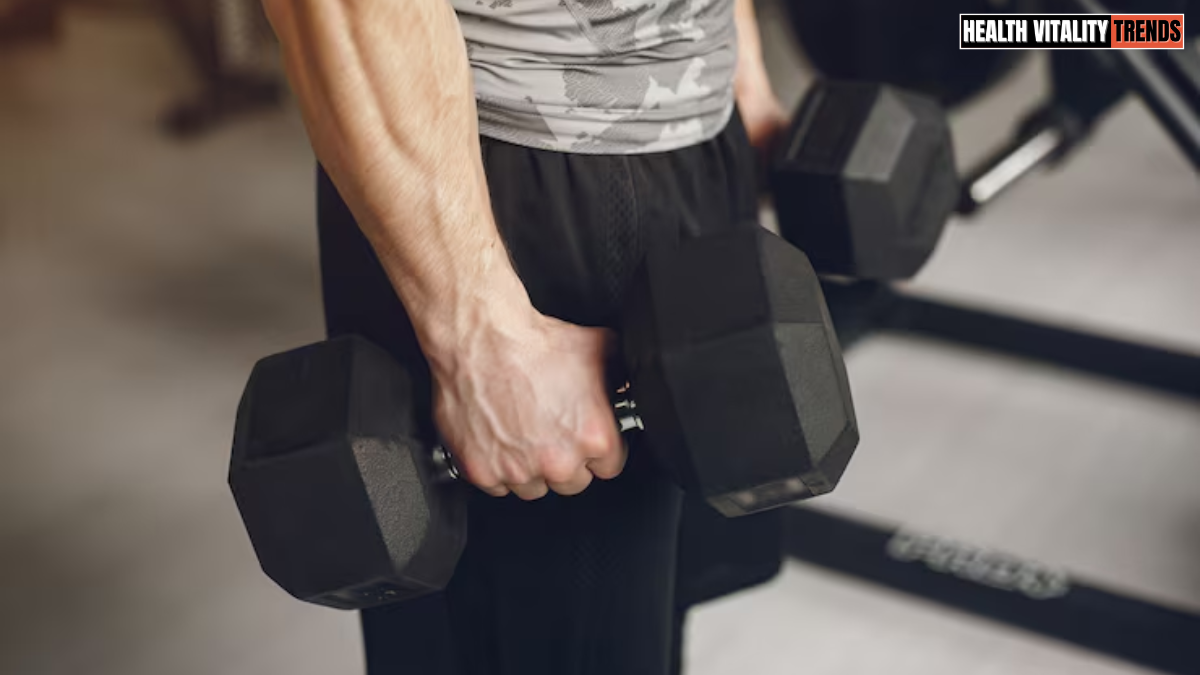
- First of all, place a pair of heavy dumbbells on the bench.
- Stand in front of the dumbbells – grip them and pick them up.
- Fold your fingers completely, and avoid opening until the end.
- Keep the dumbbells close to your sides.
- Hold this position for as long as you can.
- Aim for around 30 to 60 seconds in one repetition.
- Rest for around 60 to 90 seconds and repeat for 3 to 4 sets.
You should start with an average, challenging dumbbell weight that can allow you to maintain proper form too. As your grip improves, increase the dumbbell weight gradually. Or increase the duration of the static hold.
It’s a simple addition to your routine, but one that pays off across nearly every lift you perform.
[Also See: How to Do Alternating Dumbbell Curl: 5 Common Mistakes To Avoid]
Editor’s Note: This content is for informational and educational purposes only and is not intended to diagnose, treat, or cure any medical condition. Always consult your physician or a qualified personal trainer before starting any workout or nutrition program.