Stop Wasting Leg Day: The Squat Mistake That’s Killing Your Gains
Strong and muscular legs are a sign of a well-built lower body, that are not only functional but aesthetically pleasing. To achieve this, one needs to master the squat exercise that must be performed with a correct squatting stance every time.
But here is the twist: Not everyone who can do a heavy squat has well-developed quads. Yes, they train very hard, apply progressive overload regularly, and push through the tough leg day. Yet their results don’t match their effort.
Often, the problem isn’t about the weight on the bar or the number of sets or repetitions performed. Instead, it comes down to a subtle technique mistake that shifts the workload away from the quadriceps and places more tension on other nearby muscle groups.
The squatting mistake that we are talking about is the excessive forward lean during the execution of the squat movement, and it’s more common than you think.
Understanding the root cause of this problem and the steps taken to fix it can make a noticeable difference in how effective your squat session becomes.

[Also See: The One Dumbbell Move That Fires Up Your Entire Upper Body (Most Lifters Ignore It)]
The Squat Mistake That Shifts the Work Away From Your Quads
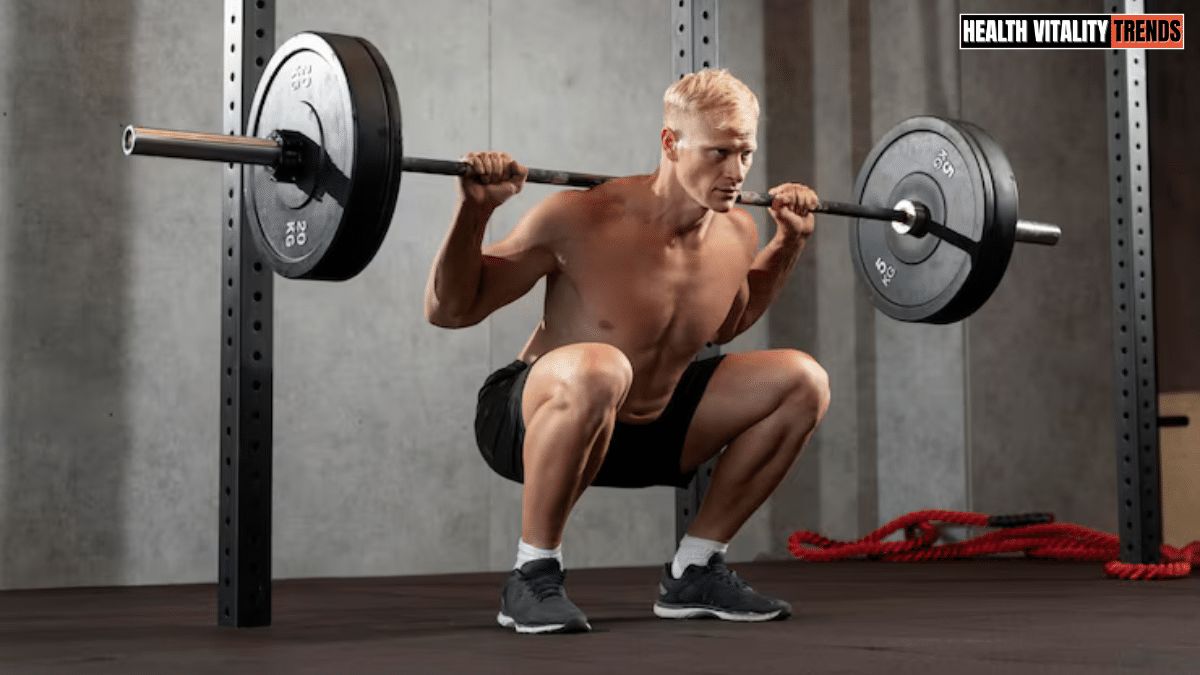
In a near-perfectly performed squat, the bar should travel roughly in a straight line over the mid-foot, while the lifter maintains a neutral spine and an upright chest posture. This position allows both the hips and knees to work together, thus distributing the load across the quadriceps, glutes, and other supporting muscles.
The problem begins when the upper body leans too far forward during the eccentric phase, which is the lowering portion of the movement. Instead of maintaining a balanced posture, the torso collapses toward the floor.
When this happens, the mechanics of the squat also changes.
A greater forward lean increases the load placed on the hips while reducing the demand on the knees. In simple terms, the movement becomes more hip-dominant. As a result, the glutes and hamstrings begin doing most of the work while the quadriceps contribute less than they should.
This is why many lifters feel that their lower back and hips are working harder than their thighs after squatting.
Excessive forward lean can occur for several reasons:
- Poor upper-back posture or lack of thoracic extension
- Weak core stability and poor bracing
- Attempting weights that are too heavy
- Limited mobility or poor squat mechanics
This problem is more common among lifters with longer femurs or taller body proportions. These individuals may naturally lean forward slightly more than shorter lifters, but the issue becomes more problematic when the torso angle increases, and the spine begins to lose its neutral position.
Other Squatting Mistakes include:
- The chest drops toward the floor during the descent phase.
- The hips begin to rise before the shoulders when standing up
- The bar path is drifting forward instead of staying over the mid-foot
- Feeling the movement more in the lower back and hips than in the quads.
Over time, this pattern not only reduces quadriceps activation but can also increase unnecessary strain on the lower back, especially when heavier loads are involved. Thus, it becomes important to analyse and correct the wrong squatting method as soon as possible.
[Also See: Electrolytes for Gym-Goers: Necessary or Just Hype?]
How to Fix This Squat Mistake and Train Your Quads Properly
The best stage to correct the excessive forward lean during a Squat is when you are still a newbie. Under proper guidance, a CPT can easily make you understand the right posture for squatting and how to control the weighted barbell during concentric and eccentric motion.
Other than this, if you are exercising solo, it becomes difficult to keep track of where you are going wrong. Here are a few cues that you can adapt in your solo squat session.
- One of the simplest cues is to always keep your chest up while maintaining a neutral spine. Although this does not mean that you have to aggressively arch your lower back, but rather keep the torso stable and aligned throughout the squat movement.
- Proper bracing or tightening of your core is also an important cue to learn. When you are going to squat, take a deep breath and tighten your abdominal muscles. This stabilizes the spine and helps to maintain an upright torso under load. Most professional lifters use a training belt to keep their body rigid during a heavy-weight squat.
- Another useful strategy to correct the bad squat posture is to practice more and more empty bar squats, even if you are capable of squatting a heavier weight. This is because with time, many lifters tend to develop poor posture as they progress with their weight-lifting journey. And practising with an empty barbell will allow you to focus on maintaining proper mechanics during the descent and ascent, rather than worrying about whether you will be able to lift the weight up or not.
- Doing exercises such as Back Extension can improve the endurance of the spinal erectors, which play a key role in keeping the torso stable during various compound movements.
If you still struggle or are taking too much time to improve your squat posture, another solution is to switch to machine-based variations.
- You can do the Smith Machine Squat, which allows the bar to move in a fixed path, which can be very useful not only for beginners but also for advanced lifters to maintain a more upright torso while focusing more on controlling ascent and descent bar movement.
- Another excellent option is the Hack Squat. This machine not only supports the back, but it also encourages a more upright posture naturally, making it easier for maximum quad muscle activation. If you want to learn the correct setup and technique, you can explore a detailed guide for how to do hack squats here.
- Similarly, the Pendulum Squat is another great machine-based exercise that is designed to keep the torso stable while allowing the quadricep muscle to experience deep knee flexion, which places significant tension on the quads. Many professional bodybuilders find this variation more comfortable and safe than a traditional squat during the competition preparation phase.
It is important to know that adapting to these alternatives doesn’t mean that you have to abandon barbell squats entirely. Instead, they can serve as a valuable tool to build strength, improve movement patterns, and reinforce proper lower-body mechanics.

[Also See: Why Your Chest Isn’t Growing (Even Though You Bench Every Week)]
Conclusion
Squats will always remain one of the most powerful exercises for building lower-body strength and muscle. But if the excessive forward lean becomes a part of the movement pattern, the exercise can shift away from being a quad-dominant to a hip-dominant exercise.
Thus, maintaining a better posture, strengthening the muscles that stabilize the spine, and using smart machine-based alternatives can make your leg workout more effective and rewarding.