The One Pull-Up Variation That Builds Serious Upper-Body Strength
If your regular pull-ups have started to feel repetitive and boring, then you could have hit a plateau. Plateau is a state where the body stops responding to the workout’s effects, and there is no increase in strength or muscle tissue, as the body has completely adapted to the current intensity of the workout.
But this is not the end for gains from pull-ups. All you have to do is increase the intensity of the exercise. And the best way to increase intensity in the pull-ups is to try the Weighted Pull-Ups.
Yes, it may sound very simple, but this small change can completely transform how your upper body develops in terms of muscular strength and hypertrophy.
The simple explanation is:
A standard pull-up already targets your latissimus dorsi (your main back muscles), along with your biceps, rear delts and core muscles. But once your body adapts to lifting your own weight, the current stimulus is not strong enough to keep driving progress, as before. That is where added resistance can help you overcome the plateau state.
A Weighted Pull-Up means – performing the same standard pull-up with an added extra load using a dip belt, weighted vest, or even holding a dumbbell between your legs. That being the case, this increases the mechanical tension, which is the primary driver of muscle strength and growth.
[Also See: What Happens If You Do Pull-Ups Every Day for 30 Days?]
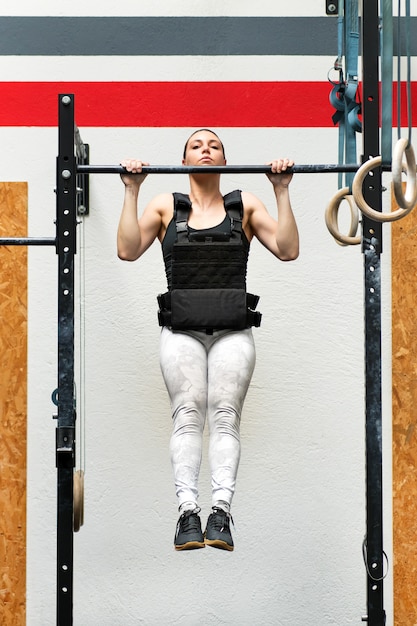
Considering a scenario – If you are an individual who can easily do 20+ bodyweight pull-ups continuously, now your muscles are no longer challenged in a way that forces them to get more stronger. Thus, it is by adding more weight to the poundage that you bring your rep range back to 4 to 8 reps, which is an ideal range of repetitions for strength building.
What makes this variation so effective is how it trains the relative strength – which is your ability to move your body through space while handling additional load. This concept directly resembles with the real-world strength and athletic performance.
[Also See: Why Your Chest Isn’t Growing (Even Though You Bench Every Week)]
Still, execution of the pull-ups matters more than the weight you add. You start with a dead hang – which means that your arms are fully extended and your shoulders are relaxed but under control. Therefore, before even pulling your body up, you engage your scapula by slightly pulling your shoudler blades down and back. This protects your shoulders and ensures that your lats are doing the work.
Now, you pull yourself up until your chin clears the bar. Keep your chest tall and avoid excessive swinging. Then lower yourself slowly.
To be noted – the lowering phase, also called the eccentric phase, is where the real strength is built. So don’t rush it.

[Also See: How Much Muscle Can You Realistically Build in 90 Days?]
One mistake you may make is – adding too much weight too soon. That’s not the right way. Because, if your exercise form breaks down, you are no longer targeting the right muscles, and you can increase the risk of unwanted injury. That being said, increase weight gradually. Even an extra 5 to 10 pounds can make a noticeable difference.
If you can’t yet do a bodyweight pull-up properly, focus on assisted pull-ups or negative reps first. And once you’re comfortable with 8 to 10 clean reps, that’s the sign that you can start adding weight to your pull-ups.
From a training perspective – weighted pull-ups are one of the most efficient upper-body exercises you can do. They build thickness in your back, improve grip strength, and develop pulling power that can be utilized in other exercises like rows or deadlifts as well.
Editor’s Note: This content is for informational and educational purposes only and is not intended to diagnose, treat, or cure any medical condition. Always consult your physician or a qualified personal trainer before starting any workout or nutrition program