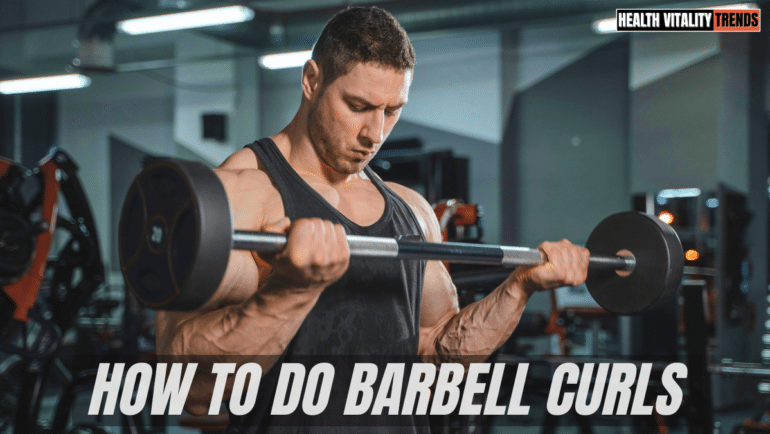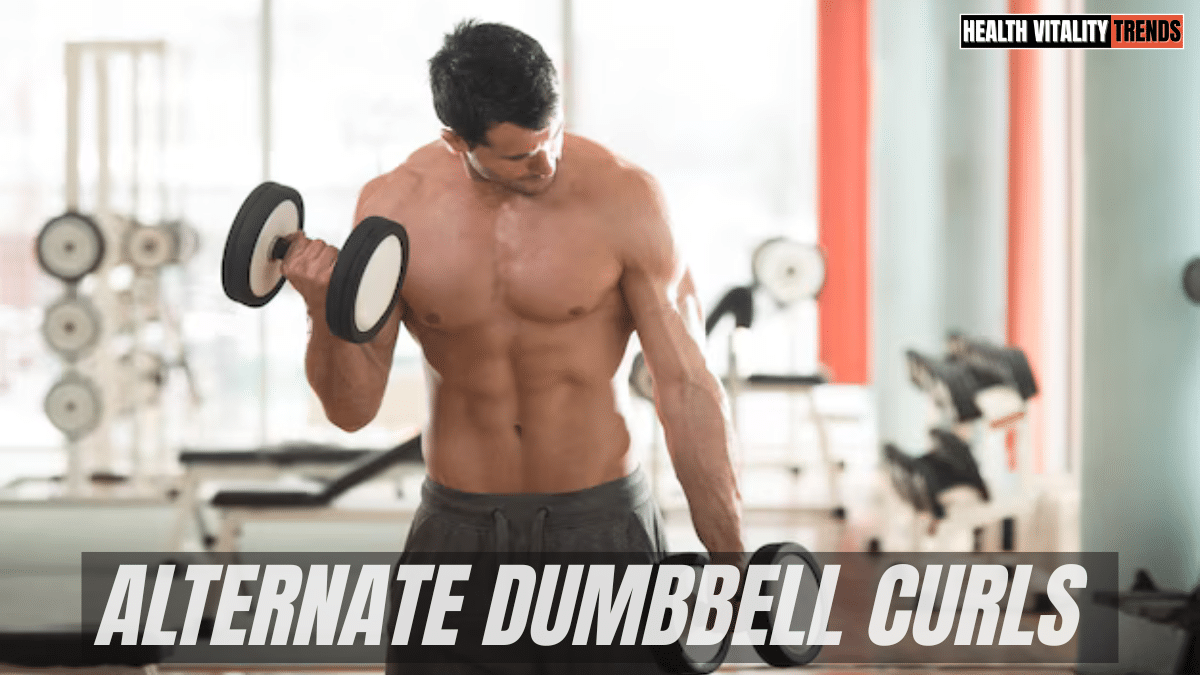
How to Do Alternating Dumbbell Curl: 5 Common Mistakes That Are Holding Back Your Arm Gains
If you are a regular gym goer, then you probably know that dumbbell curls are a fundamental exercise for training your biceps. In which you have dumbbells in both of your arms and curl them at the same time. Not only for the beginners, but this exercise is also beneficial for pro athletes for strength & muscular development.
To make the dumbbell curl exercise more effective, I suggest you learn how to do Alternating Dumbbell Curls.
So, instead of curling both arms together as you do in a barbell curl, in the alternate dumbbell curl, you curl one arm at a time, while the other arm stays down, still gripping the weighted dumbbell.
Furthermore, after you have completed a single repetition with one hand, you switch to the other arm and do the same curling movement. The exercise is done in continuation, till you have completed an equal number of repetitions with both arms in one single set.
It sounds simple, and in fact it is. This small change in exercise can improve control, focus, and muscle engagement, only when the exercise is done with correct form.
Let’s break it down clearly and practically.
Editor’s Note: This content is for informational and educational purposes only and is not intended to diagnose, treat, or cure any medical condition. Always consult your physician or a qualified personal trainer before starting any workout or nutrition program
What is an Alternating Dumbbell Curl?
The Alternate Dumbbell Curl is a unilateral biceps exercise that is performed with two equally weighted dumbbells. Unlike the regular dumbbell curl, the only change in action here is that instead of flexing both elbows together, you flex one elbow at a time in an alternating pattern until the set is completed.
Hence, the key difference here is not the equipment but the movement:
• Regular Dumbbell Curls: Both elbows flexed together.
• Alternate Dumbbell Curls: Elbows flexed in an alternating pattern.
Now that you are focusing on only one upper limb at a time. Hence, this version of dumbbell curl improves your concentration, coordination, and total time under tension of each bicep muscle during exercise.
Alternating Dumbbell Curl Muscle Worked
Primary Muscle
- Biceps Brachii
This muscle has two heads (long head and short head) and is responsible for kinesiological movements such as elbow flexion and forearm supination (turning your palm up).
Secondary Muscle
- Brachialis
This muscle lies beneath the biceps, which also contributes to elbow flexion. - Brachioradialis
Located in the forearm. Also assist with elbow flexion, especially when the forearm is in a neutral position.
Stabilizing Muscles
Your body needs more stabilizing support during the alternate dumbbell curls. Because only one arm is moving at a time now. Therefore, your core, forearm & shoulder stabilizers work harder to control the curling movement and maintain body balance.
Alternating Dumbbell Curl vs Dumbbell Curl
| Alternate Dumbbell Curls | Dumbbell Curls |
|---|---|
| Alternate bicep curling. | Curling both arms simultaneously. |
| Allow focus on one arm at a time. | More focus on lifting rather than muscle |
| Help to correct muscular & strength imbalance. | Also target strength & muscular imbalance. |
| Allows better control and range of motion. | Best range of motion and control with light to moderate dumbbell weight. |
| Allow better time under tension due to a greater range of motion. | Best time under tension when done with light to moderate dumbbell weights. |
How To Do Alternating Dumbbell Curl (Step-by-Step Guide)
This section explains how to do the Alternating Dumbbell Curl in 4 simple steps.
If you are planning to lift weights more than your average capacity, then I suggest you use a workout belt and straps as well.
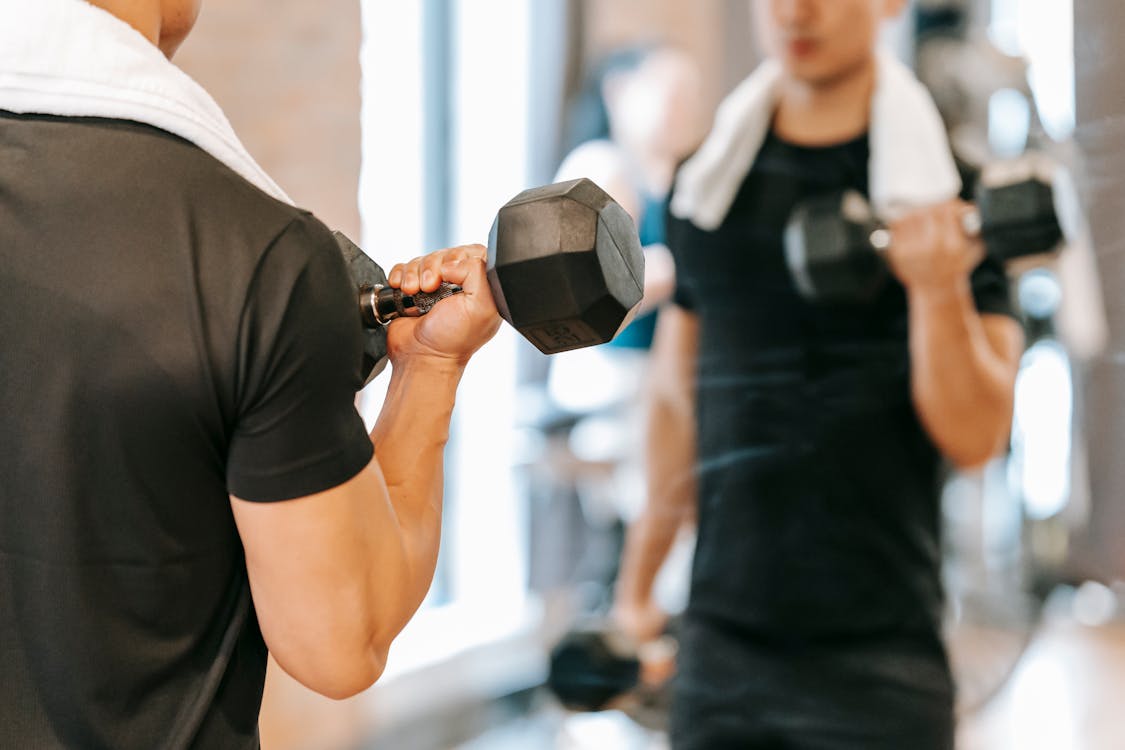
Step 1 – The Starting Position (In front of a Mirror)
- Stand in an upright position, with your feet at about hip-width apart.
- Grip the dumbbells with a suitable weight in each arm.
- Both arms should be fully extended.
- Place your elbows at your sides, with palms facing forward.
- Keep your shoulders relaxed and core tight.
Step 2 – Begin The Curl
- Choose an arm to begin with (left or right).
- Keep the other arm intact and close to your side.
- Now, curl the Dumbbell up with a controlled form.
- Continue curling till the dumbbell reaches shoulder level.
- Squeeze the bicep muscle at the top.
Step 3 – Lower The Weight Slowly
- Without losing muscle tension, slowly lower the dumbbell.
- Keep the supinated palm position intact.
- Wait until the arm is completely down.
- Then begin to curl with the other arm.
Step 4 – Switch Arms
- Bring your curling arm to the partial rest position.
- Begin to curl with the other arm.
- Similarly, flex your bicep till it reaches shoulder level.
- Complete your set with an equal number of repetitions for both hands.
Common Mistakes to Avoid
Lifting Too Heavy Too Soon
One of the most common mistakes is choosing a dumbbell so heavy that you cannot perform at least 5 clean reps with proper form. Using excessive weight not only reduces exercise quality, but it can also increase the risk of injury.
When you swing heavy weights repeatedly, you place unnecessary stress on the lower back, which may increase the risk of lumbar strain or even disc-related issues over time. Additionally, using uncontrolled force can increase the risk of a biceps strain or tear.
If you cannot control the weight, it is too heavy.
Swinging the Dumbbell
Swinging the dumbbell excessively reduces time under tension in the biceps. When momentum takes over, the muscle does less work.
This turns a focused isolation exercise (bicep curl) into a partial body movement that wastes time and energy.
The only solution is to slow down the lift, control the lowering phase, and maintain consistent tension throughout each repetition.
Rushing the Repetitions
Performing reps too quickly makes the exercise less effective. Muscles respond well to controlled tension, especially during the eccentric (lowering) phase.
If you rush through the set, you not only overstimulate the biceps but also reduce the effectiveness of the exercise movement. A steady, controlled tempo movement produces better results than fast, careless repetitions.
Letting the Elbows Drift Forward
Unintentionally moving your elbows forward during each repetition shifts tension away from the biceps and engages more of the anterior deltoid (front shoulder).
While some natural movement may occur near the top of the curl, excessive forward elbow motion reduces biceps isolation.
Therefore, keep your elbows close to your torso to avoid engagement of the anterior deltoid.
Not Bracing Properly When Lifting Heavy
Lifting with heavier dumbbells is dangerous, and failing to brace your core properly can reduce spinal stability. Bracing your core muscles can increase intra-abdominal pressure, which can help to protect the lower back.
Therefore, a weightlifting belt should be used to assist with bracing the core during heavy sets, but it is not mandatory for most light/moderate-weight curls. What matters most is learning how to engage your core and maintain a neutral spine.
Alternating Dumbbell Curls Benefits
You know what makes the alternating dumbbell curls so effective? It is its simplicity.
Being an isolation exercise, its only function is to target only the bicep muscle. Thus, it benefits a beginner in the same manner as a pro-athlete.
Build Balanced Strength
When beginners perform dumbbell curls for the first time, they are often surprised by how imbalanced their right and left arms are in terms of strength. The best way to build equal strength is to first identify which one is the weaker arm. Then make sure you can perform the same number of clean reps with the weaker arm as you would with the stronger one. Do not let the stronger side dictate the set.
Over time, this improves overall performance in other exercises where the biceps act as a secondary muscle, especially during back workouts like rows and pull-ups.
Symmetrical Muscle Building
Naturally, if one arm is weaker, it is often visible as well. The stronger arm may appear slightly larger in circumference (inches or centimeters). Even if both arms feel equally strong, there will still be a noticeable size difference. You can add extra volume of repetitions to the smaller arm.
This can mean one or two additional reps or an extra set, depending on your training goal. With proper progressive overload and consistency, this approach supports muscle hypertrophy and improves visual symmetry, which works best if you are a competitive bodybuilder.
Better Mind-Muscle Connection
Alternating curls naturally improve mind-muscle connection compared to curling both arms at the same time. When you focus on one arm, it becomes easier to detect weaknesses in your technique, such as an incomplete range of motion or a lack of control during the lowering phase. This focused attention helps you refine the movement pattern and practice better quality reps.
Improved Coordination
Alternating dumbbell curls are not just about strength or muscle growth. They also improve coordination between the left and right sides of the body. By controlling one arm while the other remains stable, you develop better neuromuscular coordination and tempo. When performed with a full range of motion and proper control, this improves overall movement quality. Better coordination in isolation movements can carry over into more complex exercises.
Optimum Results With Less Equipment
The biceps are a relatively small muscle group compared to larger muscles like the chest, back, or legs. Their primary functions are elbow flexion and forearm supination, performed by the long and short heads of the biceps brachii.
Because of this, you do not always need advanced machines to build them effectively. A simple set of dumbbells, when used correctly with proper form and progressive overload, is more than enough to stimulate growth. Consistent effort matters more than fancy equipment.
Alternate Dumbbell Curl Variations
There are various biceps exercises that can be performed using an alternating curl pattern. This approach can make them more effective by allowing you to fully focus on one arm at a time and better target different areas of the biceps and surrounding muscles.
Seated Dumbbell Curl
Just like you perform alternating dumbbell curls in a standing position, the same can be done while seated. The seated position increases stability and reduces unnecessary stress on the lower back because now your lower body is not involved in generating momentum. However, you still need to avoid shaking your torso forward, backward, or side to side. Choose an appropriate weight that allows you to maintain proper posture and controlled movement throughout the set.
Incline Dumbbell Curl
Incline dumbbell curls are one of the most effective biceps exercises because they train the muscle through a larger range of motion and place the biceps under a deeper stretch, especially the long head. Due to the bench angle and body position, it becomes difficult to use excessive weight or momentum. This naturally forces a stricter form. Just like the standing version, incline curls can also be performed in an alternating pattern for better focus and control.
Hammer Curls
Hammer curls primarily target the brachialis and brachioradialis. Developing the brachialis can help increase the overall width of your upper arm. It is very common for athletes and lifters to perform hammer curls in an alternating pattern because it improves control and reduces momentum.
Cross Body Curls
The movement in this exercise is similar to the hammer curl. But instead of curling straight up, in a cross-body curl you bring the dumbbell across your body toward the opposite shoulder. This variation still emphasizes the brachialis and brachioradialis while slightly changing the line of pull. Performing it in an alternating pattern allows better focus and cleaner execution.
Concentration Curls
Concentration curls are typically performed one arm at a time. While beginners may initially find the setup slightly confusing, this exercise is very popular among bodybuilders for isolating the biceps. Because your elbow is braced against your inner thigh, it reduces momentum and increases isolation, often placing greater emphasis on the short head of the biceps when performed correctly.
Who Should Do the Alternate Dumbbell Curl
Unlike complex compound exercises like the bench press, deadlift, and squat, which may take months to properly learn and progressively improve, the alternating dumbbell curl is relatively simple to perform. It can be done by individuals who are new to the gym as well as by experienced lifters and professional athletes.
That said, the results are not automatically the same for everyone. The outcome depends on your training level, intensity, and overall goal. Whether you are training for muscular endurance, hypertrophy, or strength, the sets, reps, and load will vary accordingly.
Overall, almost anyone can include alternating dumbbell curls in their program if the goal is to build biceps strength and muscle mass. The key is adjusting volume and intensity based on your experience and objective.
Repetitions and Sets
There are different training goals for which you train your body: muscular endurance, hypertrophy (muscle growth), and strength. The number of sets, repetitions, and rest periods differ depending on your objective.
So, if your goal while performing alternating dumbbell curls is:
Endurance
Sets: 2–4
Reps: 12–15 (or even up to 20 with lighter weight)
Rest Period: 45–60 seconds
This improves muscular stamina and the ability of the biceps to sustain repeated contractions over time.
Hypertrophy
Sets: 3–4
Reps: 8–12
Rest Period: 60–90 seconds
This rep range is commonly used for muscle growth. The focus here should be controlled reps, proper form, and progressive overload.
Strength
Sets: 3–5
Reps: 5–8
Rest Period: 2–3 minutes
For strength development, the weight should be heavier, and rest periods slightly longer to allow proper recovery between sets.