Deadlifts After 45: The Strength Benefits Many Lifters Don’t Expect
Once you cross your 40s, your fitness goals change drastically. In your 40s and even in your 50s – the ultimate fitness goal should be to have lean body mass, along with better overall physical functionality. And to attain the optimal physical functionality, the compound exercises should be your top priority, rather than just doing simple isolation movements.
Deadlifts – is one of those movement that is often associated as a young lifter’s exercise. But the better truth is that – deadlift becomes more valuable as you age.
Yes, for individuals over the age of 45 and older – now the goal isn’t just about building huge muscles or lifting as heavy as possible. But it’s about maintaining strength, preserving function, and improving long-term joint health. This is why deadlift stands among all the compound exercises like – Bench Press for chest, Squats, Shoulder Press and Rows.

[Also See: Why Muscle Mass Matters More as You Enter Your 40s]
If you are still finding reasons to include deadlifts into your workout program, here are some of the best reasons you should know – how deadlifts can help you at any age:
1. Improved Posterior Chain Strength
When you do deadlifts – it directly targets the glutes, hamstrings and spinal erectors. These are the muscles that are critical for better posture, walking mechanics and reducing stress on the lower back. Thus, strengthening this chain can help you to counteract years of sitting and inactivity.
2. Better Bone Density and Load Tolerance
Unlike not doing any physical activity as you age – doing more resistance training, especially the compound lifts strengthen your bones – by increasing bone’s mineral density.
3. Enhanced Functional Strength
The deadlifts mimic real-world movement patterns like – picking objects off the floor – bending down and getting up. Training this movement improves your neuromuscular coordination and reduces the risk of injuries at older age.
[Also See: Electrolytes for Gym-Goers: Necessary or Just Hype?]
4. Core Stability Without Isolation Work
Unlike traditional ab exercises, where you have to train each muscle group individually. During deadlifts – you require to engage all core muscles at a single time. It develops the intra-abdominal pressure and spinal stability, which are essential for protecting the lower back.
5. Hormonal and Metabolic Benefits
Deadlift is an exercise that engages multiple joints and muscles during its execution, which leads to a greater metabolic demand. This concept supports lean muscle retention and improves insulin sensitivity over time.
6. Joint-Friendly When Done Correctly
Contrary to a common belief that deadlifts become dangerous to do as you age – its not. Even if your are in your 40s, 50s or even in your 60s – all you need is to maintain the proper technique during the movement execution, along with appropriate load selection.
7. Adaptability for All Fitness Levels
You don’t always have to rely on the traditional deadlift. The ultimate goal is to do exercises – that copies the same joint action similar to the deadlift, to be on the safe side. Variations like – Romanian deadlifts, machine deadlifts, trap-bar deadlifts, and even dumbbell/kettlebell deadlifts are a great substitute.
[Also See: 6 Muscle-Building Habits Most Gym-Goers Completely Ignore]
The key takeaway here is simple: It is that deadlifts are not the exercises you need to avoid as you get older. Actually, it is the exact exercise that should be your top priority. You gain the maximum benefits from deadlifts, especially if your training experience is limited, you should consider hiring a personal trainer – who can guide you with the physical training as well as the nutrition aspect of your fitness at older age.
How To Do Deadlifts The Right Way
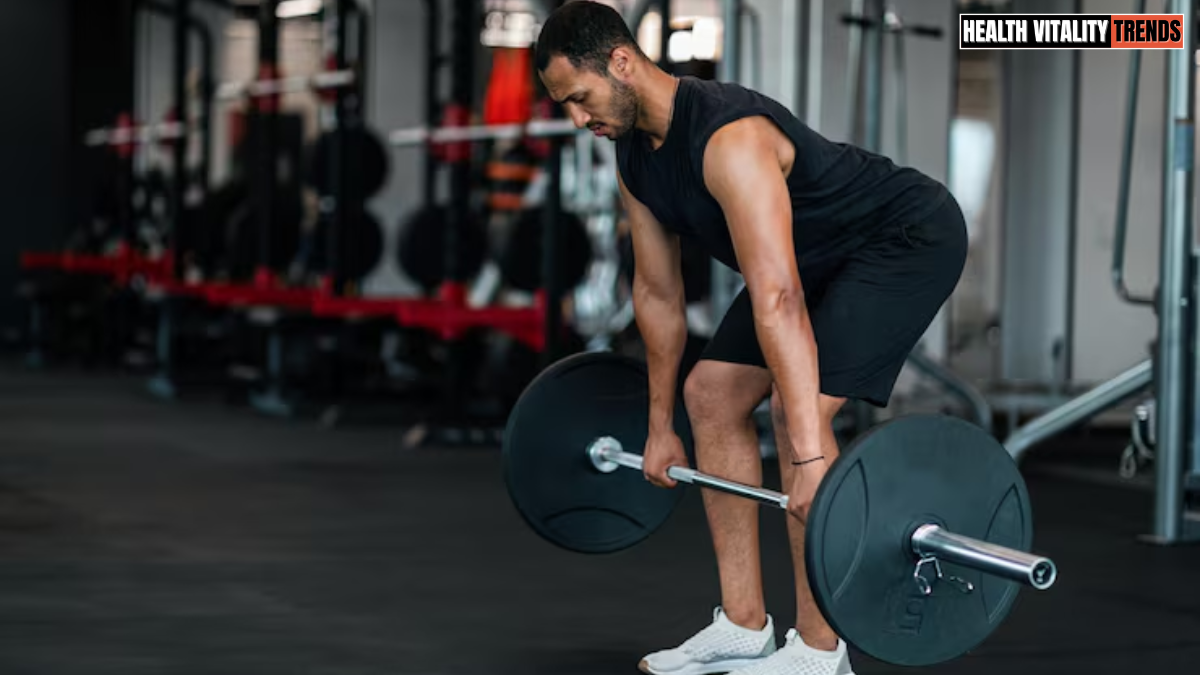
Setting up the Deadlift Stance
- Arrange your deadlift bar and weight properly in the deadlift platform.
- Place your shins near the barbell.
- Place your feet at hip-width apart from the center of the barbell.
- Grip the barbell outside your knees and bend down.
- Maintain an erect position by keeping your spine straight and hip hinged down.
- And your tibia bone should be perpendicular to the ground.
Executing the Deadlift
- Engage your lats and brace your core before lifting.
- Lift the weight up by close to your knees, and extending your hips.
- Keep the bar close to your body through the movement.
- Lock out by squeezing your glutes, and not overextending your lower back.
- Now, lower the bar in a straight line – still keeping your shin bone perpendicular to the floor.
Editor’s Note: This content is for informational and educational purposes only and is not intended to diagnose, treat, or cure any medical condition. Always consult your physician or a qualified personal trainer before starting any workout or nutrition program