The Core Strength Test That Reveals Weak Abs in Seconds
Most people think they have a strong core just because they can do 100s of sit-ups at once, or because they have a visible 6-pack abs. And truth to be told: Yes, they look very attractive, but it doesn’t guarantee that they would be as functional as they look in real life.
Even if you are capable of doing an endless number of repetitions of any of your favorite core exercises, these exercises don’t really tell you how strong your core muscles are.
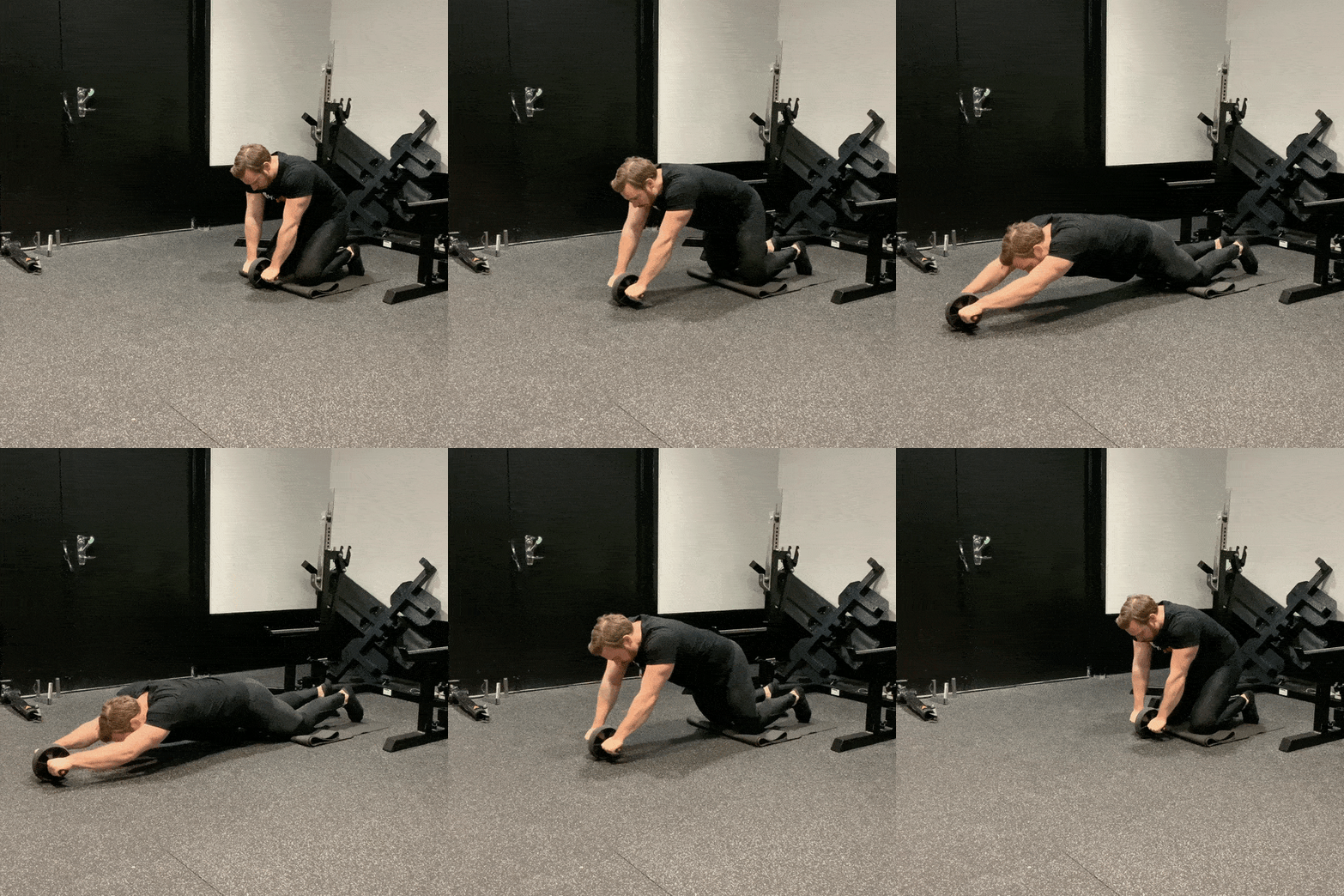
And if you really want a quick answer, there is one exercise that can expose your core strength in an instant. It’s the Ab Wheel Rollout. This movement is one of the true core strength tests to take.
[Also See: These Simple Push-Up Variations Builds Chest Size Faster Than You Think]
[Also See: Why the Triceps Pushdown Is Still One of the Best Arm Builders in the Gym]
The reason why the Ab Wheel Rollout is the true core strength test is very simple. Actually, your core’s primary job isn’t just to flex your spine like you do in a sit-up movement. But its real function is to resist the movement, especially the extension of the lower back. This is where most people fail, even if they have a very pleasing visible abs.
The Ab Wheel Rollout movement forces your core to do exactly that. As you roll in the forward direction, your deep core muscles are fighting hard to prevent your lower back from arching. Thus, the moment your core muscles give up, your hip drops, your spine overextends and the movement breaks down. That’s your answer right there.
To perform an Ab Wheel Rollout, you need to:
- On a gym mat, start on your knees with the ab wheel in front of you.
- Now, grip the handles and brace your core tightly.
- Slowly roll the wheel in the forward direction while keeping your hips tucked and your spine in a neutral position.
- Go forward as far as you can without letting your lower back sag.
- Now pull yourself back to the starting position using your core, not your arms.
Sounds simple? Yes, it does. But not when you actually do it. Even individuals who can do other core exercises with high volume, struggle to maintain proper form for just a few controlled reps. That’s because the rollout movement challenges your core in a way that most of the traditional ab exercises don’t.
The Sit-ups and Leg raises mainly target the spine flexion. While they can build endurance and aesthetics, but they don’t demand full-body core stability. The rollout, on the other hand, turns your entire anterior chain into a stabilizing unit. Your abs, obliques, lower back, shoulders, and even glutes have to work all together.
This is exactly why the Ab Wheel Rollout stands out as the real king of core exercises. It builds functional strength that carries over to weightlifting, sports, and even everyday movements. A stronger and more stable core means better posture, improved force transfer and a lower risk of lower back injuries.
[Also See: Stop Wasting Leg Day: The Squat Mistake That’s Killing Your Gains]

[Also See: Why Omega-3 Fatty Acids Matter for Joint and Heart Health]
Another advantage is the progression. Beginners can start with a short-range rollout movement, or even use a wall as a stopping point. As your strength improves with more practise, you can increase the range, slow the tempo, and eventually progress to standing rollouts, which are on a completely different level.
So, if you are serious about testing and building real core strength, stop relying only on high-rep ab workouts. Add the Ab Wheel Rollout into your routine and pay real attention to your form. It won’t just challenge your abs, it will show you exactly where you stand.
And once you have mastered it, you’ll understand why true core strength isn’t about how many reps you can do of sit-ups or leg raises, but how well you can control your body under tension.
Editor’s Note: This content is for informational and educational purposes only and is not intended to diagnose, treat, or cure any medical condition. Always consult your physician or a qualified personal trainer before starting any workout or nutrition program