The Classic Ab Exercise That Trainers Are Bringing Back
Some exercises never really do disappear. With the internet available to all of us, nowadays many old-school workout movements that were popular in the 80s fitness culture are making a comeback into our latest fitness trend. And right now, one of those exercises is the Dragon Flag, which is known as the toughest core movement to ever exist.
If you have ever watched Sylvester Stallone grinding through brutal training scenes in Rocky 4, where Rocky (played by Sylvester himself) is training for his boxing match with the Russian giant Ivan Drago (played by Dolph Lundgren). You can see how prominent this exercise was in Rocky’s training.
To this day, the Dragon Flag exercise isn’t just for show. It is a serious test of your core strength, body control, and discipline. Let’s understand what made this vintage exercise movement come back to the trend.
[Also See: The Core Strength Test That Reveals Weak Abs in Seconds]
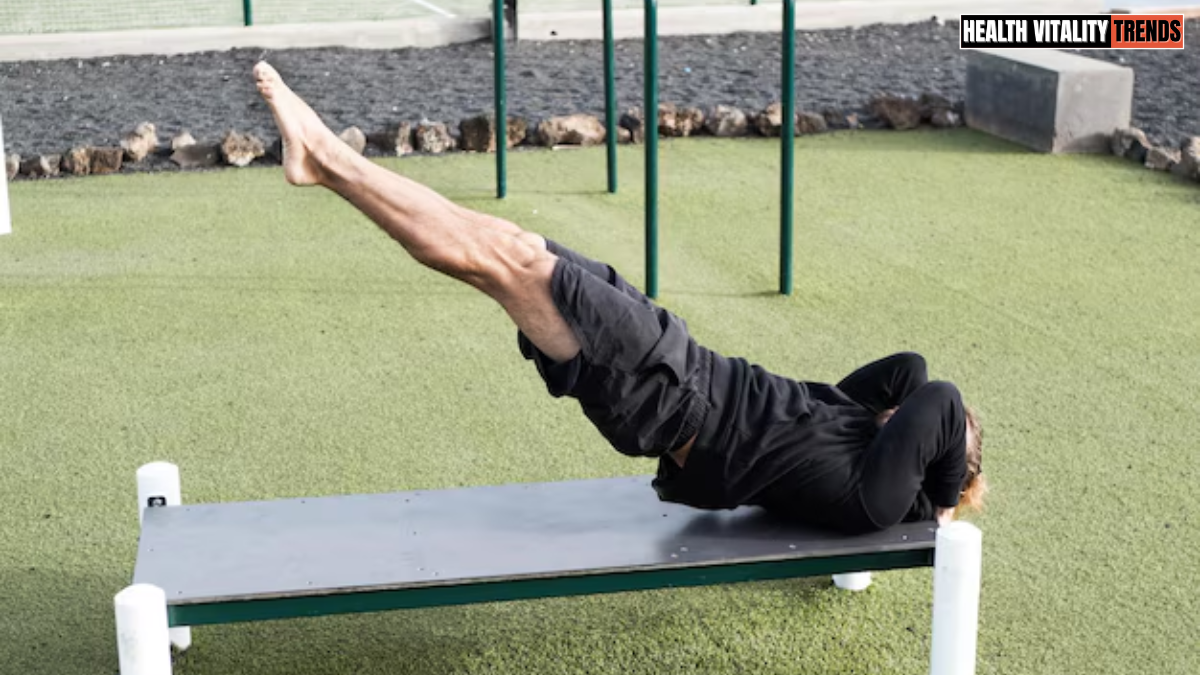
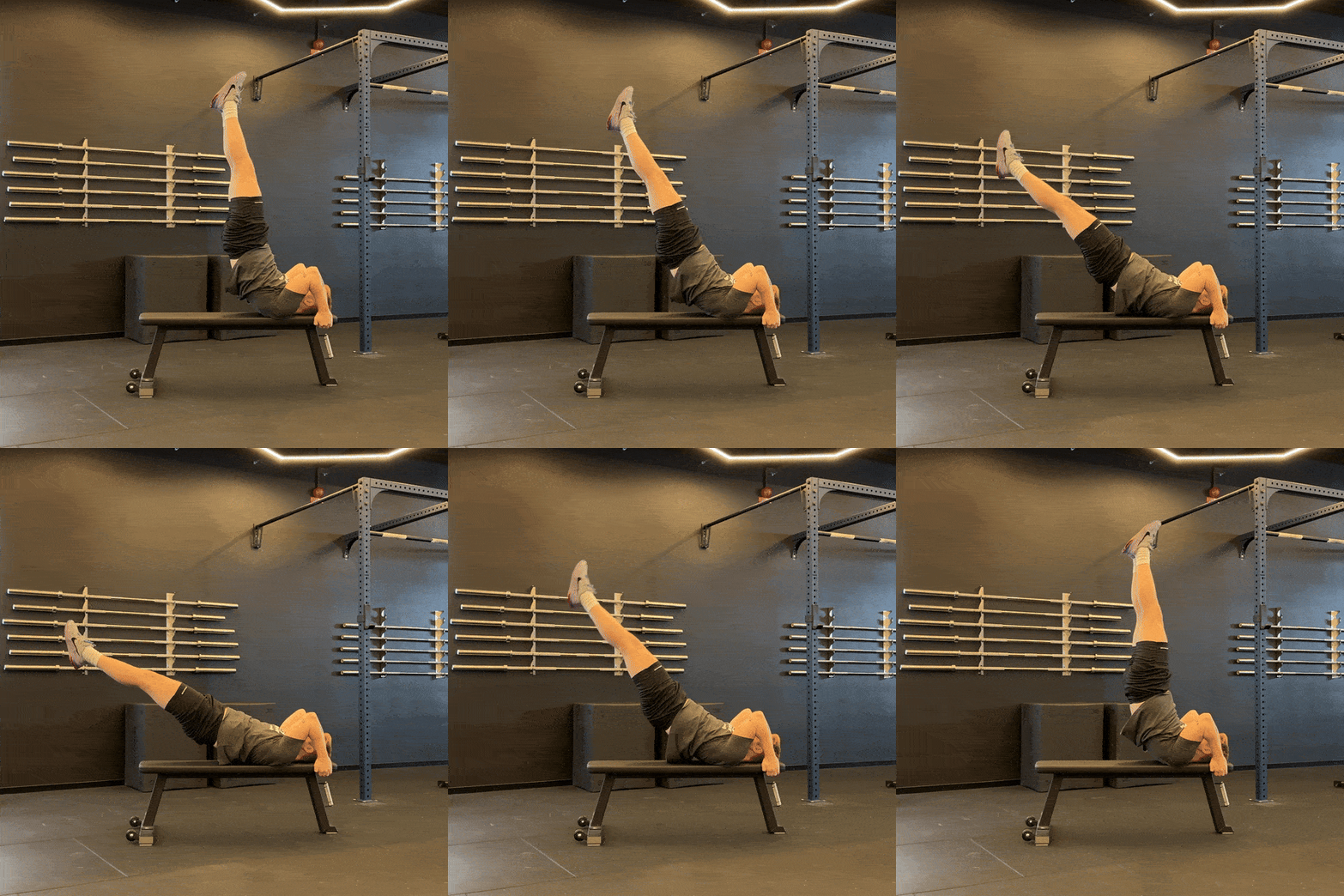
The Dragon Flags are not your standard ab exercise. Unlike crunches and sit-ups that mainly target spinal flexion, the Dragon Flag movement trains your core to resist extension. In simple terms, your abs, along with your hip flexors and stabilizers, work together to keep your entire body rigid as you lower and raise it in a straight line. See that! That’s a completely different level of demand.
From a biomechanical standpoint, the Dragon Flag is all about the full-body tension. Your upper back stays anchored while your core fights against the gravity to prevent your hips from dropping. This creates intense activation across the rectus abdominis, transverse abdominus, and even in the obliques. At the same time, your glutes and lower back also contribute to maintaining strict body alignment, making it a true compound core movement.
This is what makes the Dragon Flag superior to most traditional ab exercises. Instead of isolating the abs in a shortened range, it trains them in a lengthened and highly loaded position. This is exactly how your core functions in real life, by stabilizing your spine under load, and not just by bending it.
Another reason why trainers are bringing the Dragon Flag exercise back is its carryover. Whether you are a person who likes to lift weights, sprint or play any field sport, core stability is what transfers power between your upper and lower body. The Dragon Flag builds that connection better than almost any floor-based ab movement.
But let’s be clear—this is definitely not a beginner exercise.
[Also See: The One Dumbbell Move That Fires Up Your Entire Upper Body (Most Lifters Ignore It)]
Let’s be clear – The Dragon Flag demands a strong core muscle strength foundation, which means that you just cannot decide one day and start doing it, without building core strength at a foundational level.
If someone lacks basic core control or struggles with movement like leg raises or planks, jumping straight into this can lead to poor form or severe strain. That’s why I always recommend building up progressively – start with reverse crunches, then controlled leg raises, and eventually eccentric (only lowering part) Dragon Flags before even attempting the full version.
For those who can perform it correctly, the benefits are significant. You are not just building good-looking abs that are visible; instead, you are developing a core that is strong, stable and functional. It improves body awareness, enhances control, and builds the kind of strength that actually supports athletic performance.
This exercise is best suited for intermediate to advanced trainees, atheltes and anyone serious about upgrading their core training. So you see, it’s not about doing more reps, it is about mastering control over the core muscles.
That is why Dragon Flags are earning their place at the top again in the fitness industry. In the fitness world full of shortcuts and quick fixes, this is one of the movement that demand real effort and actually delivers results.
If there’s one core exercise that lives up to the title of “King of all core exercises” this might just be it.
[Also See: These Simple Push-Up Variations Builds Chest Size Faster Than You Think]
Editor’s Note: This content is for informational and educational purposes only and is not intended to diagnose, treat, or cure any medical condition. Always consult your physician or a qualified personal trainer before starting any workout or nutrition program