
The Balance Test That May Reveal Your Long-Term Mobility
Even though you can lift heavy, run fast, or have been training consistently for years. You are likely to overlook one critical component of fitness, which is Mobility. As a certified personal trainer, I have seen many individuals with well-built physiques, yet they sometimes struggle with basic movement control. On the other hand, even active individuals outside the gym can develop mobility limitations over time. And that should really force you to think, are you really fit?
The reality is very simple. Long-term mobility is what determines how well your body functions as you age. Strength and Endurance matter, but without joint stability, neuromuscular coordination, and balance, your quality of movement declines faster than you would expect.
One of the simplest and most effective ways to assess this is the Single Leg Stand Test.
It may look very basic, but from a biomechanics and motor control standpoint, it challenges your proprioception, ankle stability, hip alignment, and core engagement all at once. In other words, it will give you a quick review of how well your body can stabilize itself without minimal external support.
[Also See: Why Walking Lunges Are More Powerful Than They Look]
How to perform the Single Leg Stand test
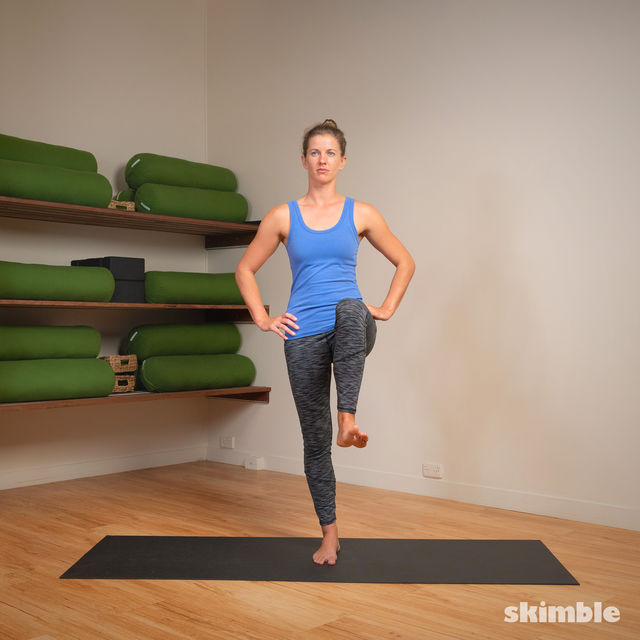
- Place a yoga mat on the floor, and stand upright with your feet at hip-width apart.
- Place your hands on your hips or keep them by your sides.
- Now lift one of the feet off the ground without letting it touch the standing leg.
- Strictly maintain an upright posture without excessive swaying.
- Hold the position as long as possible.
- Now repeat the same with the other leg.
* Make sure you perform this test barefoot or in flat footwear for better accuracy.
[Also See: Stop Wasting Leg Day: The Squat Mistake That’s Killing Your Gains]
How long should you be able to hold it?
- Less than 10 seconds: Poor balance and mobility
- 10–20 seconds: Below average stability
- 20–30 seconds: Average functional mobility
- 30–45 seconds: Good control and stability
- 45+ seconds: Strong balance and long-term mobility potential
These numbers apply to both legs independently. Symmetry matters just as much as duration.
What your results actually mean
The results never lie. If you struggle to hold even for less than 10-15 seconds, it often indicates that you have weak stabilizer muscles, poor proprioception, or limited joint control, especially around the ankles, knees, and hips. And over time, these weak muscles can increase the risk of falls, joint stress, and inefficient movement patterns.
If only one leg is able to perform significantly better than the other leg, it is a red flag for muscular imbalance or asymmetrical movement mechanics. This is common even among trained individuals, and it should not be ignored.
Being able to hold the position for up to 20-30 seconds indicates that your body has descent baseline of stability, but there is still room to improve neuromuscular efficiency and joint integrity.
[Also See: The Core Strength Test That Reveals Weak Abs in Seconds]
And once you cross the 45-second mark on both legs with a good posture and minimal sway, it reflects a strong kinetic chain coordination. This is where long-term mobility starts to work in your favor, supporting better movement quality, injury resistance, and overall physical independence.
The key takeaway here is not how long you can hold the position or not, but how controlled and stable you are throughout the test.
Overall, fitness is not just about how much you can lift or how aesthetic you look. It’s about how well your body performs under real-world conditions. And sometimes, standing on one leg can tell you more about your future mobility than an entire workout session.
Editor’s Note: This content is for informational and educational purposes only and is not intended to diagnose, treat, or cure any medical condition. Always consult your physician or a qualified personal trainer before starting any workout or nutrition program