How To Do Barbell Curls? Muscle Worked, Common Mistakes and Best Alternatives
Barbell Curls are one of the most iconic and famous arm exercises in fitness, bodybuilding, and the Strength & Conditioning field. Whether your goal is to have bigger biceps, stronger pulling power, or better arm definition, Barbell Curl movement is a must for all.
It may look simple, as you are just doing a single joint movement. If done correctly, it is a powerful exercise for building arm Size and Strength.
On the other hand, if the curling motion is performed with poor form, it will overload your lower back (lower spine) and even cause injuries such as a biceps tear, which can halt your fitness progress.
In this guide, I will break down the science, mechanism, and the real execution method for how to do barbell curls the correct way, so that you get real results from every rep.
Editor’s Note: This content is for informational and educational purposes only and is not intended to diagnose, treat, or cure any medical condition. Always consult your physician or a qualified personal trainer before starting any workout or nutrition program
What is a Barbell Curl?
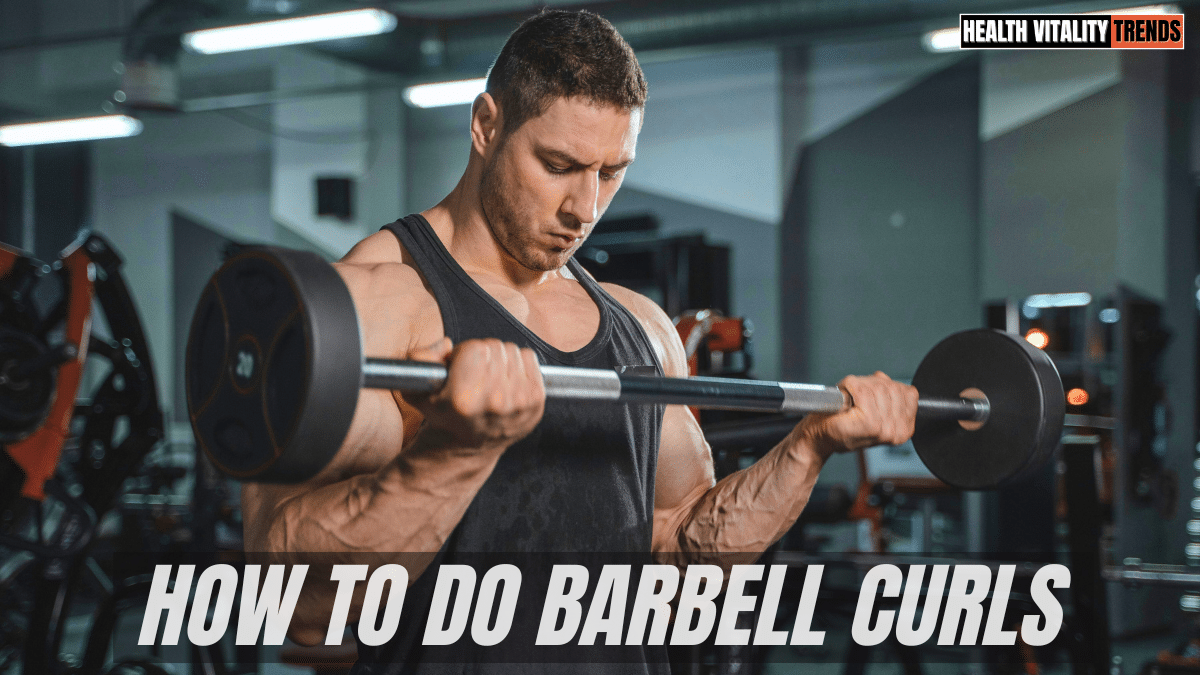
In layman’s terms, a Barbell Curl is a resistance exercise that targets the biceps muscles by flexing the elbows against a loaded barbell (similar to DB curls). You hold the bar with an underhand (supinated grip) and curl it upwards by contracting your bicep muscle group.
Unlike the dumbbell curls, which allow independent arm movement, a barbell curl locks both of your arms into the same movement pattern. Therefore, it allows you to use a heavier weight and create higher overall tension through the biceps.
Because of this, barbell curls are commonly used among bodybuilders for maximum bicep muscle hypertrophy and strength development in the upper arms.
Muscles Worked in Barbell Curls
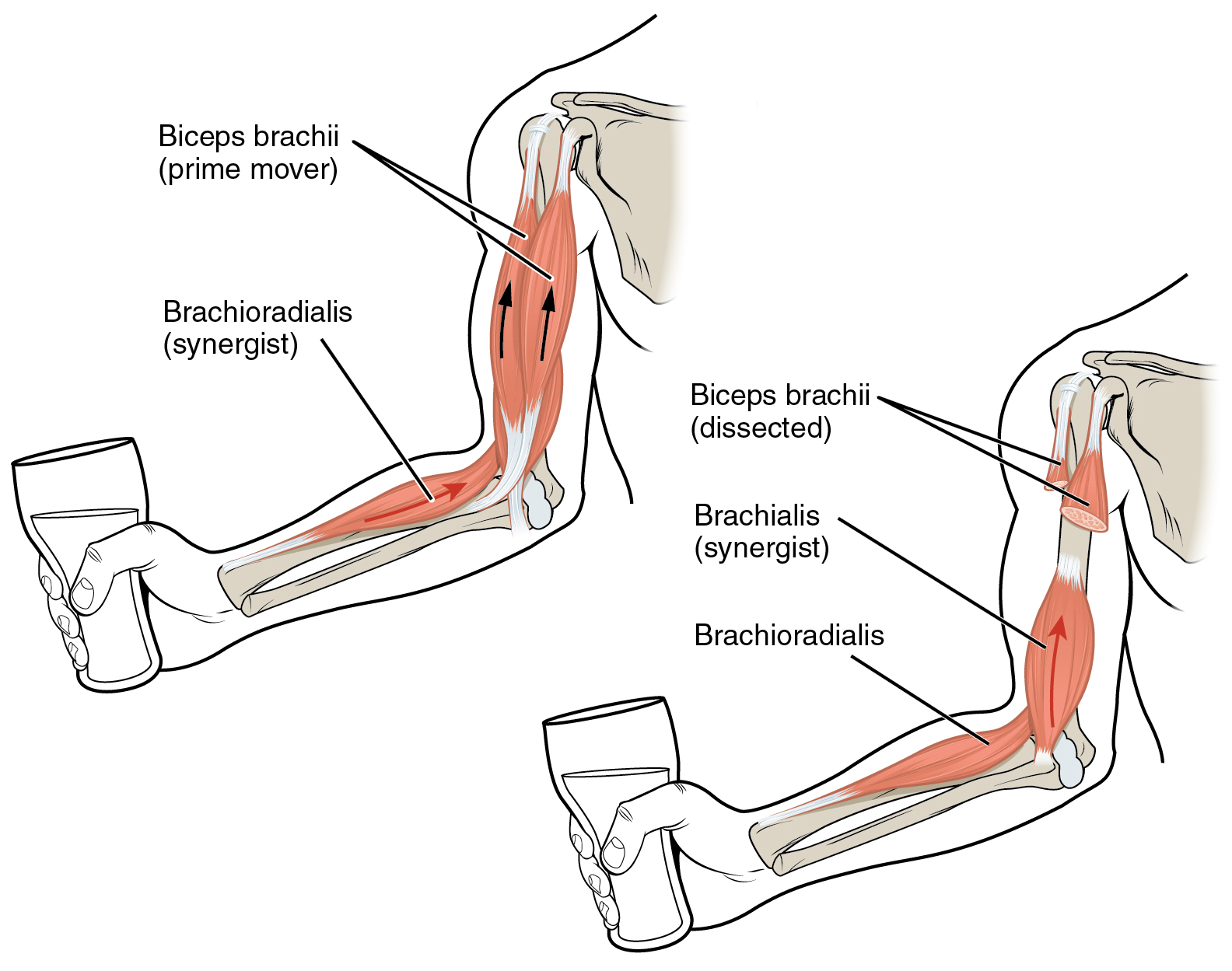
Primary Muscle: Biceps Brachii (Long Head and Short Head)
Secondary Muscle: Brachialis, Brachioradialis
Stabilising Muscles: Forearm Flexors, Front Deltoids, and Core Muscles
[Also See: Stop Wasting Leg Day: The Squat Mistake That’s Killing Your Gains]
Benefits of Doing Barbell Curls
Barbell Curls are popular for a reason:
- It allows you to lift a heavier weight than most curl variations
- Build high mechanical tension, which is a key factor for biceps muscle growth.
- Build overall biceps mass, and not just definition.
- Improve arm pulling strength for exercises such as rowing and pull-ups.
- Develops balanced muscle growth in the arms when done with proper form.
For anyone serious about arm training, you must perform Barbell Curls as an initial (first) exercise on your arm day.
How To Do Barbell Curls (Step-by-Step)
I don’t care if you are a beginner or an advanced lifter. But if you are reading this post, you need to understand one thing:
Results from Barbell Curls are greater for an individual who executes the exercises with proper technique, rather than just curling with a much heavier weight that leads to body momentum forth and back.
Instead, let’s learn what the correct form is:
STEP 1 – Starting Position
If you are looking to improve or relearn the curling motion, then I want you to put on 20% of the maximum weight that you have already curled before. And if you are an entirely new individual, the empty barbell is enough.
Now, follow these instructions:
- Stand in front of the gym mirror to check your form continuously
- Stand upright with feet at shoulder width apart.
- Hold the barbell with an underhand grip.
- Your hands/palms position too should be at about shoulder-width.
- Rest the bar against your thighs.
- Extend your arms.
- And keep your chest up and shoulders back.
STEP 2 – Brace Your Body
Before you even begin the curling movement, brace your body by tightening your core. Keep your knees slightly bent and do not lock your knees completely.
STEP 3 – Curl the Bar
Now it’s time for the main movement, that is, curling the bar. Begin by bending your elbows upwards, till the bar is close to your chest. Always keep your elbows close to your sides, and do not let them drift forward.
STEP 4 – Squeeze at the Top
This is where many individuals make mistakes. What I am implying is, majority of people are just inches away from doing a complete concentric (upwards) barbell curl motion. What you need to do is, when the bar is close to the chest, you need to squeeze your biceps hard for a second. Doing this will completely contract the biceps muscles.
STEP 5 – Lower the Bar Slowly
Let me tell you one thing as a CPT: Lifting the barbell upwards is only half of the barbell curl exercise. But the other half, that is the eccentric phase, is where most people make mistakes. They just loosen their body posture and muscle tension in the downward phase.
But you are going to do it right, by controlling the weight as it comes down, not losing the muscle tension, and fully extending your arms at the bottom until the working set is complete.
STEP 6 – Repeat
Maintain the tempo of 2 seconds in concentric phase and 3 seconds in eccentric phase, in all repetitions until the set is completed.
Proper Barbell Curl Form Tips
Details that make a huge difference in bicep muscle activation.
- Keep your elbows close to the side of your ribcage.
- Always keep your wrist straight, or wear a wrist strap.
- Avoid too much engagement of the front deltoids when curling the bar upwards.
- Maintain smooth barbell movement arc.
- Always focus on slow and controlled negative (downwards) repetitions.
Common Barbell Curl Mistakes to Avoid
These are some of the most common mistakes that people make, and if they are ignored excessively, you will eventually stop seeing positive growth results.
- Swinging the body, that turns the movement into a hip and back exercise instead of a biceps exercise.
- Putting too much weight on the bar can eventually lead to unnecessary swinging of the body.
- Unable to lock elbows inwards, leading to reduced bicep muscle activation and increased strain on the shoulder.
- Not extending the arm fully can limit muscle growth.
- Dropping the weight during the downward phase can sabotage the muscle hypertrophy goal.
How Much Weight Should You Use for Barbell Curls?
While increasing weight on the barbell is necessary to build strength, break a plateau or muscle hypertrophy as the progression follows. But the right weight to do barbell curls depends upon what is your training level.
Beginners: An unloaded barbell is the perfect weight for beginners to practise the curling movement, with 10 to 15 repetitions per set. As the progress grows, increase the load by 2.5lbs each side of the barbell.
Intermediate Lifter: A weight that allows you to perform a maximum of 10 to 12 reps per set is sufficient.
Advanced Lifters: Well, there are no weight restrictions. The only thing that you have to keep track of is that your form remains strict.
Always avoid body swinging, leaning back, and incomplete repetition.
Best Barbell Curl Alternatives
While the old-school Barbell Curls are the real GOAT of bicep exercises, these are some of the notable substitute exercises that I personally vouch for. These have a similar impact on arm muscle hypertrophy and strength development.
EZ Bar Curl
EZ Bar Curl is very similar to the standard barbell curls. The only difference here is that your wrists are at a more angled grip.
How to Do EZ Bar Curls
- Similar to the plain Barbell Curl, hold the EZ bar with an underhand grip on the angled sections.
- Keep your feet at shoulder-width apart, and toes slightly outwards.
- Now, keep your core tight, avoid any body movement, and lock your elbows close to your sides.
- Lift the weighted EZ bar by focusing entirely on your biceps. Lift, until the bar reaches close to your chest.
- Squeeze your biceps at the top.
- Now, slowly lower the bar at a steady rate, and come back to the starting position.
Here, because of the angled grip on the EZ Bar, you get a more natural grip than compared to a straight barbell. Which, in turn, reduces strain in the elbow and wrist.
| Barbell Curls | EZ Bar Curls |
|---|---|
| Straight bar with a fully supinated grip. | Angled grip that places the wrist in a semi-supinated position. |
| Causes Stress on wrists and elbows. | More joint-friendly on wrists and elbows |
| Allow heavier weight lifting. | Allow less weight lifting, but better control and comfort. |
| Prioritise biceps brachii engagement | Target biceps effectively with reduced joint pain. |
| Best for lifters with health wrists & elbows | Ideal for lifters with joint discomfort and recovery from injuries. |
Standing Cable Curls
Unlike doing the standard curls with a barbell, in a cable curl, your foot as well as your hand are supposed to be in a fixed spot on the floor.
How to Do Standing Cable Curls
- On the cable-cross setup, set a pulley to the lowest position with a straight bar attachment.
- To start the exercise, you will stand facing the machine and grab the bar with an underhand grip.
- After grabbing the bar, take a step back and position your feet at shoulder-width apart, with toes slightly outwards.
- Keep your chest up, tighten your core, and lock your elbows to your sides.
- Now, curl the bar upward until your biceps are fully contracted.
- Slowly return the bar to the starting position while maintaining the tension in the biceps muscles.
In comparison to free weights, cable curls provide constant resistance through the entire range of motion. Thus, improving muscle tension and controlled exercise movement.
| Barbell Curls | Standing Cable Curls |
|---|---|
| Resistance varies throughout the range of motion. | Constant tension on the muscle from start to finish. |
| Hardest at the mid-range, easier at the top and bottom range. | From bottom to Top range, the challenge remains the same. |
| Allow lifting of heavier weights, but body form deteriorates. | Lighter weight, but higher time under tension. |
| Requires core muscles to work more on stabilising the body. | Machine setup reduces momentum and cheating. |
| Best for strength and mass building | Best for controlled muscle movement and injury recovery. |
Who Should Do Barbell Curls?
Nowadays, gyms are often filled with too many machines and variations that involve the same muscle movements and contractions, similar to a barbell curl. And often, we search the internet for new variations and substitutes, even for this simple exercise.
The real truth is, it’s all a waste of time.
The result from the barbell curl is effective even if you do it with an empty bar or with the heaviest weight you can curl. The only difference here is the weight that you put on the curl bar, which determines your goal, which is: Muscle building, Strength training, or recovery from injuries.
So, if you are a beginner, an advanced lifter, a bodybuilder, or an elderly gym enthusiast, you should treat Barbell Curls as a fundamental arms strength & conditioning exercise.
As long as you do curling movements with correct form and sufficient weight, almost anyone can benefit from them.
How to Add Barbell Curls to Your Workout
It’s not just that you have to do the curling movement with the right form, but you also need to know how many sets and repetitions are necessary for muscle and strength building.
For Muscle Building
- 3 to 4 sets are enough
- 10 to 15 repetitions
- With 60 to 90 seconds of rest in between sets
For Strength Development
- 4 to 5 sets
- 5 to 8 repetitions
- With 2 to 3 minutes of rest in between each set
Are Barbell Curls Safe?
Yes, it is the safest movement to develop strength and build muscles in the upper arms. In fact, studies suggest that beginners should focus on this fundamental exercise for the first few months of their training program.
Moreover, injuries related to this exercise do occur only if the person doing it does not have the correct form, causing strain in the lower back. Or if the weight is too heavy to lift, such that it overloads the biceps muscle joints with the humerus bone, which will definitely cause a bicep tear.
Final Thoughts
For doing a simple exercise, such as the Barbell Curl. No matter how advanced the machine you use is, or how premium the quality of the barbell is.
It all comes down to two things, i.e. Form & Technique and an appropriate weight that allows you to curl the barbell with a complete range of motion until the set is complete. And in turn, it should lead to biceps muscle growth.